Social
Respect for human rights is a guiding principle for the TRATON GROUP and forms the foundation of its approach to social sustainability. This chapter outlines how the Group manages material impacts, risks, and opportunities related to four key areas: its own workforce, workers in the value chain, road safety, and affected communities. These disclosures are linked to the “Human Rights” joint impact area and reflect the Group’s ambition to contribute to a just transition.
Own workforce1
The attractiveness and innovative strength of an organization is largely dependent on how well it recognizes and leverages the individual capabilities of its employees. Especially considering the dynamic shifts shaping today’s workplaces, diversity in employees’ job profiles and qualifications is becoming increasingly important. TRATON relies on qualified, motivated employees, and wants to offer its staff a safe and attractive working environment in which they can develop their full potential. In the DMA, the Group identified the following IROs related to its own workforce.
Impacts, risks and opportunities related to own workforce
| Sustainability matter | IRO category | Time horizon | Scope | Description |
|---|---|---|---|---|
| Working conditions | Potential negative impact | Short-term | Own operations | Damage on own workers’ well-being from adverse working conditions, discrimination, and poor safety practices |
| Risk | Long-term | Own operations | Staff turnover, productivity loss, and safety issues in own workforce resulting from adverse working conditions | |
| Equal treatment and opportunities for all | Potential negative impact | Short-term | Own operations | Negative effects from discrimination in employment like unequal training, promotion opportunities, pay, and benefits |
The material impacts and risk relate to all employees. However, some groups in the TRATON workforce may be more vulnerable to these risks due to economic, political, and social processes of exclusion. These groups could therefore be disproportionately affected by the TRATON GROUP’s operations and value chain. Vulnerable groups of TRATON’s own workforce may be migrant workers, female workers, temporary workers, minority workers (e.g., linguistic, racial, or religious minority), juvenile workers, interns or apprentices, less technically literate groups, marginalized groups, low-income and low-skilled workers with limited literacy.
Additionally, the human rights salience assessment (see Stakeholder engagement) has enabled TRATON to identify certain groups within its workforce who may be at greater risk of harm, with particular attention given to vulnerable groups.
The risk analysis of the TRATON GROUP’s own business areas (see Report on opportunities and risks) has neither identified a risk of incidents of forced or compulsory labor nor a risk of incidents of child labor. Therefore, no specific types of operations, countries, or geographies are considered at significant risk. Nevertheless, due to the global activities of TRATON, the Group operates in countries with significant social, political, or economic instability, conflict regions, or high-risk areas, among others. Such an environment, despite all efforts, could complicate the TRATON GROUP’s commitment to complying with international standards around the world.
Approaches and policies
General approach to people and culture management
TRATON’s purpose is: “Transforming Transportation Together. For a sustainable world“. This requires a team of dedicated and passionate individuals working collaboratively across the entire TRATON GROUP towards a common objective. The TRATON GROUP employer value proposition (EVP), “be part of something bigger,” reflects this sentiment.
The culture foundation of the TRATON GROUP’s corporate values and TRATON’s shared leadership principles (see Corporate culture) provides the necessary support for this purpose and EVP.
Employee representation
The TRATON GROUP attaches great importance to the participation of its employees and their representatives. Decisions and activities to manage impacts are therefore aligned with the perspectives of TRATON’s workforce. This engagement takes place mainly with employee representatives.
Employee representatives are involved in various bodies at the TRATON GROUP. One such is the TRATON Supervisory Board, which is made up of an equal number of shareholder and employee representatives and, hence, enables equal say from both groups in decision-making.
At Group level, TRATON has two forums — the Group Works Council (Konzernbetriebsrat) and the SE Works Council — that are designed to enable the multinational involvement of employee representatives in the European Union. As part of an additional agreement with the SE Works Council, TRATON enables participants to be invited from outside the European Union so that employee representatives from locations around the world can take part in the meetings. TRATON conducts at least five SE Works Council meetings and four Group Works Council meetings per year to enable effective communication and collaboration across the organization. In addition, the Executive Board and the employee representatives established an economic committee held twice a year for information on economic matters at the level of the SE Works Council. Subcommittees hold several meetings to discuss matters related to Group Industrial Functions.
Frameworks for employee engagement
The rights of TRATON’s European employees are governed by the SE Participation Agreement as defined under section 2 (3) and (4) of the Act on the participation of the employees in a European community (SEBG), in member states of the European Union, and the European Economic Area. The Chief Human Resources Officers (CHROs) and the Group Labor Relations department are responsible for enabling employee engagement on an operational level. The strategy on labor standards and working conditions (see table on Policies addressing own workforce) defines common principles and standards for TRATON employees. Further internal agreements include the SE Participation Agreement and the Business and Human Rights Commitment. External commitments comprise e.g., the TRATON Modern Slavery and Human Trafficking Statement, and the commitment to the United Nations Global Compact. Each brand is responsible for ensuring execution and compliance with these standards and agreements and is autonomous in shaping their individual work environment and framework for execution.
The TRATON GROUP tracks compliance with labor standards through monitoring tools and reporting, such as the reporting for CSRD, for the SE Works Council meetings and dialog with the SE Works Council, (e.g., country reports), the TRATON Speak up! Whistleblower portal or brand-respective whistleblower initiatives, as well as surveys (e.g., annual employee survey). These surveys as well as the SE Works Council meetings are used to assess the effectiveness of employee engagement.
At the Group Works Council level, TRATON has established over 20 work agreements covering several topics, including the proper use of Group-wide IT systems and measures to protect employees. At the international level, the Group has implemented several agreements that enable the involvement of employee representatives in decision-making processes. During SE Works Council meetings, a variety of local issues are directly addressed and directed to the appropriate individuals within various brands.
The TRATON GROUP has several initiatives in place to gain insight into the perspectives of people in its own workforce who may be particularly vulnerable and/or marginalized and to improve inclusion. For instance, the TRATON GROUP has a strategic initiative to improve the engagement of underrepresented groups of employees. The SE Works Council representatives for severely disabled employees met twice in the reporting year. The TRATON GROUP works together to find solutions for integrating people with disabilities into working life by offering them suitable jobs, work aids, or appropriate support measures.
Frameworks for human rights
The TRATON GROUP integrates human rights into its compliance management system and respects all applicable regulations in force to protect human rights as a fundamental and general requirement throughout the world. This is stressed in internal regulations and in the due diligence processes described below, where TRATON strives to involve relevant stakeholders.
TRATON is committed to complying with applicable national and international human rights legislations and, hence, acknowledges the International Bill of Human Rights and has joined the UN Global Compact where TRATON recognizes the commitment to its principles regarding human rights and environmental protection. TRATON further strives to operate in line with the UN Guiding Principles on Business and Human Rights, the OECD Guidelines for Multinational Enterprises, and international labor standards such as the International Labour Organization (ILO) Declaration on Fundamental Principles and Rights at Work. Furthermore, TRATON acknowledges the following conventions and uses them to guide its actions, where applicable within the countries in which it operates:
- Minamata Convention on Mercury
- Basel Convention on the Control of Transboundary Movements of Hazardous Wastes and their Disposal
- Stockholm Convention on Persistent Organic Pollutants
TRATON considers these international conventions and declarations as the basis of its commitment and the way in which business should be conducted.
As described in the Codes of Conduct (for both the one for Employees as well as the one for Suppliers and Business Partners, see the section on Sustainability governance), the TRATON GROUP rejects all kinds of forced or compulsory labor as well as modern slavery and human trafficking. This includes work carried out involuntarily due to intimidation, penalty, violence by security forces, or threat of being disadvantaged. Employment relationships are based on voluntary participation and can be terminated at any time by the employees of their own free will and within a reasonable period of notice. The TRATON GROUP assumes responsibility for the health and safety of its employees and the continuous improvement of their work environment. Child labor is prohibited across the entire TRATON GROUP. The ILO determines the minimum age for employment, which must be adhered to.
The Group has defined clear responsibilities within the organization in the human rights risk management system. Moreover, the TRATON Human Rights Committee (HRC) is a multidisciplinary committee that monitors and tracks the implementation of human rights’ due diligence obligations in the Group. The HRC meets regularly and reports directly to the Executive Board. Such reports include the results of risk analysis, the effectiveness of preventive and remedial measures, and relevant findings from the complaints procedure. Further, employees are trained on the Code of Conduct for Employees in web-based and face-to-face training. Moreover, employees receive specific training on business and human rights to provide guidance and raise awareness of the Group’s corporate responsibility for this topic (see Corporate culture). They can address questions on human rights, e.g., via the TRATON Compliance helpdesk and receive information on human rights through various communication formats. In addition to general preventive measures, TRATON continuously evaluates and implements measures addressing identified risks.
The TRATON human rights approach encompasses not only the working conditions of the Group’s own workforce, but also those of workers in the value chain. Also covered are other material matters, such as other work-related rights of workers in the value chain, equal treatment, and opportunities for the Group’s own workforce, and affected communities’ economic, social, and cultural rights.
Human rights risk management
A central element of the human rights management is the risk analysis. For TRATON’s own operations, an abstract risk analysis was first carried out in 2024. Based on the analysis of external sources such as industry studies and country risk indices, abstract human rights and environmental risks were identified. All relevant entities of the TRATON GROUP were assigned to one of three risk categories. The subsequent concrete risk analysis included the validation of the identified abstract risks and the determination of concrete risks. Following a risk-based approach, risk workshops as well as questionnaires and individual interviews with topic managers and subject matter experts were used to identify, prioritize, and validate risks. To deepen its understanding of selected risk areas, TRATON began in 2025 to supplement the risk assessment in its own operations by initiating specific “deep-dive” projects. The results of the risk assessment are analyzed in the context of our human rights management system and the implemented human rights measures, where potential gaps are being addressed by additional measures and controls, if needed.
Policies
TRATON has implemented several policies that provide guidance for managing the IROs related to its own workforce. These policies also outline fundamental principles for the actions.
The TRATON Policy Statement on Human Rights, the TRATON Strategy on Working Conditions and Labor Standards, the OHS Group Policy as well as the Code of Conduct for Employees relate to the identified potential negative impact and risk related to the working conditions of TRATON’s own workforce.
Furthermore, TRATON has several policies in place related to the potential negative impact on the TRATON GROUP’s own workforce that would occur in case of discrimination in employment like unequal training, promotion opportunities, pay, and benefits. Apart from the Code of Conduct for Employees, these policies are the TRATON GROUP Diversity & Inclusion commitment, the TRATON GROUP corporate values, and the TRATON Policy Statement on Human Rights.
The aforementioned policies are described in detail in the Policies addressing own workforce table below. Exceptions are the Code of Conduct for Employees and the TRATON GROUP’s corporate values, which are presented in the Sustainability governance section and in the Policies addressing corporate culture table in the Corporate culture chapter.
Policies addressing own workforce
| Name of policy | Key contents and objective | Scope | Responsible organizational level and monitoring process | Availability of the policy for stakeholders | Further Information |
|---|---|---|---|---|---|
| TRATON Policy Statement on Human Rights | The Policy Statement on Human Rights outlines the principles on how TRATON wants to live up to its commitment to comply with applicable national and international human rights legislation. It applies to all TRATON companies worldwide and is based on internationally recognized tools. The principles shall be incorporated and inherent in our systems and processes. | TRATON GROUP and its value chain | The most senior level at the TRATON GROUP that is accountable for this policy is the Executive Board. The policy is reviewed and updated if necessary. The management of TRATON GROUP entities is responsible for implementing the actions and requirements defined in this commitment in their entities. | Access via intranet and website | The policy is based on the UN Guiding Principles on Business and Human Rights, as well as other international instruments such as the International Labour Organization (ILO) Declaration on Fundamental Principles and Rights at Work. |
| TRATON Strategy on Working Conditions and Labor Standards | This strategy aims to secure fair working conditions and labor standards and is based on the TRATON Policy Statement on Human Rights and associated standards. It contains Group-wide minimum standards for our entire workforce considering wages and salaries, working hours and rest periods, employment contracts as well as social protection. Besides the minimum standards, it also describes the roles of the Labor Relations Cross-Brand Team, the TRATON SE Works council, and the TRATON CHRO Team. | TRATON GROUP | The most senior level at the TRATON GROUP that is accountable for this policy is the Executive Board. The policy is reviewed and updated if necessary. | Access via intranet | The policy is based on the International Labour Standards. To consider the interests of key stakeholders, the strategy has been aligned with the SE Works Council, the TRATON CEO, HR board members of the brands, labor relations representatives, and trade unions. |
| TRATON GROUP OHS Policy |
A Group policy for occupational health and safety (OHS) was aligned with all TRATON brands and will enter into force in 2026. The TRATON GROUP’s goal is to provide safe and healthy workplaces to prevent work-related injury and ill health, and to promote a safety and health culture and well-being at work. The purpose of this policy is to establish holistic and effective management of OHS matters in the TRATON GROUP. |
TRATON GROUP | The most senior level at the TRATON GROUP that is accountable for this policy is the Executive Board. | Access via intranet | |
| TRATON GROUP Diversity & Inclusion commitment |
TRATON does not tolerate discrimination on grounds of ethnic or national origin, sex, gender identity, religion, views, age, disability, sexual orientation, skin color, political views, social background, or any other characteristics protected by law. TRATON embraces diversity, actively encourages inclusion, and creates an environment that fosters each employee’s individuality in the interests of the Group. At the TRATON GROUP, diversity and inclusion is viewed as central to success and crucial for reaching the goals as a company and as a responsible employer. The TRATON GROUP Diversity and Inclusion commitment is an essential component of the “Responsible Company” pillar of the TRATON Strategy and aligns with the Group’s corporate values. Commitments and actions are fundamentally anchored through a set of strategies and measures across all brands. Diversity and inclusion at the TRATON GROUP is a long-term strategic approach to safeguard future success. TRATON encourages a corporate culture that supports the diversity of skills, experience, knowledge, and the perspectives of the most valuable asset — the Group’s employees. |
TRATON GROUP |
The most senior level at the TRATON GROUP that is accountable for this policy is the Executive Board. To support development in line with the Diversity & Inclusion commitment and enable continuous strategic Group initiatives and best-practice sharing, TRATON established a Group diversity and inclusion working party with representatives from each of the brands across the TRATON GROUP. TRATON follows up on the success of diversity and inclusion initiatives through relevant key performance indicators such as the representation of women in management and the representation of women in management development. |
Access via intranet and website https://traton.com/ dam/jcr:961d4ca4- b778-4b29-8bd8-762e0 c495427/230221%20%20 TRATON%20Group%20 Diversity%20Inclusion%20 Commitment%20-%20EN %20-%20final.pdf |
|
Actions
The following section outlines the measures and processes in place to manage material impacts, risks, and opportunities related to own workforce, including regular risk analyses, monitoring, and compliance mechanisms to provide a safe, fair, and supportive workplace.
The TRATON GROUP conducts regular risk analyses to identify, assess, and address potential negative impacts within its business operations and supply chain. These analyses prioritize areas such as workers’ well-being, workplace safety, and the prevention of discrimination and adverse working conditions. This ensures that timely and effective mitigation measures are taken to uphold ethical standards and support sustainable practices.
The implementation of measures related to working conditions within the TRATON GROUP is overseen by the Group Human Resources (HR) department. In 2025, the following actions were taken regarding working conditions of our own workforce. Regular works council meetings, updating the annual employee survey (MyVoice), and central coordination by the Group Health, Safety, and Security department aim to prevent potential negative impacts on the well-being of our own workforce due to adverse working conditions, discrimination, and poor safety practices, as well as related identified risks. The actions listed in the table below relate to the sustainability matters equal treatment, working conditions, and equal opportunities.
Actions related to own workforce
| Actions | Description and time horizon | Scope | Target in place | Overall progress in 2025 and how we track effectiveness |
|---|---|---|---|---|
| Regular Works Council meetings | Works Council Meetings take place regularly throughout the year. The TRATON Strategy on Working Conditions and Labor Standards is coordinated and monitored in collaboration with the Group Works Council. Its aim is to improve working conditions for all employees of the TRATON GROUP. TRATON supports the employee representatives and the corresponding committees, including funding for events, translation, interpreters, material preparation, and other subsidies. In addition, the Group provides the necessary human resources to support the committees, goals, and plans of the employee representatives and collective bargaining agreements. | European entities | No | Ongoing process, meeting frequency set by each Works Council |
| Group talent development programs | The TRATON GROUP is committed to continuously developing its employees to promote their motivation, necessary skills, and competencies, with a strong focus on daily learning. The goal is to enable self-driven and accessible learning throughout the TRATON GROUP, empowering the business in the present to be as successful as the future it envisions. In addition to brand-level learning initiatives, the Volkswagen Academy, and partnerships with external learning providers, the TRATON GROUP has offered talent development programs since 2017, covering each of the hierarchical levels. The Group talent development programs are held annually or bi-annually and are adjusted to meet the evolving needs of the organization or to reflect fundamental changes, such as the implementation of TRATON’s corporate values. | TRATON GROUP | Yes | The goal is to facilitate cross-brand collaboration among top talents, ensure the visibility of talents at Group level, and develop key skills aligned with the Group strategy. To track and assess the effectiveness of these programs, evaluations are gathered from participants on the program content, presenters, and the practical application of new knowledge in daily business. This feedback helps ensure the programs are aligned with the ongoing needs of the organization. |
| Representation of women in Group talent development programs | TRATON endeavors to improve the representation of women in the Group talent development programs, with a particular focus on professionals, brand managers, brand executives, and Group executives, and has taken decisive action to achieve this goal. The Group’s initiatives began in 2023 and continued throughout 2025, with a commitment to ongoing progress. To drive these improvements, we actively engage in communication and follow up with brand representatives. | TRATON GROUP | Yes | For more details on the target and progress, see the section on Performance below. |
| Annual Employee Survey (MyVoice) | This new employee survey will serve as a crucial method for gathering employee views on workplace dynamics, team collaboration, and manager relationships. It will provide an overall assessment of employee engagement, offering insights from line managers up to the TRATON GROUP level on what is working well and areas that need further development. This process aims to enable continuous improvement at both team and organizational levels. Aligned with the TRATON GROUP’s corporate values, TRATON Shared leadership principles, which are described in detail in the section on Corporate Culture, and the TRATON GROUP Diversity & Inclusion commitment, the new survey will be closely tracked from 2026 onward. | TRATON GROUP | No | The TRATON GROUP made the decision to pause its annual employee survey “Stimmungsbarometer”(StiBa) from 2024 to prepare for implementing a new group-wide employee survey and tool called MyVoice. It was planned to be introduced in 2025 and has been postponed to 2026. To facilitate the development and implementation of this new survey, both financial and personnel support was provided through the HR and IT departments. The tracking of this action and its effective implementation is carried out by TRATON and the brands, which will follow up on the action plans derived from survey results. Each TRATON brand defined its own initiatives for 2025, as the Group survey will not be introduced until 2026. |
| D&I Strategy | In 2025, a cross-brand working group updated and sharpened the existing diversity and inclusion (D&I) approach based on the Diversity & Inclusion Commitment. It thereby established a strategy framework that can be also used by the brands and that shows the link between strategy and operational initiatives. D&I is an important part of company culture and the new D&I strategy also shows a clear link to the TRATON Corporate Culture Frameworks. | TRATON GROUP | No | The D&I Strategy was developed and adopted during fall 2025. Continuous monitoring of target achievement is carried out by the CHROs. The TRATON GROUP shared targets, and future initiatives will be updated and steered within the HR Governance model. |
| Central coordination via Group Health, Safety and Security department | To strengthen group-wide health and safety management, TRATON centralized its coordination in a new Group Health, Safety and Security department. This Group function leads efforts to unify and enhance the topic of health and safety across all brands. This coordinated approach is designed to set a new standard for health and safety across the TRATON GROUP. | TRATON GROUP | No | A senior expert was appointed with a coordinating function and a TRATON GROUP health and safety policy was developed. The policy will enter into force in 2026. A collaborative platform for the brands supports regular meetings and streamlined collaboration. The current brand structures were reviewed and an internal audit with a focus on corporate governance and reporting at the level of TRATON SE and in two brands was initiated. In addition, an internal process to review occupational health and safety (OHS) was established. To monitor the effectiveness of OHS approach, progress is reported regularly to the CHRO. This reporting enables any necessary adjustments to be made, keeping health and safety standards aligned with the strategy. |
Performance
Characteristics of the undertaking’s employees
112,123 (previous year: 109,826) employees were employed by the TRATON GROUP at the end of 2025.2
In the reporting year, 9,022 (previous year: 10,271) employees left the TRATON GROUP. The turnover rate was 8.1% (previous year: 9.4%). It is calculated by relating the number of departures to the average number of employees in the reporting year. The basis of the calculation is the data from December of the previous year to December of the fiscal year of the reportable entities of the Group. The reference basis is the average number of employees during this period. The following groups are considered in the departures: employees who left TRATON due to dismissal, retirement, death, or at their own request. For Scania and MAN, departures to TRATON GROUP entities are included in the total departure numbers. This is due to technical challenges in the system, which does not record transfers between TRATON GROUP entities.
All individuals with an active employment relationship involved in the value-adding process of the TRATON GROUP are included. All metrics are reported as headcount in this section and reflect the number of the respective group of employees as of December 31 of the reporting year.
Number of employees by headcount, broken down by gender
| Gender | As of December 31, 2025 | As of December 31, 2024 |
|---|---|---|
| Female | 22,923 | 22,229 |
| Male | 89,170 | 87,564 |
| Other | 2 | 0 |
| Not disclosed | 28 | 33 |
| Total | 112,123 | 109,826 |
Number of employees by headcount, broken down by country
| Country1 | As of December 31, 2025 | As of December 31, 2024 |
|---|---|---|
| Germany | 21,292 | 21,239 |
| Sweden | 22,688 | 22,570 |
| USA | 14,386 | 15,378 |
1 Only countries with more than 10% of total headcount mentioned
Number of employees by headcount, broken down by gender and employment relationship
| Female | Male | Other | Not disclosed | Total | ||||||
| 2025 | 2024 | 2025 | 2024 | 2025 | 2024 | 2025 | 2024 | 2025 | 2024 | |
| Number of employees1 | 22,923 | 22,229 | 89,170 | 87,564 | 2 | 0 | 28 | 33 | 112,123 | 109,826 |
| Number of permanent employees | 21,928 | 20,742 | 86,222 | 83,497 | 2 | 0 | 28 | 33 | 108,180 | 104,272 |
| Number of temporary employees | 995 | 1,487 | 2,948 | 4,067 | 0 | 0 | 0 | 0 | 3,943 | 5,554 |
| Number of non-guaranteed hours employees2 | 0 | 0 | 0 | 0 | 0 | 0 | 0 | 0 | 0 | 0 |
1 All persons with an active employment relationship involved in the value-adding process of TRATON are included, such as top management, those in the passive phase of partial early retirement (ATZ), and apprentices. Excluded are all forms of dormant employment, such as employees on parental leave as well as marginal employment, employees in academic training temporary external personnel and self-employed individuals.
2 Non-guaranteed hours employees are employed without a guarantee of a minimum or fixed number of working hours.
Characteristics of non-employees in the undertaking’s own workforce
As of December 31, 2025, there were a total of 5,335 (previous year: 5,127) non-employees in the TRATON GROUP’s own workforce. Non-employees include temporary external personnel and self-employed people. Temporary external personnel refers to personnel in an employment relationship with a temporary employment agency, who are only employed for a limited period and perform the same work as the company’s employees. These personnel are not paid directly by TRATON and are therefore not considered employees. Self-employed people work independently to operate business or professional activities themselves, as opposed to working for an employer.
Collective bargaining coverage and social dialog
TRATON surveys coverage by collective bargaining agreements and social dialog. Collective bargaining refers to negotiations between employers (or their organizations) and trade unions (or duly elected worker representatives) to determine working conditions, terms of employment, and regulate relations between employers and workers or their organizations. A collective bargaining agreement is a written agreement resulting from these negotiations, covering conditions of employment such as payment and working hours, and potentially addressing topics like health and safety. In the reporting year, the overall percentage of employees covered by collective bargaining agreements was 67% (previous year: 69%3 ).
Percentage of total employees in the European Economic Area (EEA) covered by collective bargaining agreements and workers’ representatives
| Collective Bargaining Coverage1 | Social Dialog2 | |||
| Coverage Rate |
Employees – EEA (for countries with > 50 employees representing > 10% total number of employees) |
Workplace representation – EEA (for countries with > 50 employees representing > 10% total number of employees) |
||
| 2025 | 2024 | 2025 | 2024 | |
| 0 to 19% | ||||
| 20 to 39% | ||||
| 40 to 59% | ||||
| 60 to 79% | ||||
| 80 to 100% | Germany, Sweden | Germany, Sweden | Germany, Sweden | Germany, Sweden |
1 Coverage includes all employees under a collective bargaining agreement, including those under voluntary extension (e.g., non-union members). An employee covered by multiple agreements is counted only once. In countries with trade unions, only employees covered by agreements between the employer and a trade union are considered.
2 Representatives of the workers duly elected and authorized are those freely elected by the workers, independent of employer control, in accordance with national laws or collective agreements. Their functions do not overlap with trade union prerogatives and do not undermine the position of trade unions or their representatives.
Adequate wages
To assess whether employees are being paid an adequate wage, an annual reference value is used as a benchmark. Within the EEA, the minimum wage serves as the reference value, while outside the EEA the living wage is applied. The source for the reference values is WageIndicator. This is a global research initiative that collects and publishes data on wages, cost of living, and labor market conditions. It provides living wage benchmarks to help organizations ensure fair and adequate pay. If there is no applicable minimum wage in an EEA country, comparative values are used that are not lower than the minimum wage of a socio-economically similar neighboring country. Almost all employees of the TRATON GROUP received remuneration above the applicable reference values. In countries where the reference values referred to above were not reached, a case-by-case review was conducted with regard to existing local collective bargaining agreements. If the case-by-case review showed compliance with existing local collective bargaining requirements, those employees are considered to be adequately remunerated. In Singapore, there are no local collective bargaining requirements within the TRATON GROUP and 19% of the workforce (10 employees) fall below the reference value applied. All employees were remunerated in line with existing local legal requirements.
Representation of women in Group talent development programs (target)
By increasing the representation of women in the Group talent development programs, TRATON encourages the brands to promote women to higher management positions based on objective criteria. This is closely connected to the TRATON GROUP diversity and inclusion commitment. The Group’s targets for 2025 were to increase the share of women in the High Potential Challenge and Management Excellence Program to 50% and in the Leading the Future Program to 35%. The target setting was informed by the actual data of previous years since 2017 and the women in management target set out below. The CHROs were involved in target setting and inform the brands via the CHRO meeting. TRATON successfully met its targets for the High Potential Challenge, Management Excellence, and Leading the Future Programs for the cohorts starting in 2025. Since the Executive Elite Program (EEP) generally follows a two-year cycle, there was no cohort in 2025, and the EEP will also be paused temporarily in 2026. This is an ongoing goal, and the proportion of women in the talent development program cohorts applies to each respective year, meaning that there is no base value or year.
Representation of women in management (target)
In the context of the commitment, the TRATON GROUP has set the target of achieving a 28% female management workforce by 2029, with an interim target of 24.8% by 2025. TRATON has fulfilled this interim target. In 2025, the TRATON GROUP reassessed its Women in Management target path in light of organizational changes and applicable regulatory requirements for US entities. Updated brand forecasts led the TRATON GROUP to adjust its target for 2029 from 30% to 28%. The revised goal reiterates the continued commitment to fostering an inclusive working environment. The women in management target includes Group Executives, Brand Executives, and Brand Managers and the objective is to increase the proportion of women in all three management groups. The target is closely connected to the TRATON GROUP diversity and inclusion commitment. To define the target, TRATON relied on workforce data, discussions with internal experts, alignment with the Volkswagen Group, and involvement of the Group Works Council. Monitoring and reviewing the target is also a collaborative effort that involves TRATON and the Volkswagen Group.
Diversity metrics
The following tables show the distribution of employees by age group and gender at the highest management level (by number and percentage).
Distribution of employees by age group
| Number of employees | 2025 | 2024 |
|---|---|---|
| Under 30 years | 24,198 | 25,149 |
| Percentage of employees under 30 years | 22% | 23% |
| Between 30 and 50 years | 60,374 | 58,365 |
| Percentage of employees between 30 and 50 years | 54% | 53% |
| Over 50 years | 27,551 | 26,312 |
| Percentage of employees over 50 years | 25% | 24% |
Gender distribution in number and percentage at top management level
| Number of employees at top management level1 | 2025 | 2024 |
|---|---|---|
| Female | 8 | 7 |
| % of total at top management level | 18% | 16% |
| Male | 36 | 37 |
| % of total at top management level | 82% | 84% |
| Other | 0 | 0 |
| % of total at top management level | 0% | 0% |
| Not disclosed | 0 | 0 |
| % of total at top management level | 0% | 0% |
| Total | 44 | 44 |
1 Top management level is defined as the Volkswagen Group’s “TMK Group” (Top-Management Kreis Group).
Health and safety metrics
84% of employees4 are covered by a company health and safety management system based on legal requirements and/or recognized standards or guidelines. In the reporting year, there was one fatality in TRATON’s own operations.5 This fatality involved a non-employee. Therefore, no fatalities involved employees of the TRATON GROUP and no fatalities involved other workers.6 In the reporting year, there were 3,331 reportable work-related accidents involving employees of the TRATON GROUP, resulting in a rate of 17.8 work-related accidents per 1,000,000 hours worked (TRIR).
Incidents, complaints, and severe human rights impacts
During the reporting year, the TRATON GROUP received 1,169 (previous year: 863) hints through the whistleblower channels. The number of reported cases has risen compared with the prior-year period, as expected, due to awareness campaigns and whistleblower protection laws in force within Europe. Of these cases, six (previous year: 537 ) cases were confirmed as violations related to discrimination and harassment. 13 cases (previous year: nine) cases were confirmed as violations related to workforce issues outside of discrimination and harassment. As in the previous year, there were no fines, sanctions, or compensation payments related to incidents and complaints about discrimination, including harassment. No (previous year: 0) cases8 were submitted to the national contact points for multinational enterprises of the OECD in connection with workforce issues.
As in the previous year, during the reporting period, there were no9 serious incidents related to human rights in connection with the workforce that were reported through the whistleblower channels. Therefore, no10 cases were violations of the UN Guiding Principles on Business and Human Rights, the ILO Declaration on Fundamental Principles and Rights at Work, or the OECD Guidelines for Multinational Enterprises. The fines, sanctions, and compensation payments related to these incidents amount to €0 (previous year: €0).
Additionally, the same methodology as above is used to measure the total amount of fines, penalties, and compensation for damages resulting from complaints. The total amount of fines, penalties, and compensation for severe human rights incidents is also tracked.
Furthermore, based on the available data, the TRATON GROUP did not face significant fines, penalties, or compensation for damages in an amount that requires a separate disclosure of those numbers in the consolidated financial statement.
During the reporting period, one infringement of human rights protected by the German Supply Chain Due Diligence Act11 (Lieferkettensorgfaltspflichtengesetz, LkSG) with regard to the workforce of suppliers in the upstream and downstream value chain was identified (previous year: none). The infringement concerned the prohibition on disregarding occupational safety.
Workers in the value chain
The TRATON GROUP recognizes its responsibility to uphold labor rights and ethical standards throughout its supply chain. This section details the Group’s policies, risk assessments, and grievance mechanisms related to value chain workers. In the DMA, TRATON identified the following IROs related to workers in its value chain.
Impacts, risks and opportunities related to workers in the value chain
| Sustainability matter | IRO category | Time horizon | Scope | Description |
|---|---|---|---|---|
| Working conditions | Potential negative impact | Short-term | Upstream | Impact of adverse working conditions, occupational health and safety issues, and denial of freedom of association on workers in the value chain |
| Other work-related rights | Potential negative impact | Short-term | Upstream | Potential employment of underage workers and the use of forced labor within the value chain |
These IROs are strongly connected to the “Responsible Company” pillar of the TRATON Way Forward strategy and the joint impact area of human rights. Based on the human rights salience assessment, TRATON developed an understanding of how particular value chain workers may be at greater risk of harm.
The material negative impacts on affected communities identified in the DMA are widespread and do not pertain to specific incidents or business relationships. In the DMA and based on the results of the human rights salience assessment, only workers in the upstream value chain were identified to be potentially impacted materially, with workers in the raw materials supply chain at greater risk of being negatively impacted. Among these, the following particularly vulnerable groups were identified: migrant workers, temporary workers, female workers, trade unions and workers’ representatives, minors, low-income and low-skilled workers with limited literacy, and individuals from minority ethnic, religious, or language groups. In general, raw material mining in certain regions is more at risk of child and forced labor, particularly in cobalt mining sites in the Democratic Republic of the Congo. For more details on the human rights salience assessment, see the section on Stakeholder engagement.
Approaches and policies
The Group policies — Policy Statement on Human Rights and Code of Conduct for Suppliers and Business Partners — relate to the potential negative impacts identified within the value chain.
The TRATON GROUP’s Policy Statement on Human Rights is applicable to own workforce as well as to workers in the value chain and is described in the section Own workforce. The Group’s Code of Conduct for Suppliers and Business Partners is further detailed in the section Sustainability governance and essentially covers all material IROs related to the following topics: elimination of child labor and protection of minors, elimination of forced labor, working hours, fair wages, work-life balance, health and safety measures, freedom of association, and collective bargaining.
Processes for identifying, addressing, and monitoring supplier violations
To mitigate negative impacts on workers in the value chain, violations of the Code of Conduct for Suppliers and Business Partners can be identified in the case of direct or indirect suppliers through the Supply Chain Grievance Mechanism (SCGM) as part of the complaints procedure and the sustainability rating (for more details, refer to the table below describing Actions). In both cases, on-site audits can be used.
TRATON empowers and upskills its suppliers and business partners in executing corrective actions to effectively address violations and fosters a collaborative environment where both short- and long-term improvements are achieved. Suppliers are actively involved in the development of these actions with SCGM experts and/or auditors. This allows action to be taken to stop or minimize the breach. In particular, the selection and design of appropriate measures weighs up the effort associated with the specific violation and the affected persons in the relevant local context. If necessary, an escalation process can be initiated, in which it is possible to block the supplier or business partner.
The check of the effectiveness of the measures implemented by the supplier or business partner as a result of an on-site audit is carried out by the auditor or the responsible brand expert as part of a desktop review or by a further on-site audit. In cases where a direct supplier or a business partner fails to implement the defined measures or does not implement them completely, the defined steps of a multi-stage escalation process are followed. As part of this process, if the measures are not implemented effectively within the specified period, a new on-site audit can be ordered or, if necessary, the business relationships can be suspended. This temporary suspension means that the supplier or business partner is blocked from being re-awarded a contract. If, upon re-examination of the action plan by the auditor or subject matter expert, it is determined that the supplier or business partner has not corrected the violation, the supplier will remain barred from new business. Finally, current and upcoming orders from the supplier or business partner can be verified based on the evidence.
In the event of specific indications of potential misconduct by employees of TRATON, a business partner, or its business partners in turn in the context of collaboration with TRATON, the Group offers all stakeholders the option of reporting such misconduct via the TRATON whistleblower system. The Group’s approach to addressing negative impacts via the whistleblower system as well as mechanisms in place to protect its users against retaliation is outlined in the section TRATON’s grievance mechanism. As the complaint channels are available to the public, they are also accessible for all value chain workers as well as affected communities. To prevent and detect negative impacts on value chain workers specifically, TRATON requires its suppliers and business partners to establish a grievance mechanism adequate to their business via the Code of Conduct for Suppliers and Business Partners. The mechanism allows for concerns related to business ethics, human rights, or the environment to be raised by both their own employees as well as other potentially affected people anonymously, confidentially, and without fear of retaliation. The Group’s Code of Conduct for Suppliers and Business Partners further demands suppliers and business partners provide their employees with unhindered access to the whistleblower system implemented by TRATON and not perform any actions that obstruct, block, or impede access. Suppliers and business partners undertake contractually to pass these obligations on to their suppliers and to ensure, to the extent possible and reasonable, that the obligations are passed on further in the supply chain. Detailed information on how topics addressed are monitored and how the effectiveness of the whistleblower system is ensured is presented in the section TRATON’s grievance mechanism.
As of now, TRATON has not adopted a process to engage directly with workers in the value chain about impacts. Until a process is in place, TRATON integrates value-chain workers’ perspectives through external research including reports, papers, and articles from Non-Governmental Organizations (NGOs), media, and other reputable organizations/experts, reflecting affected persons’ perspectives and voices.
Actions
Responsible supply chain system
The TRATON approach to managing supplier relationships largely relies on the Responsible Supply Chain System (ReSC system), which includes preventive actions including confirmation of the Code of Conduct for Suppliers and Business Partners, the sustainability rating (S-Rating), training courses for suppliers, and the human rights focus system (HRFS), as well as mitigation and remedial action such as the supply chain grievance mechanism (SCGM). In the context of the responsible supply chain system policy and incorporated actions, such as the raw materials due diligence management system (RMDDMS) and the HRFS incorporating supplier audits, TRATON, together with the Volkswagen Group has developed an understanding of the extent to which workers with certain characteristics and workers who work in a specific environment, or perform certain activities may be more affected by impacts. As the Code of Conduct for Suppliers and Business Partners is a standard measure of the ReSC system, the actions relate to the same IROs as the Code of Conduct for Suppliers and Business Partners and therefore cover both sustainability matters, namely working conditions and other work-related rights of workers in the value chain.
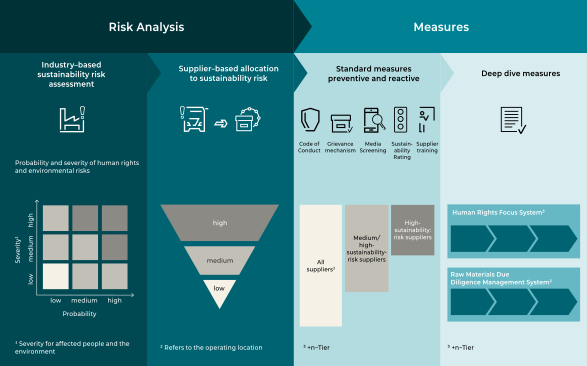
The ReSC system includes the following elements, which build on each other:
- Risk analysis: A regular risk analysis is used to identify potential negative impacts on workers at supplier level. The processes for analyzing risk represent the first step of the ReSC system. Based on the risk class determined for certain business models and countries, the supplier is assigned a package of actions to prevent and mitigate the potential negative impacts identified to enable it to be eligible for the award of contracts.
- Standard measures: These preventive and reactive actions include confirmation of the Code of Conduct for Suppliers and Business Partners by direct suppliers, the Supply Chain Grievance Mechanism (SCGM), media screening, the S-Rating, and training for suppliers and employees.
- Deep-dive measures: These include the human rights focus system (HRFS), the raw materials due diligence management system (RMDDMS), and collaboration with external partners to progress the sustainability policy in the supply chain.
Actions related to workers in the value chain
| Action | Description and time horizon | Scope | Target in place | Overall progress in 2025 and how we track effectiveness |
|---|---|---|---|---|
|
Standard measure Supply Chain Grievance Mechanism (SCGM) |
The SCGM was implemented as part of the ReSC system to systematically process reports of risks or violations. It is used to process hints of violations of the Code of Conduct for Suppliers and Business Partners by the TRATON GROUP’s direct or indirect suppliers. Part of this may also include the definition of (remedial) actions once the facts of the case have been established and the corresponding conclusions have been made, i.e., via ad hoc on-site audits. These audits can identify gaps in supplier performance as well as risks at indirect suppliers’ sites that need to be mitigated through the direct supplier. The mechanism is available via the channels of the Volkswagen Group, the TRATON GROUP, or TRATON brand whistleblower systems and is open to all potentially affected stakeholders. |
Direct and indirect suppliers Upstream and downstream supply chain |
No target has been set because it is currently not possible to define a measurable and verifiable target due to the qualitative nature of this topic. | Supplier-specific measures, defined during audits or through the SCGM (e.g., following up on reports of violations) and implemented by the supplier, are assessed for effectiveness by auditors or case handlers. This is carried out through methods such as desktop reviews or on-site follow-up audits. |
|
Standard measure Media screening |
The TRATON GROUP brands, either directly or through Volkswagen Group Procurement Sustainability, carry out continuous and risk-based media screening of relevant suppliers1 using a software tool. If the tool identifies indications of possible breaches of the Code of Conduct for Suppliers and Business Partners by suppliers in the upstream and downstream value chain, these are reviewed and, if necessary, processed in the SCGM. The media screening can identify potential breaches even if there is no direct report in the whistleblower system, or no findings are made in supplier audits. This enables these cases to be processed by the SCGM, and where necessary, remedial action to be taken. |
Direct and indirect suppliers Upstream and downstream supply chain |
No target has been set because it is currently not possible to define a measurable and verifiable target due to the qualitative nature of this topic. | In the case of media screening, it was not feasible to define suitable indicators to determine the effectiveness of this measure. |
|
Standard measure S-Rating |
The S-Rating is an established process in the brands of the TRATON GROUP. This standardized instrument is used to assess the degree to which direct suppliers with high sustainability risks and a corresponding company size comply with Volkswagen’s Group sustainability requirements. It is closely linked to the requirements of the Code of Conduct for Suppliers and Business Partners. The goal is to create transparency, verify compliance with Volkswagen’s Group sustainability standards, identify potential areas for improvement, and provide incentives for sustainable corporate governance. In 2025, the S-Rating process was fundamentally revised and reintroduced under the name “S-Rating 2.0.” The new evaluation logic distinguishes between positive and negative S-Ratings: Positive S-Rating: The supplier meets the sustainability requirements and is eligible for contract awards. A positive S-Rating is intended to demonstrate that a direct supplier, by meeting the minimum criteria of the S-Rating, has the capacity to mitigate or avoid potential negative impacts on the working conditions of its own employees, and to eliminate actual negative impacts on working conditions and other labor-related rights. Negative S-Rating: The supplier has not yet submitted the necessary documentation or has violated sustainability requirements of the TRATON GROUP. A negative S-Rating generally means the supplier is not eligible for contract awards and serves as a targeted incentive to improve sustainability performance and promote responsible business practices. The evaluation is risk-based and event-related, conducted before each new contract award. It is based on a risk analysis that considers environmental, social, and integrity aspects. TRATON draws on data from a specialized service provider to determine the country risk. Supplier evaluation begins with a Self-Assessment Questionnaire (SAQ), which captures documented processes, management systems, and relevant documents. These responses are validated by external service providers and typically adjusted based on country risk. Based on the SAQ responses, suppliers receive recommendations to improve their processes and regulatory frameworks. For certain companies, an audit (on-site inspection) by selected service providers may also be required. If discrepancies are found, the supplier must develop and implement an action plan. The effectiveness of these measures is reviewed by auditors, for example, through desktop reviews or follow-up audits. Audits are conducted based on risk. If the supplier receives a score below 100 points, they are issued a Corrective Actions Plan (CAP). The required actions are documented in the CAP, jointly agreed upon with the supplier, and subsequently monitored. If a supplier receives an audit result of less than 50 points, a follow-up audit will be conducted after the CAP has been implemented. In addition to SAQ and audits, other instruments — such as the SCGM or specification-specific requirements (e.g., through RMDDMS) — influence the S-Rating and thus the supplier’s eligibility for contract awards. |
Direct suppliers Upstream and downstream supply chain |
Long-term goal: By 2040, more than 95% of relevant Volkswagen Group direct suppliers, based on turnover, should have a positive S-Rating. Interim goal: For the reporting year 2025, an interim target of 85% for the Volkswagen Group was defined. TRATON brands are contributing to this target, but a target feasible specifically for commercial vehicles is currently being evaluated. The target is directly linked to the Group’s sustainability goals, as a positive S-Rating shows that suppliers meet sustainability requirements and thereby reduce or avoid negative impacts on working conditions and work-related rights. The interim target was defined by a cross-functional working group based on feasibility analyses and internal benchmarking. Workers in the supply chain or their representatives were not directly involved in the target-setting process. |
The target has not been adjusted since the goal was defined. The underlying methodology for calculating the associated KPI was revised and updated as part of the introduction of S-Rating 2.0, expanding the supplier base covered and the assessment logic. This methodological change improves transparency and harmonization across brands, but affects comparability with previous evaluations. The revised method for calculating the KPI will be implemented gradually to ensure consistency across all brands. Performance is continuously monitored at brand level using internal systems that aggregate supplier S-Rating data. Although no direct employee integration into tracking has been established, the system takes supplier feedback and audit results into account when assessing effectiveness. The results are regularly reviewed and analyzed for significant trends to support targeted supplier outreach and improvements. In 2025, the share of supplier sales revenue with a positive S-Rating at TRATON was 85%. As 2025 is the first year using the revised methodology, the reporting year serves as the baseline for future tracking. |
| Standard measure Sustainability training for employees in procurement | Sustainability is an integral part of the skills profile for employees in procurement, deeply embedded not only in individual competencies related to the core focus areas of sustainable procurement, but also in the organizational culture. Systematic training of TRATON’s employees is essential for improving sustainability in the supply chain. | TRATON GROUP buyers globally | No specific target has been defined at this stage due to ongoing data validation and evolving standards. The focus is on continuously enhancing the internal training portfolio. | In 2025, training courses on sustainability for procurement were performed by the brands and attended more than 1,817 (previous year: 363 attendees) times worldwide. The significant increase is primarily attributable to major training events at MAN and Scania. To date, no monitoring of effectiveness in relation to working conditions and other work-related rights has been implemented. |
| Standard measure Sustainability training for suppliers | To enable continuous supplier development, the TRATON GROUP brands in collaboration with Volkswagen Group conduct topic-specific sustainability training and workshops with suppliers at selected locations or online. They also offer web-based training courses, including on S-rating and the Code of Conduct for Suppliers and Business Partners. Since 2023, an in-depth human rights training has been rolled out to suppliers with a high sustainability risk. The training includes legally required aspects such as training on child labor, forced labor, and discrimination. In addition to the training courses, TRATON provides current suppliers with an e-learning module on sustainability in eight languages. |
Direct suppliers Upstream supply chain |
No specific target has been defined at this stage due to ongoing data validation and evolving standards. The priority is to continuously enhance the external training portfolio. | In 2025, 600 (previous year: 733) suppliers were trained accordingly. To date, no monitoring of effectiveness in relation to working conditions and other work-related rights has been implemented. |
|
Deep-dive measures Raw materials due diligence management system (RMDDMS) |
Regarding the responsible sourcing of raw materials, TRATON as part of the Volkswagen Group RMDDMS follows the approach on the five steps of the OECD Due Diligence Guidance for Responsible Business Conduct and the requirements of the OECD Due Diligence Guidance for Responsible Supply Chains of Minerals from Conflict-Affected and High-Risk Areas. This management system serves to identify, assess, and implement mitigation actions. In total, it currently covers 18 raw materials. These include the battery raw materials cobalt, lithium, nickel, and graphite, the conflict minerals tin, tungsten, tantalum, and gold (3TG), and aluminum, copper, leather, mica, steel, natural rubber, platinum group metals, rare earths, cotton, and magnesium. With this risk-based approach, the TRATON GROUP, as part of the Volkswagen Group, prioritizes its activities based on the severity and likelihood of the infringement and the ability to influence it. Audits are one of the key tools used to assess risks in the upstream supply chains and identify mitigation measures. They are utilized alongside other tools used for raw material due diligence and help promote transparency, compliance, and a culture of continuous improvement and dialog throughout the supply chain. RMDDMS mitigation measures are implemented by TRATON brands in a way that corresponds to their business. Some TRATON brands implement additional measures tailored to their specific supply chain risks and sustainability goals. |
Direct and indirect suppliers Upstream supply chain |
No target has been set because it is currently not possible to define a measurable and verifiable target due to the qualitative nature of this topic. | In the RMDDMS, measures are considered effective if they help improve living conditions or protect the environment. Each measure is assigned a timeline and success indicators upon selection, with results feeding into the annual risk analysis for 18 high-risk raw materials. To date, no monitoring of effectiveness in relation to working conditions and other work-related rights has been implemented. |
|
Deep-dive measure Human rights focus system (HRFS) |
Within the sustainable supplier management, TRATON as part of the Volkswagen Group is also involved in protecting groups of people who may be affected by negative impacts along the upstream and downstream supply chain. To achieve greater impact here, Volkswagen Group introduced the HRFS. TRATON brands as part of Volkswagen Group use the HRFS in a way that corresponds to their business to identify topics that may be associated with human rights and environmental risks. These topics require more in-depth analysis and are continuously addressed. The tools and actions implemented in the HRFS are intended to minimize and stop identified negative impacts on value chain workers. Simultaneously, the aim is to promote positive impacts on these workers. |
Direct suppliers Upstream and downstream supply chain |
No target has been set because it is currently not possible to define a measurable and verifiable target due to the qualitative nature of this topic. | As of the reporting year, no measurement for tracking the effectiveness is in place. |
| Human rights salience assessment (not part of the ReSC system) | To understand the TRATON GROUP’s human rights and social risk profile and increase the readiness and ability of the key decision-makers to consider human rights in TRATON’s sustainability and business strategy, the TRATON GROUP commissioned an external consultancy to conduct a human rights salience assessment in 2023-2024. The salience assessment identifies and prioritizes human rights risks from the perspective of rightsholders prior to any management effort. It covers the TRATON GROUP’s value chain across its brands including TRATON’s own operations, supply chain, distribution, and sales networks, as well as customers and end-users. The salience assessment methodology on negative impacts is aligned with the United Nations Guiding Principles on Business and Human Rights considering the four criteria of scope, scale, remediability, and likelihood. In total, 18 salient human rights risks and impacts were identified, which can be split into the three categories labor and workforce; product, customer, and end-users; and cross cutting and emerging themes. |
Upstream and downstream supply chain TRATON GROUP |
No target has been set because it is not possible to define a measurable and verifiable target due to the qualitative nature of this topic. | The human rights salience assessment served as a basis for the DMA and will inform further actions around managing IROs related to value chain workers. As a next step, the TRATON GROUP will start a new human rights program. In 2025, no measurement for tracking the effectiveness was in place. |
1 The relevance of a supplier for media screening results from factors including the procurement volume or the risk exposure derived from the type of product or service.
Road safety
Countless people come into contact with the TRATON GROUP’s products and services on a daily basis. TRATON gives the highest priority to the security and safety of its products. Through the DMA, the company identified potential negative and positive impacts related to the entity-specific issue of road safety. The following section outlines the approach of the TRATON GROUP to managing material impacts related to road safety across the value chain.
Impacts, risks and opportunities related to road safety
| Sustainability matter | IRO category | Time horizon | Scope | Description |
|---|---|---|---|---|
| Road Safety (entity-specific sub-topic) | Potential negative impact | Short-term | Downstream | Impact of traffic accidents on road users. |
| Potential positive impact | Short-term | Downstream | Increasing safety features in the products and promoting safe road use. | |
Approaches and policies
The TRATON GROUP Policy on Product Safety and Conformity is related to the potential negative impact on people from traffic accidents and the potential positive impact by increasing the safety features in products and promoting safe road use. The Policy plays a key role, especially in ensuring the personal safety of customers, the environment, and society in general. It is strongly aligned with the corresponding Volkswagen Group policy and sets consistent standards across the Group to meet legal requirements and fulfill the TRATON GROUP’s commitment to responsible product stewardship. A system for actively and passively monitoring products placed on the market must be maintained, and any risks associated with these products must be prevented as far as reasonably possible.
Road safety policy
| Name of policy | Key contents and objective | Scope | Responsible organizational level and monitoring process | Availability of the policy for stakeholders |
|---|---|---|---|---|
| Product Safety and Conformity (Group policy) |
The Product Safety and Conformity policy established consistent standards for the TRATON GROUP. It is closely aligned with the Volkswagen Group’s policy. It stipulates that TRATON entities bringing products to market adhere to the organizational and procedural frameworks and aims to ensure that in-the-field identified risks against safety and/or conformity are detected, assessed, and appropriately mitigated. Additionally, the policy specifies multi-brand collaboration among the TRATON brands. It sets consistent, Group-wide standards in accordance with the TRATON GROUP’s module and component strategy, facilitating the coordination of necessary measures across the entities within the TRATON GROUP. As a commercial vehicle manufacturer, TRATON strives to manufacture products of the highest possible quality. However, sustained success is possible only if integrity — in other words, activities conforming to statutory requirements and driven by a commitment to values — forms the basis for day-to-day activities. It further maintains a system for active and passive product surveillance monitoring for the products that it releases on the market. Finally, TRATON aims to avert hazards and danger to life and limb arising from such products as far as it is reasonably able to do so. |
TRATON GROUP | The monitoring process for this policy is described in detail in the following in the Actions related to road safety table. | Access via intranet |
Process for Safety-Conformity-Related Matters
If a case has the potential to be safety- and/or conformity relevant, the Product Safety Committee at the respective manufacturing entity must be consulted in accordance with Group regulations. The Product Safety department then determines the necessary and appropriate actions to restore the safety and conformity of products on the market. These actions may include recall campaigns, workshop service actions, warranty extensions, or production halts.
Any indications of safety- and/or conformity relevant issues identified through passive or active product monitoring are analyzed in detail. Once the Product Safety Committee approves a measure, its implementation is initiated and coordinated by the respective brand’s field quality and service organization, which reports to the Product Safety Committee on timing and progress.
The effectiveness of each measure is tracked through ongoing product monitoring and evaluated based on the implementation rate.
All decisions and measures approved by the Product Safety Committee are binding for all relevant departments. The Product Safety Committee office monitors the timely execution of these measures and, when necessary, reports the status back to the Committee. This includes input from departments such as Technical Development and Production, and considers factors like frequency of occurrence, root cause, affected components, and other impacted Group models.
Cybersecurity Management System
The brands use a variety of automotive management systems for motor vehicles to address the cybersecurity of their vehicles.
Potential risks are analyzed during development and mitigated using appropriate state-of-the-art solutions. Tests uncover remaining weak spots and help to close them before starting production.
To effectively respond to new cybersecurity risks, ongoing risk assessments are maintained by the brands and different monitoring procedures were implemented. Continuous monitoring includes internal sources, like the analysis of vehicle data, and external sources, like the screening of the web by a threat intelligence service provider. These measures enable the brands to detect new cybersecurity vulnerabilities and cyberattacks on TRATON GROUP products (also known as incidents). Vulnerability and incident management processes on brand and VW Group level ensure an appropriate and prompt response.
If necessary, suitable countermeasures will be rolled out in the field via the known channels like over-the-air updates or field campaigns.
Actions
The following actions highlight the TRATON GROUP’s ambition regarding road safety.
Actions related to road safety
| Action | Description and time horizon | Scope | Target in place | Overall progress in 2025 and how we track effectiveness |
|---|---|---|---|---|
| Monitoring and management of product safety and conformity | The brands of the TRATON GROUP placing products on the market are committed to maintaining robust systems for both active and passive surveillance of products released on the market to prevent potential hazards. As soon as indications of potential safety and/or conformity-relevant deviations are identified, this information must be immediately subjected to a more detailed technical analysis and, if necessary, a risk assessment to introduce any necessary measures. For managing such procedures, designated committees are installed within the brands. This is a recurring action. | TRATON GROUP | No | Regular internal audits are conducted to ensure that all actions required by the product safety and conformity policy are complied with and effective. To this end, at least 5% of the new cases of suspicion of non-conformity or lack of safety added since the last audit should be audited in each calendar year. |
| Scania Zone | Scania Zone is a position-based service for vehicles that allows geographic conditions to be set to restrict speed in certain areas. It is managed in Scania’s digital ecosystem My Scania and the applications Scania Driver app and Scania Fleet app. | Scania’s L, P, G, R and S cabs as well as the CrewCab models | No | |
| Fédération Internationale de l’Automobile (FIA) Road Safety Index. | As part of Scania’s ambition to drive the shift towards zero accidents, Scania has completed the first three steps of the FIA Road Safety Index — Value Chain Analysis, Commitment, and Footprint — initially focusing on Scania’s global functions and the operations in Sweden. This is an important step in measuring how well Scania aligns with its ambition. | TRATON GROUP operations in Sweden | No | Scania received a 3-star rating, the highest rating awarded by a third-party certification body. This makes Scania one of the world’s leading companies and the first heavy-duty vehicle manufacturer to receive this award. |
Affected communities
The TRATON GROUP recognizes that its vehicles and operations can influence the lives of people. This section outlines how the Group manages impacts related to affected community rights and vehicle misuse, in line with the joint impact area human rights.
Impacts, risks, and opportunities related to affected communities
| Sustainability matter | IRO category | Time horizon | Scope | Description |
|---|---|---|---|---|
| Communities’ economic, social and cultural rights | Potential negative impact | Short-term | Upstream, own operations, and downstream | Harm due to inadequate protection of communities’ rights and vehicle misuse. |
Aside from the DMA, the Human Rights Salience Assessment was conducted for various groups of rightsholders. One of these groups is the local communities in the vicinity of TRATON’s sites and along TRATON’s supply chain that may be impacted by activities such as production or raw material extraction.
Affected communities in the scope of this report are all communities affected by material IROs. The following were identified as affected communities in this context:
- Rightsholders affected by crimes and illegal activities facilitated by the Group’s vehicles, such as illegal logging, mining, robberies, terrorist attacks, kidnapping, or human trafficking. These persons may experience impacts on their health, standard of living, personal safety, and life. In conflict zones, misuse of the TRATON GROUP’s vehicles may exacerbate these impacts, while in authoritarian states, it could affect political expression and personal liberty.
- Rightsholders in communities near TRATON operations or along the supply chain may face impacts from activities like mining.
- Primary users of the GROUP’s vehicles, such as drivers, may have their privacy impacted if smart systems collect data like location history or health information without consent. This also applies to connected devices and vehicle cameras.
- Drivers and passengers of TRATON vehicles may experience impacts on their right to health, safety, and life if there are accidents associated with poor product or road safety. Other rightsholders that may be involved in accidents with TRATON vehicles, such as pedestrians or passengers in other vehicles, may also experience impacts on health, safety, and life.
The material negative impacts on affected communities identified in the DMA are widespread and do not pertain to specific incidents or business relationships. The identified risk of legal and reputational harm and operational disruptions from implication in human rights violations may arise from dependencies of the TRATON GROUP on communities located near its operations or within its supply chain, potentially leading to disruptions that affect business continuity and local stakeholder relations. The material impacts in the area of product misuse are reflected in the TRATON project on conflict-affected and high-risk areas (CAHRA).
Approaches and policies
The Group’s approach to addressing negative impacts via the grievance mechanism as well as mechanisms in place to protect its users against retaliation is laid out in the section on TRATON’s grievance mechanism.
Besides the grievance mechanism, which is accessible to everyone, the TRATON GROUP has not adopted a process to engage with affected communities as of now. Until a process is in place, TRATON integrates communities’ perspectives through external research including reports, papers, and articles from NGOs, media, and other reputable organizations/experts, reflecting rightsholders’ perspectives and voices.
TRATON respects the human rights of affected communities in the same manner as TRATON respects the human rights of its own workforce and value chain workers, striving to ensure that its internal mechanism and principles are in line with the UN Guiding Principles on Business and Human Rights, ILO Declaration, and OECD Guidelines. This approach is important for communities near the Group’s operations or supply chain and communities affected by crimes and illegal activities potentially facilitated by the Group’s vehicles. Therefore, the Group’s risk analysis addresses negative impacts on local communities that may be caused by own business operations or TRATON’s suppliers. Similarly, cases of regulatory violations with negative impact on local communities that are caused by misconduct of employees or suppliers of the Group can be addressed via the relevant channels contained within the TRATON complaints procedure.
The Code of Conduct for Suppliers and Business Partners (see section Sustainability governance) requires suppliers and business partners to respect the rights of local communities to decent living conditions, including their rights to land, access to water, and other natural resources, as well as their right to practice their culture. The Policy Statement on Human Rights sets out further principles that TRATON adheres to in the context of human rights, contributing to mitigating potential negative impacts in this context.
Policy addressing affected communities
| Name of policy | Key contents and objective | Scope | Responsible organizational level and monitoring process | Availability of the policy for stakeholders |
|---|---|---|---|---|
| Export Control Policy |
The policy serves as the overarching framework for all Group entities. It defines the Group’s responsibilities and principles for complying with export control and sanctions requirements, and assigns clear accountability for their implementation. As export control laws and regulations inherently incorporate human rights considerations by prohibiting exports that could contribute to repression, conflict, or violations of international law, the Group integrates human rights protection by restricting sales to sanctioned countries, high-risk end-users, and conflict regions. These measures ensure products are used solely for legitimate civilian purposes and prevent potential misuse of products. Under the framework of the Group policy, each entity must designate appropriate governance and accountability (e.g., an export control function with defined reporting lines), perform risk-based classification of products, software, and technology, conduct screening of transactions and business partners, determine licensing needs, maintain records, and provide role-appropriate training and awareness. Brand- or country-specific procedures, work instructions, and process descriptions supplement this policy, provided they meet or exceed its requirements. The TRATON GROUP Export Control department supports the Group entities in ensuring compliance with this policy as well as with national, EU, and US regulations. Entities report to their respective Export Control function, these to the TRAON Export Control function. Moreover, reporting is annually taken to the Volkswagen Export Control department. Where necessary, qualified external parties may be considered to conduct reviews and audits. Corrective actions required to adapt export control operations or the Internal Compliance Program (ICP) based on review findings will be jointly defined and monitored by the respective brand and/or TRATON GROUP entity. All TRATON GROUP entities and their employees are required to comply with this policy. |
TRATON GROUP |
Each local brand entity involved in exports must appoint an Export Control Officer in line with the governance structure provided by the Central Brand Export Control function. Additionally, all TRATON GROUP entities nominate a member of their respective management board or board of directors to be Chief Export Control Officer and responsible for foreign trade and export control matters. The policy defines the framework for each Group entity to implement an Internal Compliance Program (ICP) including export control self-assessments as described in the table Actions addressing affected communities |
Access via intranet |
Actions
The table below outlines the actions addressing affected communities taken in 2025.
Actions addressing affected communities
| Action | Description and time horizon | Scope | Target in place | Overall progress in 2025 and how we track effectiveness |
|---|---|---|---|---|
| Project to conflict-affected and high-risk areas (CAHRA) | To address negative impacts on affected communities in conflict-affected and high-risk areas (CAHRA) caused by our own operations and those of business partners, TRATON develops its heightened human rights due diligence approach (CAHRA) project. Additionally, this action aligns with identified impacts and material topics related to upholding international standards in CAHRA. The scope of this action extends to business partners in the downstream value chain that are located in or sell to CAHRAs. In this context, input from this project could help to better understand the adverse impact of certain complaints related to CAHRAs. | Downstream | No target has been set because it is currently not possible to define a meaningful and measurable target due to the qualitative nature of this topic. | This project started in 2025 and aims to focus on sales and end-use related risks. The project facilitates risk mapping for sales and end-use risks. A due diligence process for CAHRAs is to be developed. |
| Internal Compliance Program and export control self-assessment |
The TRATON Export Control Policy establishes a binding framework and requires all TRATON brands and entities to implement an Internal Compliance Program (ICP) to ensure adherence to international legal requirements arising from trade regulations, including the U.S. Export Administration Regulations (EAR), the EU Dual-Use Regulation, and other applicable national export control laws. The ICP serves as the overarching framework for the Group. It defines the Group’s responsibilities and principles for complying with export control and sanctions requirements, and assigns clear accountability for their implementation. The scope and level of detail of each ICP shall be tailored to the commercial activities of the respective entity and will depend on factors such as its size, structure, scope of business, and customer portfolio. |
TRATON GROUP | No target has been set because it is currently not possible to define a meaningful and measurable target due to the qualitative nature of this topic. | To identify export control requirements and as part of the ICP, Group entities are required to conduct continuous export control self-assessments to identify and mitigate risks. These assessments help evaluate the effectiveness of procedures and controls in place, ensuring improvement and alignment with evolving legal requirements (e.g., in the field of sanctions). Where necessary, qualified external parties may be considered to conduct reviews and audits. Corrective actions to adopt the export control operations according to the findings of the review are monitored by the respective brand and/or TRATON GROUP entity. |
Performance
In 2025, no confirmed cases were reported of non-respect of the UN Guiding Principles on Business and Human Rights, ILO Declaration on Fundamental Principles and Rights at Work, OECD Guidelines for Multinational Enterprises, nor cases of severe human rights issues and incidents connected to affected communities.
Further aspects of the management of impacts and risks related to affected communities are described in section TRATON’s grievance mechanism. The processes described in the section Own workforce for identifying appropriate action for negative impacts are implemented across the TRATON GROUP’s operations and supply chain.
No specific measurable targets with respect to the defined affected communities have yet been established due to the need for further internal evaluation.