Report on Expected Developments, Opportunities, and Risks
1. Report on expected developments
This report describes the estimated expected development of the TRATON GROUP’s most important key performance indicators for fiscal year 2026. These estimates are based on assumptions concerning the development of opportunities and risks, the economy as a whole, and our most important truck and bus markets. The assessments presented for future development of the business are based on the targets of our segments. Developments that run counter to our assumptions and expectations may lead to corresponding adjustments to the forecast. We present risks and opportunities that could cause deviations from the forecast developments in the section Report on opportunities and risks.
Expected macroeconomic developments
We assume that the global economy will grow at a similar pace in 2026 as in the previous year. A further decline in inflation across major economic regions, coupled with continued monetary easing should positively impact consumer spending. Lower inflation and declining interest rates typically benefit the truck markets as well. We continue to believe that risks will arise from the growing fragmentation of the global economy, protectionist tendencies, turbulence in the financial, energy, and commodity markets, and structural deficits in individual countries. The growth outlook is also clouded by persistent geopolitical tensions and conflicts. Major risks include the Russia-Ukraine conflict, Middle East tensions, increasing uncertainties related to US economic policy, and rising global geoeconomic measures that may worsen geopolitical tensions. We expect the advanced economies to exhibit a similar pace of growth on average, and the group of emerging markets to grow at a slightly slower pace than in the reporting period.
Expected sectoral developments
Following a decline in the previous year, we expect our most important truck and bus markets (EU27+3, North America, and South America) to stabilize as a whole in 2026 with a positive tendency. In light of the numerous risks mentioned above, we continue to operate in a highly volatile macroeconomic environment. These risks could also significantly impact our industry.
In the EU27+3 region, we forecast a slight increase in new registrations of medium and heavy trucks (> 6t). In the North American market, we also expect a slight increase, although uncertainty is particularly high in this region as a result of the tariff policy. In South America, by contrast, we forecast a moderate decline in the truck market.
With the establishment of our new plant in Rugao, the Chinese market is becoming increasingly important for us. We anticipate a slight decline in the heavy-duty truck market (>16t) in China in 2026.
For buses, we anticipate a slight decline across our most important markets (EU27+3 region, North America, and South America) in 2026, albeit with regional variations. In the EU27+3 region, we forecast a moderate decline after a record year in 2025. We expect a noticeable increase in new registrations in North America. In South America, we forecast a substantial market decline, following a noticeable increase in the reporting period.
Foreign exchange rate developments
For 2026, we expect the euro to appreciate against the US dollar and sterling. We anticipate that the Swedish krona will move sideways against the euro. The Brazilian real and the Mexican peso are expected to devalue against the European single currency to varying degrees.
Interest rate developments
After key interest rates were cut in most major Western industrialized countries and in many emerging markets in 2025, further changes in 2026 will depend on future inflation trends and the economic developments in the countries concerned. Overall, we assume that interest rates in 2026 will be slightly lower on average than in 2025.
Forecast of the most important key performance indicators
Unit sales 2026
We forecast unit sales across all brands and all vehicle classes (including the MAN TGE) to fall within a range of –5 to +7% compared with the previous year. The range mainly arises from the high level of uncertainty and reflects various scenarios relating to the impact of tariff and industrial policy in North America, the German fiscal stimulus program for infrastructure and climate change, and the upcoming presidential elections in Brazil. Additionally, we plan for increasing unit sales in Asian markets thanks to our new production facility in China.
Sales revenue 2026
We expect the TRATON GROUP’s sales revenue and the sales revenue of the TRATON Operations business area to develop along similar lines to unit sales, in the range of –5 to +7% compared with the previous year. Within this forecast range, we stand to benefit from the resilience of the service business, expansion of the Financial Services business and an expected increase in the number of battery-electric vehicles with higher sales prices.
Return on sales 2026
For fiscal year 2026, we forecast an operating return on sales (adjusted) of between 5.3 and 7.3% for the TRATON GROUP. We plan to offset additional costs from tariffs as much as possible through mitigation and cost measures. These measures will only take effect successively over the course of the year. As a result, the operating return on sales (adjusted) in the first quarter of 2026 is expected to be below the forecast range for the full year. The forecast is based on the tariff situation prevailing at the end of 2025. For the TRATON Operations business area, we expect an operating return on sales (adjusted) of between 6.1 and 8.1%.
For the TRATON Financial Services business area, we forecast a return on equity of 8.0 to 11.0%.
Net cash flow 2026
Based on the forecast range for operating return on sales (adjusted) and taking into account higher volatility in working capital, we expect the TRATON Operations business area to generate net cash flow of between €0.9 billion and €1.7 billion for fiscal year 2026. As in the 2025 reporting period, we anticipate a positive net cash flow to materialize only in the second half of 2026.
Summary of expected developments
Compared with the previous year, the 2026 forecast reflects significantly greater uncertainty, as seen in the chosen forecast ranges of the key performance indicators. The forecast is subject in particular to geopolitical risks and unexpected impacts of US trade policy.
At the same time, the TRATON GROUP needs to invest in new products and future technologies, while implementing cost-cutting measures, to stay competitive and financially resilient.
Nevertheless, we aim to achieve results at least at the level of the reporting period. This applies in particular to the key performance indicators operating return on sales (adjusted) of the TRATON GROUP and the TRATON Operations business area, as well as net cash flow at the TRATON Operations business area.
| Actual 2025 | Forecast 2026 | |
| TRATON GROUP | ||
| Sales (units) | 305,486 | –5 to +7% |
| Sales revenue (€ million) | 44,052 | –5 to +7% |
| Operating return on sales (adjusted) (in %) | 6.3 | 5.3 to 7.3 |
| TRATON Operations | ||
| Sales revenue (€ million) | 42,536 | –5 to +7% |
| Operating return on sales (adjusted) (in %) | 7.3 | 6.1 to 8.1 |
| Net cash flow (€ million) | 1,643 | 900 to 1,700 |
| TRATON Financial Services | ||
| Return on equity (in %) | 8.0 | 8.0 to 11.0 |
2. Report on opportunities and risks (contains the report required by section 289 (4) of the HGB)
The TRATON GROUP is exposed to numerous risks in a wide range of categories. Entrepreneurial risks are acceptable to a reasonable extent, but they need to be managed effectively and controlled with appropriate risk response measures. Risks that pose a threat to the continued existence of the TRATON GROUP or any TRATON brand must be avoided.
In this context, the term “risk” describes the possibility of events or developments occurring that may — individually or together with other circumstances — have a significant effect on achieving the TRATON GROUP’s targets, plans or strategies. Risks with a positive effect are referred to as “opportunities.” In addition, risks to society and the environment are taken into consideration, which relate to the aspects presented in the Group Sustainability Report. Such risks may impact TRATON’s business activities, society, and the environment, or a combination thereof. Risks arising from the supply chain and the use of TRATON’s products and services are also included.
The TRATON GROUP promotes a risk awareness culture that is characterized by transparency and encourages people throughout the Group to address and manage risks openly. Transparency is fundamental for dealing effectively with risks and avoiding blind spots, in other words, risks that remain undetected and therefore are not addressed properly.
TRATON is a dynamically evolving company that is characterized by various transformation projects (e.g., formation of Group Industrial Functions, expansion of TRATON Financial Services, development of the TRATON Modular System). To address these changes, the TRATON GROUP continuously reviews and enhances its risk management and internal control systems in order to ensure effective and uniform minimum standards across the whole TRATON GROUP.
Risk management organization
The Executive Board of TRATON SE holds the ultimate responsibility for implementing and monitoring effective risk management in the TRATON GROUP. In order to fulfill this obligation, the Executive Board provides strategic focus, takes decisions on major risk management matters, and acknowledges TRATON GROUP’s significant risks. Furthermore, the Executive Board provides summarized information to the Audit Committee and Supervisory Board of TRATON SE so that these can fulfill their oversight role.
The mandate to develop the Group’s risk management framework has been assigned to the Governance, Risk & Compliance (GRC) function at TRATON SE. Together with the corresponding functions in the brands, it is responsible for designing, implementing, and coordinating the respective processes across the TRATON GROUP.
As a principle, all managers across the organization have a responsibility to manage risks within their area of responsibility (risk ownership). As soon as these risks fulfill the relevant reporting criteria and thresholds, they must be reported openly and promptly along the defined reporting channels and additionally to the respective risk management function.
The TRATON Audit function provides independent assurance about the effectiveness and efficiency of the TRATON GROUP’s risk management activities.
Risk management framework
The TRATON risk management framework covers several risk and control related processes within the TRATON GROUP and shows how these correlate. The framework addresses relevant legal requirements and further makes reference to generally accepted principles defined by external framework and standard setters (e.g., COSO, ISO).
The purpose of risk management at TRATON is to define binding minimum standards for effective risk management across the whole TRATON GROUP. It provides a transparent description of the current TRATON risk exposure and ensures that clear responsibilities are allocated for all relevant risks. In general, all processes included in the framework follow the same generic cycle:
- Identify relevant risks that affect the business, society, or the environment
- Assess and prioritize relevant risks based on financial effect, likelihood, and further criteria
- Respond to risks by implementing appropriate risk responses (e.g., controls or action plans)
- Report to management on the company’s risk status
- Monitor the company’s risk status and the effectiveness of risk response measures
The risk management framework deals with risks in a narrower sense, thus without considering opportunities. Instead, for external reporting purposes opportunities are collected periodically from dedicated functions, especially Controlling, Sustainability and Strategy.
Risk management processes
Enterprise risk management (ERM)
The ERM process is designed to provide management with transparency regarding the TRATON GROUP’s current risk exposure. To achieve this, it focuses on concrete risks which, isolated or in combination with other risks, may have a significant effect on TRATON and its Brands’ strategies, plans and objectives or on society and the environment. ERM encompasses all organizational rules and measures to identify and assess such concrete risks from a broad range of categories. It helps management to ensure that all relevant risks are clearly assigned to an owner and to monitor the implementation of appropriate measures. ERM serves as the core process for satisfying a variety of internal and external reporting obligations, as outlined in the related chapters below.
It should be noted that ERM and Double Materiality Analysis (DMA) (for more information, refer to the Sustainability Report) are separate processes. Interfaces between ERM and DMA have been defined to combine information gained through both processes. The impacts, risks, and opportunities identified in the DMA are incorporated into the ERM process. Conversely, the results of the ERM process are considered when updating the DMA.
Risks are assessed on a net basis in terms of their probability of occurrence and financial effect, which already factors in any implemented risk response measure. The assessment also covers the qualitative criteria of reputational loss, effect on legal and compliance, and effect on society and the environment. A risk score is calculated from the quantitative and qualitative criteria. Risks are ranked according to this risk score, if necessary, considering an additional professional judgement by management.
For risk aggregation purposes, the two quantitative criteria of probability of occurrence and financial effect are used. TRATON uses a Monte Carlo simulation to analyze the aggregate effect of the risks on its financial position. The expected maximum loss at a defined confidence level (value-at-risk) is then compared with the Group’s risk-bearing capacity. Risk-bearing capacity is defined as recognized equity plus the planned financial result after tax of the TRATON GROUP. The outcome of this comparison is included in the overall assessment of the TRATON GROUP’s risk and opportunity position.
Internal control system (ICS)
The ICS is a recurring process for managing and monitoring systemic or inherent risks at process level. It covers all prescribed procedures, methods, and measures that serve to provide reasonable assurance regarding the reliability of financial reporting and selected compliance topics (e.g., anti-corruption, antitrust law, tax compliance, product compliance) as well as reliance regarding sustainability reporting. ICS as a process comprises the selection of entities to be included (scoping), the risk-based selection and documentation of relevant control activities, assessment of control design and operating effectiveness, remediation of identified control deficiencies, and management reporting.
In response to the European Union’s (EU) Corporate Sustainability Reporting Directive (CSRD), TRATON already implemented internal controls for sustainability reporting as well during 2024. During fiscal year 2025, the project to further improve controls in the area of sustainability reporting was continued. The focus was increasingly placed on the risk-based control approach, which will be implemented in the coming years.
Risk reporting
The Executive Board, the Audit Committee, and the Supervisory Board of TRATON SE are informed regularly about the TRATON GROUP’s risk position and risk management. The same applies to the executive and supervisory bodies of the TRATON brands and Group companies.
On behalf of TRATON SE’s Executive Board, the TRATON Governance & Risk Board (GRB) deals with risk management, internal controls, and other related topics within the TRATON GROUP on a quarterly basis. During the reporting year, the board was re-named to TRATON Risk & Control Board (RCB). The RCB is hosted by the GRC function and is composed of the Chief Financial Officers of TRATON SE and the brands as well as other managers from the levels below the Executive Board.
In addition to the criteria for regular risk reporting processes, criteria have been defined across the TRATON GROUP for when an urgent risk notification to the Executive Board is required. That is the case if a new risk emerges that may have a material impact on the TRATON GROUP’s targets, or if an already reported risk increases significantly.
Finally, TRATON satisfies several other internal and external reporting requirements. These include risk reporting to Volkswagen AG and external risk reporting in the Combined Management Report of the statutory financial reporting.
Appropriateness and effectiveness of risk management
Monitoring the appropriateness and effectiveness of risk management, in particular the ERM and ICS processes, is one of the core tasks of the RCB. It collates and evaluates relevant information that allows conclusions to be drawn on the appropriateness and effectiveness of risk management. This includes findings from internal and external audits, results from control evaluations as part of the ICS and status reports on risk management projects. If weaknesses are identified, the RCB initiates appropriate corrective measures and monitors their implementation. The results are integrated into the reports to the Executive Board, Audit Committee, and the Supervisory Board of TRATON SE.
Based on the measures described above for monitoring the appropriateness and effectiveness of risk management, the company is not aware of any evidence that would indicate any material weakness in risk management. It should be noted that even an appropriate, effective risk management system cannot offer any absolute certainty that all relevant risks will be identified in good time and will be mitigated by suitable measures and controls.
Main characteristics of the internal control system for financial reporting
The TRATON GROUP’s internal control system is designed, among other things, to provide reasonable assurance that TRATON’s consolidated financial statements are accurate, in other words without material errors or omissions. The internal control system for sustainability reporting was introduced in 2024. Given the recent developments in the relevant legislation, the desired future level of reliance is being reviewed.
As sustainability reporting is expected to become more mature over the coming years, TRATON is striving to gradually improve the level of reliance that is ensured also by controls. At TRATON SE, the Accounting and ESG functions prepare the consolidated financial and sustainability statements, respectively. The two functions are responsible for TRATON’s frameworks for financial reporting and sustainability reporting, respectively. Among other things, these include reporting manuals, policies, definitions of procedural instructions, and internal controls. Furthermore, both functions monitor legislative requirements relevant to their area of responsibility and review the consistency and continuity of financial and sustainability reporting across the TRATON GROUP.
To ensure the validity of financial reporting, typical control mechanisms are systematically applied to all relevant processes, in particular comprehensive verification and review mechanisms, approval hierarchies, segregation of duties, and the four-eyes-principle. For sustainability reporting, typical control mechanisms are systematically applied to processes of data collection and data aggregation, such as comprehensive plausibility checks, review mechanisms, and approval hierarchies. Since financial reporting and consolidation rely heavily on the use of information technology, appropriate IT controls are in place for all relevant systems, e.g., access controls, backup/recovery procedures, and change management, including controls over external service providers. For sustainability reporting, TRATON expects greater reliance on information technology in the future and will use IT controls to mitigate the underlying risks. The TRATON GROUP’s internal control system for financial reporting not only covers accounting at TRATON SE but also includes other functions and subsidiaries where material reporting-relevant information is generated. The internal controls for sustainability reporting cover not only the ESG activities of TRATON SE, but also other functions at Group level in which material information on sustainability reporting is consolidated and reported. Consolidation and aggregation of data relevant for sustainability reporting is also monitored by controls at brand level.
The effectiveness of the internal control system for financial reporting is assessed at least annually during the ICS process. The implementation status of the internal controls for sustainability reporting in fiscal year 2024 was tracked and documented. In the course of an ongoing CSRD ICS project, a continuous evaluation approach for internal controls over sustainability reporting has been implemented for the 2025 reporting year. This first control evaluation will be performed in the period of Q4 2025 to Q2 2026. Any identified control deficiencies are centrally monitored until remediation measures have been implemented.
Opportunities and risks
Significant opportunities and risks that may have an effect on the TRATON GROUP’s net assets, financial position, and results of operations, as well as on society and the environment, are classified into five categories: Strategic Risks, Market Risks, Operational Risks, Legal & Compliance Risks, and Financial Risks.
Strategic risks
The TRATON GROUP’s strategy, the TRATON Way Forward, is based on the long-term vision of how TRATON will manage the growing importance of sustainability, decarbonization, and digital transformation, and hence the resulting changes expected in the transportation and logistics industry. This strategic framework aims to leverage the opportunities resulting from these changes. TRATON is committed to operating sustainably and responsibly at all times, irrespective of individual corporate decisions.
The TRATON Way Forward consists of four elements. The elements are: (1) Responsible Company; (2) Value Creation; (3) TRATON Accelerated!; and (4) Strategy Execution & Governance. Implementing these elements is associated with various opportunities and risks.
1. Responsible Company
Commercial vehicles are subject to increasingly rigorous environmental requirements and other regulations worldwide. The goal of climate neutrality by 2050 defined in the European Green Deal for the 27 member states of the EU and the associated ambitious CO2 reduction targets (general reduction of CO2 emissions in the EU by at least 55% by 2030 vs. 1990 and by 90% by 2040 vs. 1990) poses a significant challenge for TRATON and the entire transportation sector. In mid-2024, for example, the European Union set new ambitious targets for manufacturers of heavy-duty commercial vehicles such as the TRATON GROUP to reduce CO2 emissions in Europe in the course of two decades in the new Regulation (EU) 2024/1610 (CO2 regulation). The target set for 2025 of reducing CO2 emissions from heavy-duty commercial vehicles with more than 16 tons by 15% is already in force. In 2024, however, the EU increased its reduction target from 30 to 45% by 2030, and set targets for commercial vehicles of 65% by 2035 and 90% by 2040. The targets are based on a benchmark from the period July 2019 to June 2020. In addition, these targets have been extended to other commercial vehicle sub-groups. This concerns medium and heavy commercial vehicles over 5 tons, including interurban buses and coaches. Some special vehicles will continue to be exempt. To stimulate faster deployment of zero-emission city buses, the EU has further decided that all new city buses must be zero-emission starting in 2035, with an interim target of 90% in 2030. If these emissions targets are not met, there are to be penalties of €4,250 for every gram of CO2 emitted per ton-kilometer (tkm) that exceeds the limits starting in 2025. The new Euro 7 emissions standards to limit harmful pollutants such as nitrous oxide (NOx) or particulate matter from vehicle exhaust gases have been agreed in the EU. The corresponding law was published in May 2024. The final text is very challenging in terms of both limit values and testing methods. Many technical details remain to be set in so-called secondary legislation.
In the USA, the current administration’s move to roll back federal emissions standards for medium and heavy-duty trucks presents significant regulatory and market risks. At the core of this reversal is the proposed repeal of the 2009 Endangerment Finding, the legal basis for the U.S EPA’s regulation of greenhouse gas (GHG) emissions under the Clean Air Act. This repeal will eliminate the agency’s authority to regulate vehicle GHG emissions, disrupting long-term compliance frameworks. In parallel, the US administration has advanced proposals to rescind the Greenhouse Gas Phase III standards and reconsider NOx emissions limits under EPA’s 2027 rulemaking. These actions may loosen short-term compliance obligations, but will also increase the probability of future regulatory reversals and litigation-driven policy reinstatements. The administration has also invoked the Congressional Review Act (CRA) to overturn California’s Clean Air Act waivers, which enables it and other “Section 177 states” to adopt stricter vehicle emissions standards. These rollbacks are under legal challenge, and their outcomes could redefine the balance of state and federal regulatory authority — introducing years of policy uncertainty. Collectively, these measures represent a dramatic shift in US climate and emissions policy. This transition increases regulatory volatility, exposure to stranded asset, and potential misalignment with global sustainability trends, particularly to the extent that Mexico, Canada, the EU, and Asian markets maintain or tighten emissions requirements.
In Brazil, TRATON is affected by the CO2 reduction and energy efficiency program, which is based on European directives and the VECTO program for calculation. The program, following an adaptation to Brazilian conditions, will be finalized by December 2026. Targets are scheduled to be established in early 2029, with vehicles expected to meet them starting in 2033. The city of São Paulo, which is a benchmark for other cities in the country in decarbonization initiatives, remains committed to meeting the legal requirement to eliminate the use of fossil fuels by 2038 in some transportation sectors. Currently, in terms of the vehicle applications under the city’s control, the focus is on urban buses, which have aggressive targets for replacing their fleet with pure electric vehicles. Another topic under discussion in Brazil is the consideration of the entire product life cycle. The corresponding requirements are scheduled to come into force in 2027.
Along with other important markets in which the TRATON GROUP sells its products, in 2023 China set the China 6 (CN 6) emission standard for reducing pollutions for all heavy-duty commercial vehicles. Also, China introduced new Stage IV Fuel Consumption Limits in July 2025, as well the New Energy Vehicle Credit Policy plan, which is estimated to be implemented from 2028 to reduce CO2 emissions for all commercial vehicles. The progress of new regulation drafting, and regulation revision goes rapidly, especially on Advanced Driver-Assistance Systems (ADAS), Intelligent and Connected Vehicles (ICV) and New Energy Vehicle (NEV) areas.
Adapting commercial vehicles to new emissions standards is technologically challenging and costly, especially considering often differing regulations for CO2 and other pollutant emissions produced by combustion engines. To meet the EU, North America, Brazil, and China targets, it is imperative to deploy new technologies to reduce CO2 and other exhaust emissions. TRATON is therefore investing to a substantial extent in climate-friendly alternative drive systems, primarily battery-electric commercial vehicles.
However, the medium- to long-term transition from combustion engines to zero-emission commercial vehicles is associated with uncertainties that are reflected in various risks and opportunities. The current and future investments in battery-electric vehicles might not generate the expected income, especially in the United States market. On the one hand, the gradual, well-timed switch to battery-electric vehicles offers TRATON the opportunity to meet CO2 emissions standards worldwide, respond better and faster to customer wishes, and gain market share by entering the market at an early stage. On the other hand, the limited availability of batteries and the current higher purchase costs for battery-electric commercial vehicles represent risks to the transition to zero-emission commercial vehicles. An additional very important and necessary condition for the transition is a powerful, widespread charging infrastructure tailored specifically to commercial vehicles. To speed the market acceptance of battery-electric commercial vehicles in the European market, the TRATON GROUP has established the Milence joint venture together with Daimler Truck and the Volvo Group. This partnership aims to develop a publicly accessible, high-performance charging network for battery-electric commercial vehicles in Europe that is open to vehicles from all manufacturers. Despite the common efforts in the Milence joint venture, the development of an adequate pan-European charging infrastructure remains a challenge. Brazil faces a structural challenge in decarbonizing its transportation sector due to severe infrastructure limitations. According to the Confederação Nacional do Transporte (CNT), Brazil’s transportation federation, only about 12% of Brazil’s federal road network is paved, leaving approximately 88% unpaved or in poor condition. This will delay the large-scale deployment of electric long-haul transportation since effective electrification presupposes a robust and paved highway network capable of supporting both logistics and energy infrastructure. Despite these infrastructural limitations, Brazil has a comparative advantage when it comes to the immediate decarbonization of transportation. For example, the new Law No. 14,993/2024 (Lei do Combustível do Futuro) creates a legal framework for combustion engines that run on renewable fuels, in particular biodiesel and biomethane. In China, economies of scale created for electric vehicles present an opportunity to intensify sourcing of cost competitive parts. In addition, TRATON could potentially sell more electric vehicles in China than in Europe. This would increase the chances of achieving the CO2 reduction targets set by the TRATON GROUP. However, the imminent risk in China is that the TRATON GROUP might not be ready with a commercial product once the enabling regulatory and technological conditions are all in place.
By aspiring to be a Responsible Company, TRATON continues its aim to foster diversity and inclusion throughout the company and ensure good standards of governance and ethical conduct by its employees. During these efforts, TRATON is exposed to various challenges that may result in the company not achieving the targets it has set itself. Altogether, the company will gain access to various long-term opportunities, for example, if it succeeds in attracting investors with a strong focus on sustainability criteria.
2. Value Creation
Within the TRATON GROUP, each brand has a clearly defined strategic target return and is seeking to achieve this return by gaining market share, improving unit price realization, and enhancing efficiency. The TRATON GROUP operates in an industry where improving brand performance is crucial in order to maintain competitiveness and increase profitability. Moreover, cooperation between the brands is generating significant opportunities due, in particular, to additional economies of scale. The future success of the TRATON GROUP may be jeopardized if long-term synergies from cooperation between the brands fail to materialize and successful operational efficiency enhancements within the individual units are not achieved.
In addition, TRATON’s presence on the North American market is creating opportunities from leveraging the powerful component and technology base within the TRATON GROUP, expanding the financial services business, and further leveraging International’s dealer and service network, which is one of the largest independent networks in the North American market. However, the success of this complex and long-term process is associated with uncertainties, which are also influenced by decisions made by the current US administration.
In the course of its global expansion, the TRATON GROUP intends to close the most important gap it still has ― Asia. China is the world’s largest commercial vehicle market by volume. TRATON intends to respond to local demand through appropriate investments and market entry strategies. However, this exposes TRATON to certain risks associated with the Chinese market. These include growing geopolitical uncertainties that could lead to new trade barriers and the decoupling of economic areas. In addition, the company’s activities in China are under particular scrutiny regarding the respect for human rights. Various operational risks are also associated with investments in China, such as risks from legislation, and risks from the local market and competitive environment.
3. TRATON Accelerated!
In a world that will be shaped by electrification, autonomous driving, and connectivity, the TRATON GROUP aims to create more added value for customers in the future through new business models, solutions, and partnerships. The Group is expanding its perspective on business beyond pure transportation through an active role in shaping the transportation and logistics ecosystem of the future. Moving into new business areas such as logistics, new solutions for customers, and other digital business models entails risks for TRATON but also offers it sustainable opportunities to position itself competitively in the long term during the transformation of technologies and markets. In addition, the development of the TRATON Financial Services segment into an integrated captive Financial Services unit for the whole Group enables comprehensive financing options to meet the demand for new technologies and business models.
4. Strategy Execution and Governance
The fourth element of the TRATON Way Forward focuses on executing the strategy. The goal is to concentrate capabilities and hence strengthen the overall competitiveness by developing a Group-wide modular system with standardized interfaces for the most important technology areas (TRATON Modular System) and through closer organizational integration. TRATON laid the foundation by establishing new Group Industrial Functions for research and development and by coordinating purchasing, production, and logistics across the whole Group. If the TRATON GROUP fails in achieving the desired synergy and efficiency improvements, this could have a substantial adverse effect on its long-term business, operating result, financial position, and future prospects.
Market risks
The commercial vehicle industry is heavily influenced by economic and political conditions globally and in the TRATON GROUP’s regional and product-specific core markets. For that reason, the industry is subject to significant cyclicality. Deviations from expected developments in the economic environment and fluctuations in the business climate may result in both opportunities and risks when it comes to the demand for TRATON GROUP’s products and services.
In general, demand for commercial vehicles is highly cyclical, i.e., periods of high customer investment in commercial vehicles are typically followed by phases of reduced demand. The length, timing, and intensity of these demand cycles can vary depending on the market segment, customer group, and region. Additionally, these cycles are influenced by external political and economic factors and hence generally subject to uncertainty. Such variable demand patterns can lead to a rapid rise or fall in demand for the TRATON GROUP’s products and services. The global macroeconomic situation, which is characterized, among other factors, by growing geopolitical tensions, has led to a continuing imbalance between supply and demand.
Risks to global economic development also stem from increasing political uncertainty, protectionist tendencies, and structural deficits that threaten the development of individual advanced economies and emerging markets. The increasing ecological challenges, which affect individual countries and regions to different degrees, are another contributing factor. Inflation has recently decreased in many regions, prompting central banks to cut interest rates. The extent to which this monetary policy course will continue is uncertain. The TRATON GROUP can miss growth opportunities if it fails to expand beyond the current regional core markets. The Group could lose market share to new and existing competitors if it fails to meet customers’ and regulatory requirements alike. In case of political turmoil, it could be partially or fully shut out of important markets.
The TRATON GROUP aims to benefit from accessing growing addressable markets in emerging economies. The addressable market for western vehicle manufacturers in these markets is expected to grow as stricter regulations and emissions standards are implemented globally over the coming years. However, economic growth in some emerging markets is overshadowed, in particular, by dependency on energy and commodity prices, a shortage of capital imports, as well as by socio-political tensions, conflicts, corruption, inadequate government structures, and a lack of legal reliability. Increasing competition from non-western manufacturers, especially from China, adds to the difficulty in gaining market share in emerging economies.
Geopolitical tensions and conflicts, such as the war in Ukraine, tensions between China and Taiwan, and the conflict in the Middle East, as well as signs that the global economy is becoming increasingly fragmented are additional material risk factors for the development of individual countries and regions. In addition, the tensions between the USA, the EU, China and other countries on trade barriers, including national protective measures (e.g., increased tariffs imposed by the US Administration or any potential retaliatory measures worldwide) may lead to considerable risks that could adversely affect the TRATON GROUP’s operations. These are increasingly leading to sanctions, tariff barriers, and other protectionist obstacles to trade. Considering the existing strong global interdependence, local developments may also negatively impact the global economy. The same applies to violent conflicts, terrorist activities, cyberattacks, and the spread of infectious diseases, which may prompt unexpected, short-term responses from the markets.
International’s business in North America gives the TRATON GROUP access to a large, high-margin part of the global transportation market. This opens additional growth potential for the TRATON GROUP and ensures a better balance between regional market developments in the cyclical commercial vehicle industry. In addition, International Motors has substantial growth opportunities in its primary North American markets if the International brand can progressively restore its market share to the levels seen in the past. However, increased tariffs or other protectionist measures introduced by the USA, or any retaliatory measures may have a significant influence on this market development, which is why the TRATON GROUP is monitoring them closely.
The TRATON GROUP is subject to intense competition, which may increase further in the future, e.g., as a result of new competitors entering primary markets. TRATON GROUP’s future success depends on the Group’s ability to address the key factors of competition in the commercial vehicle industry. These are, in particular, its innovative capacity, which has a positive effect on the total cost of ownership of TRATON GROUP products, the ability to address specific customer needs with tailored solutions such as after-sales and financing services, and the availability of technological innovations that drive major trends in the industry (i.e., alternative drives, connectivity, and autonomous driving). If the TRATON GROUP fails to successfully compete in changing markets, this may result in pricing pressure, loss of sales revenue, and lower margins.
The TRATON GROUP can address the fluctuation in the demand for its products with flexible production and labor concepts, among other measures. Furthermore, the international footprint of the TRATON GROUP helps to buffer market volatility that is limited to specific regions, at least to some extent. As a further option, we may implement structural adjustments if a market downturn cannot be addressed by temporary measures. Such adjustments may involve substantial nonrecurring expenses.
Operational risks
The TRATON GROUP’s future success depends on its ability to correctly assess and respond to the industry’s major trends with innovative, commercially attractive products, technologies, and services. Furthermore, growing climate and environmental awareness, increasingly strict energy efficiency and exhaust emissions regulations have resulted in a shift towards the development of commercial vehicles with alternative drive systems, and vehicles powered by alternative fuels or electricity. Timely innovations in disruptive trends like autonomous driving, digital connectivity, and electric powertrains provide business opportunities. Therefore, the TRATON GROUP is investing substantially in research and development. This may also involve partnerships and cooperation with suppliers or other organizations outside TRATON GROUP’s core competencies.
The development of new products involves large and complex projects that are subject to various risks. These may result from several factors, including inaccurate assumptions with respect to planning and implementation costs, unexpected technical challenges, weaknesses in project design and management, or poor performance of third-party suppliers and partners. These factors, if they materialize, could result in cost overruns, delays in new product launches, delivery delays, quality issues, and damage to customer relationships. Substantial risks relating to the delayed ramp-up of sales of BEVs could lead to risks of TRATON’s product portfolio not meeting the CO2 and other emission regulations. To address these risks, the TRATON GROUP and its brands have set up a strategic planning process based on an analysis of trends in the market and business environment. The resulting product plans are used to manage TRATON GROUP’s extensive research & development activities.
As commercial vehicle technology becomes increasingly complex, the risks from vehicle defects, cybersecurity and quality issues generally rise. Substandard quality may result in manufacturers’ guarantee, statutory warranty, and ex gratia repair costs as well as the loss of market share or lower product margins. Moreover, if security issues arise, the software included in vehicles could impact the functionality of vehicles and jeopardize the safety of vehicle users and other traffic participants. The TRATON GROUP and its brands have implemented dedicated management systems aiming to prevent such risks (Cyber Security Management System and Software Update Management System). However, in severe cases, TRATON may be exposed to product recalls as well as product liability and compensation claims. Alternatively, superior product quality may strengthen the company’s positioning within the competitive environment.
The impact of these factors may be further increased as the TRATON GROUP employs a modular system concept in the production of its vehicles. The Group’s risk exposure with respect to product defects is further amplified because individual components are used in several vehicle types, models and brands. Conversely, the Modular System opens up various opportunities for the TRATON GROUP. These include economies of scale in production and procurement, as well as a better distribution of development costs.
In order to maintain high quality standards for its products and comply with government-prescribed safety and other standards, the company incurs costs for monitoring, certification, and quality assurance. The TRATON GROUP has implemented a comprehensive quality management system that begins at the product gestation stage and extends to manufacturing, suppliers, and in-life monitoring of the entire Group’s products. Furthermore, TRATON generally records warranty provisions in its accounts based on past experience, known claims as well as technological progress and solutions for known quality issues.
A lack of availability of bought-in components, for example semiconductors, and increasing costs for energy and certain raw materials such as rare earth elements can lead to significant uncertainties for the TRATON GROUP. If suppliers are unable or unwilling to fulfil delivery obligations, for example due to supply shortages, tariffs, trade or regulatory barriers, labor strikes, capacity allocation to other customers, or financial distress, the TRATON GROUP would face risks of production downtimes and inventory backlogs. Moreover, any escalation of regional conflicts could trigger further disruptions in global supply chains and energy and commodity markets. TRATON has intensified monitoring of its supplier network as it relies heavily on the timely delivery of high-quality materials and components by its suppliers.
In addition, the TRATON GROUP’s corporate responsibility to respect human rights and the environment is anchored within its own business area and within the business relationships in its sphere of influence. TRATON’s Policy Statement on Human Rights outlines its commitment to comply with applicable national and international human rights legislation. However, due to the TRATON GROUP’s international business activities, risks in this regard cannot be completely ruled out.
The TRATON GROUP’s success depends on the uninterrupted operation of its manufacturing activities. Unforeseen disruption of a production facility represents a risk and may be caused by a number of incidents — for example maintenance outage, power failure, equipment failure, fires, floods, social unrest or terrorist activity, labor difficulties, risks to public health, or other operational problems. Furthermore, accidents or technical faults in production facilities may cause hazardous substances to contaminate water, soil, and air. The TRATON GROUP has taken a variety of preventive and detective measures to mitigate these risks. These measures include preventive plant maintenance and servicing, regular checks by qualified personnel, on-site inspections, risk avoidance plans, hazardous substance management, and plant fire departments.
Due to the high level of competition in the commercial vehicle industry, efficiency improvements and cost savings are crucial to maintain competitiveness and profitability. The TRATON GROUP is focusing on significant long-term synergies from Group-wide cooperation initiatives in the areas of procurement, modularization of parts and components, shared drive platforms, new technologies, production and logistics sites, and research and development. Furthermore, TRATON has operational efficiency initiatives in place for each of its brands. However, there can be no assurance that these programs will yield the targeted improvements permanently, or that they will not entail higher implementation costs than expected.
The TRATON GROUP’s business processes rely heavily on information technology. As well as opportunities for improving the efficiency and effectiveness of TRATON’s operations, this also gives rise to risks. Parts of the infrastructure may fail as a result of accidents, disasters, technical damage, outdated technology, or cyberattacks, thereby impairing business processes or bringing them to a complete standstill. There is also the risk of unauthorized access to confidential business data and information stored on the company’s IT systems or those of its business partners. In order to ensure the availability, integrity, and confidentiality of information, the TRATON GROUP uses a risk-based information security management system as well as a combination of the latest hardware and software technologies, effective IT organizational mechanisms, and an IT-related internal control system.
In addition, the company’s business performance depends on the TRATON GROUP being able to stand out through its human resources strategy. Considering external factors such as demographic shifts, labor market volatility, and regulatory changes in employment law ensures that the strategic program remains adaptable and compliant. The TRATON GROUP leverages the strength of its brands, focuses on common prioritized topics, and uses joint resources effectively to enable the business to succeed. The key is to utilize the potential of the company’s employees to achieve the strategic goals while mitigating potential challenges such as the loss or non-utilization of expertise. Attracting, developing, and retaining talent is therefore of crucial importance. Enhancing recruitment, people development and employee-retention strategies allows TRATON to mitigate risks of talent shortages and presents opportunities to attract, hire, develop, and retain experienced management and personnel for the Group. TRATON’s management team has substantial expertise and industry experience, and the loss of key members of management or employees with critical core competencies may adversely impact the TRATON GROUP’s ability to execute its strategic objectives. Attracting and retaining these employees depends on a variety of factors. Therefore, TRATON has set the goal of becoming and remaining an employer of choice. These factors include a strong organizational culture, flexible working opportunities, various compensation and benefit programs, an attractive work environment, good career development opportunities, a strong commitment to diversity, high health and safety standards, and a positive public image.
Legal & compliance risks
The TRATON GROUP is involved in various legal disputes and legal proceedings in the ordinary course of its business. Some of the associated risks are considerable. See the “Important legal cases” section for further information. Furthermore, the company may be subject to proceedings by governmental authorities if it fails to comply with laws and regulations. In connection to its global business operations, the TRATON GROUP must comply with a broad range of legal and regulatory requirements in areas such as anti-bribery, corruption, and money-laundering. Violations are punishable by civil penalties as well as criminal fines and imprisonment. Furthermore, any violation could negatively affect the Group’s reputation.
In particular, the TRATON GROUP is subject to antitrust regulation in the European Union and other jurisdictions and thus exposed to the risks of related enforcement actions and damage claims. Competition in the commercial vehicle industry is increasingly concentrated, which is why it is subject to heightened scrutiny by antitrust authorities. An infringement of antitrust regulations could adversely affect the TRATON GROUP in a variety of ways, including significant fines, private enforcement claims, disclosure of and changes in business practices, and reputational damage.
The TRATON GROUP is subject to data protection regulations with respect to, among other things, the use and disclosure of personal data, and the confidentiality, integrity, and availability of such information. In particular, TRATON SE is subject to the stringent requirements of the EU’s General Data Protection Regulation (GDPR), which entered into force in May 2018. If TRATON fails to comply with the requirements of this regulation, this could result in claims for damages and other liabilities, significant fines and other penalties, as well as the loss of customers and reputation.
The TRATON GROUP’s global footprint and large number of products and services expose us to risks arising from breaches of the company’s patents by third parties, or the unauthorized disclosure of company-specific TRATON expertise by third parties. To address these risks, the company reviews the specific legal situation in each case, if appropriate, with the support of external legal advisors. This enables TRATON to defend itself against unjustified claims and to assert own claims. Further, the TRATON GROUP has set up and is continuously enhancing a comprehensive compliance program with a special focus on combating corruption, antitrust law, preventing money laundering, and business and human rights, among other things.
Financial risks
Due to its global business activities and international nature, the TRATON GROUP is exposed to considerable financial risks. The prevailing geopolitical uncertainties, such as the war in Ukraine, tensions between the US, the EU, China, and other countries regarding trade barriers, and the conflict in the Middle East, are affecting exchange rate risks, liquidity risks, interest rate risks, and commodity price risks. The TRATON GROUP manages these risks using a Group-wide financial risk management system.
If the TRATON GROUP carries out transactions in a currency other than its functional currency, it is exposed to currency risk. The TRATON GROUP therefore partly hedges currency risk arising from receivables and liabilities, and from the existing order backlog, and planned unit sales. The inclusion of subsidiaries or other affiliated companies in countries outside the eurozone in the consolidated financial statements represents a risk and an opportunity as a result of currency translation. As a general rule, TRATON does not use derivatives to hedge these translation risks.
Interest rate risk results from interest rate-sensitive assets and liabilities. The goal of interest rate risk management is to largely reduce these risks through the use of derivative financial instruments.
The manufacture of the TRATON GROUP’s products requires commodities. Price trends on the commodity markets or price escalation clauses in supplier contracts may entail commodity price risks. These risks are managed through long-term supplier contracts, price escalation clauses in customer contracts, and targeted commodity price hedging in the banking market.
Liquidity risk describes the risk that the TRATON GROUP may have difficulties in meeting obligations associated with financial liabilities. To always ensure sufficient liquidity, cash inflows and outflows are continuously monitored and managed. In addition, changes in the TRATON GROUP’s liquidity are monitored using a detailed financial plan. The TRATON GROUP’s financial management manages automated cash pools, wherever legally and economically appropriate and feasible.
For external financing purposes, the opportunities available on the financial market are tracked continuously to ensure the TRATON GROUP’s financial flexibility. Additionally, the TRATON GROUP has access to Volkswagen Group intragroup financing.
Credit risk is the risk that a party to a contract will fail to meet its contractual obligations as a result of its own financial situation or the political environment, thereby causing a financial loss for the TRATON GROUP. The credit risk is reduced through the careful selection of business partners, through appropriate contractual and payment terms, and through guarantees and documentary credits. In addition, central cash management functions and a central limit allocation system are used to distribute investments of cash funds across financial institutions.
The TRATON GROUP is exposed to a risk of impairment affecting earnings if equity-method investments are impaired.
The company grants its employees pension commitments and other long-term benefits. The present value of these liabilities depends largely on the discount rate used to discount future benefits, the inflation rate as the basis of future benefit adjustments, expected salary trends, the development of health and nursing care insurance contributions, the contribution payments to be made, and the life expectancy of the beneficiaries. In order to reduce the financial risks inherent in pension commitments, some of the TRATON GROUP’s pension plans are funded on a mandatory or voluntary basis through pension plan assets that can be offset against pension plan liabilities in the balance sheet. The fair value of plan assets can be negatively impacted, in particular, by changes in exchange rates, interest rates, credit risks, and securities prices. Any significant increase in the present value of pension commitments and other long-term benefits granted by TRATON to its employees and/or significant reductions in the fair value of plan assets could materially adversely affect the TRATON GROUP’s net assets, financial position, and results of operations.
The TRATON GROUP’s financial planning is based on assumptions made by the Group’s management. These assumptions relate to business developments or other external factors that are difficult to predict or cannot be influenced by TRATON, as well as measures, some of which still have to be implemented. There is therefore a risk that the planning assumptions may be incomplete or incorrect, and that a variance between the planned and actual outcomes may arise. Opportunities for TRATON may materialize if actual developments differ from expected developments in a positive way.
Furthermore, the TRATON GROUP is subject to income and other taxes in multiple jurisdictions. Provisions for income, sales, value-added, and other taxes, including withholding taxes, are primarily determined on the basis of responsible judgment and estimates of tax bases. Accordingly, in the ordinary course of our business, there are various transactions and calculations, including, for example, intercompany transactions and cross-jurisdictional transfer pricing and transactions with specific documentation requirements, for which the final tax assessments are or the timing of the tax effect is subject to some uncertainty.
TRATON is regularly subject to tax audits conducted by the tax authorities responsible, which may disagree with the tax positions that have been included. Even if the TRATON GROUP considers the reported tax positions appropriate, an external tax audit may affect the tax positions reported. As a result, TRATON may be subject to additional tax liabilities, interest, penalties, or any regulatory, administrative, or other sanctions relating thereto.
Aggregated representation on the basis of risk categories
The Combined Management Report outlines risks that could have a significant impact on the achievement of the company’s goals based on financial criteria as well as on the society and the environment. The ERM process defines brand-specific thresholds for internal risk reporting in the net risk impact amount of between €7.5 million and €15 million. These criteria are validated on a regular basis and adjusted if necessary.
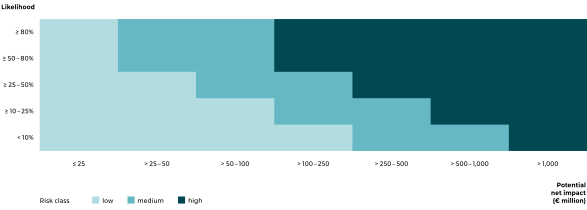
For risk aggregation purposes, we run a Monte Carlo simulation. As part of this process, we analyze the identified risks’ potential impact and probability of occurrence considering any risk-mitigating measures that may have already been implemented. The outcome of the Monte Carlo simulation for each risk category is then set in relation to the TRATON GROUP’s planned operating result to calculate the corresponding risk class. The matrix below forms the basis of this process. If there are more risks or if they have a higher net impact, the risk class itself is higher, while a planned higher operating result with an unchanged risk assessment results in a lower risk class.
Risks belonging to the “Strategic Risks” category usually have a long-term effect, which is difficult to quantify in the short term. TRATON therefore does not quantify these risks. The risk class for strategic risks is assessed through expert opinion.
The aggregated risk situation of the reported risks for each risk category is represented in the following table on the basis of the three risk classes (Low, Medium, High) and the risk categories described above:
| Risk category | Risk Class – 2025 Annual Report | Risk Class – 2024 Annual Report |
|---|---|---|
| Strategic risks | High | High |
| Market risks | High | Medium |
| Operational risks | High | High |
| Legal & compliance risks | High | High |
| Financial risks | High | High |
The current geopolitical environment, uncertainty surrounding emissions regulations, increasing trade barriers, challenges in supply chains, and future developments regarding the costs of bought-in components, energy, and raw materials, are all contributing to a continued high level of uncertainty. This means that the Strategic Risks, Operational Risks, Legal & Compliance Risks, and Financial Risks categories are assessed as “High”, which is unchanged compared with the previous year. The “Market Risks” category is now rated as high rather than medium, in particular because a difficult market environment is expected.
Overall assessment of the TRATON GROUP’s risk and opportunity position
According to its own evaluation, risks in the market risks category have the most considerable impact on the TRATON GROUP. In addition to the general cyclicality of and intense competition in the commercial vehicle industry, these also include the economic environment. Growing geopolitical tensions between the US, the EU, China, and other countries are leading to increasing trade barriers and protectionist measures (e.g., new or increasing tariffs by the US administration or possible worldwide retaliatory measures). These may have a negative impact on sales volumes and sales margins. In the area of Strategic Risks, the requirements and risks arising from the CO2 emissions regulation in the EU, as well as uncertainty about CO2 and nitrogen oxides (NOx) rules in North America, remain a particular focus. Operational risks chiefly comprise supply chain risks, risks in conjunction with EU CO2 penalties for exceeding fleet limits, and general raw material cost increase risks. Whereas operational business risks posed the greatest risk to TRATON in the 2024 Annual Report, they are less pronounced than market risks in the reporting period. Legal & Compliance Risks comprise mainly litigation risks involving the TRATON GROUP. Among the Financial Risks, future currency developments continue to be an area of considerable uncertainty that may have both a positive and a negative effect on the TRATON GROUP.
Overall, the TRATON GROUP is exposed to significant levels of uncertainty that it can influence only partially. In the aggregate, the described risks generally outweigh the corresponding opportunities. TRATON has determined that there are no risks that could endanger its continued existence, either individually or in combination with other risks.
In light of the highly dynamic nature of the current business environment, the company will continue to closely monitor its principal risks and opportunities in the future.
Important legal cases
MAN and Scania/EU antitrust proceedings
In July 2016, the European Commission reached settlements (the “Settlement Decision”) with MAN and four other European truck manufacturers (excluding Scania) finding collusive arrangements on pricing and the timing and the passing on of costs for emission technologies for medium- and heavy-duty trucks from January 17, 1997, to January 18, 2011 (for MAN: until September 20, 2010). MAN was granted immunity from fines since it had revealed these practices to the European Commission in September 2010. Scania decided not to apply for leniency and not to settle this antitrust case and, by decision of the European Commission dated September 27, 2017 (the “Scania Decision”), received a fine in the amount of approximately €880.5 million. Scania appealed the Scania Decision to the General Court of the European Union and asked for full annulment. On February 2, 2022, the General Court rendered its judgment, whereby Scania’s appeal was dismissed in its entirety and the amount of fines set by the European Commission upheld. On April 8, 2022, Scania appealed against the judgment of the General Court of the European Union from February 2, 2022, to the European Court of Justice. The €880.5 million fine plus interest from the EU antitrust proceedings was paid on April 12, 2022, to avoid additional interest penalties. On February 1, 2024, the European Court of Justice decided to dismiss Scania’s appeal. Following the Settlement Decision, a significant number of (direct and indirect) truck customers in various jurisdictions have initiated or joined lawsuits against MAN and/or Scania. With the merger of MAN SE with TRATON SE taking effect, TRATON SE has — in most jurisdictions — automatically assumed the procedural role of MAN SE as legal successor in the respective proceedings (and is insofar covered by “MAN-companies”). Even if such claims may have expired under the respective applicable local laws, it cannot be excluded that further lawsuits will be filed. The claims against MAN companies differ significantly in scope; while some truck customers only bought or leased a single truck, other cases concern a multitude of trucks. Furthermore, some truck customer damages claims have been combined in class actions or through claim aggregators to which the truck customers assigned their respective damages claims. A number of (direct and indirect) customers in various jurisdictions have initiated or joined lawsuits against Scania. Further, Scania has received a number of third party notices from other defendant commercial vehicle manufacturers. As is the case for MAN, the claims against Scania differ significantly in scope as some customers only bought or leased one truck while others operate a whole fleet of commercial vehicles. Furthermore, some customer damages claims in other jurisdictions have been combined in class actions or through claim aggregators.
MAN and Scania take the view that there are well-founded arguments against such claims and take appropriate steps to defend themselves. However, it cannot be excluded that these claims result in substantial liabilities for MAN and/or Scania including significant costs for their defense, which may have a material adverse effect on MAN’s and/or Scania’s financial results, cash flows and financial positions. Given the inherently complex nature of these claims and the different stages of the proceedings (with a number of cases still in a rather early stage), it is not possible to make a reliable estimate of the total liability that may arise from these claims. MAN and Scania are continuously monitoring the development and re-assesses the respective risks on a regular basis.
TRATON recognized a negative impact on its operating result in the amount of €173 million (€162 million) for cases in which, as a result of a reassessment of the risks, a final and unappealable ruling under which MAN or Scania would have to pay damages is more likely than unlikely at present. In accordance with IAS 37 “Provisions, Contingent Liabilities and Contingent Assets” (paragraph 92), no further information is disclosed so as not to prejudice TRATON’s position.
VW Truck & Bus Ltda.
In the tax proceedings between Volkswagen Truck & Bus Indústria e Comércio de Veículos Ltda. (VW Truck & Bus Ltda.), formerly MAN Latin America Indústria e Comércio de Veículos Ltda. (MAN Latin America), and the Brazilian tax authorities, the Brazilian tax authorities took a different view of the tax implications of the acquisition structure chosen by MAN SE (now merged with TRATON SE) for the acquisition of VW Truck & Bus Ltda. in 2009. The tax proceedings have been divided into two auditing periods, covering the years 2009–2011 (Phase 1) and 2012–2014 (Phase 2). In December 2017, an adverse last instance judgment was rendered by the Brazilian Administrative Court (Phase 1), which was negative for VW Truck & Bus Ltda. VW Truck & Bus Ltda. appealed this judgment before a regular judicial court in 2018. This lawsuit was dismissed in 2019, and an appeal was filed against the dismissal. The appeal was then rejected in June 2023, and a petition for review was filed in July 2023. In the tax proceeding related to Phase 2, a partial success was achieved that partly reduced the penalties. An appeal against this decision was filed, which was rejected in September 2023, thus concluding the Administrative Court proceedings. As a result of a new law regarding the handling of casting vote decisions in September 2023, VW Truck & Bus Ltda. filed an objection to the determinations in October 2023. In May 2024, the amendment to the law already resulted in a significant reduction in penalties in Phase 2, and in November 2024 the complete abolition of isolated and qualified penalties in Phase 2 was finally achieved. In May 2025, the Brazilian Office of the Attorney General of the National Treasury reviewed Phase 1 of the proceedings. As a result of this review, the amount in dispute was reduced due to the partial removal of penalties, the associated interest, and the related legal costs.
Due to the potential range of penalties plus interest which could apply under Brazilian law, the estimated size of the risk in the event that the tax authorities are able to prevail overall with their view is uncertain. As a result of the partial success in Phase 1, the risk has been reduced from approximately BRL 3.1 billion (€477 million; conversion as at December 31, 2024) to around BRL 2.4 billion (€366 million; conversion as at December 31, 2025) for the total contested period from 2009 onwards.
MAN SE merger squeeze-out
The merger of MAN SE with TRATON SE was entered in the commercial register of MAN SE and TRATON SE on August 31, 2021. With this, MAN SE ceased to exist as an independent legal entity, and all rights and obligations were transferred to TRATON SE. MAN SE shares were delisted at the same time.
Cash compensation in the amount of €70.68 per common and preferred share was paid out to MAN SE noncontrolling shareholders on September 3, 2021. This marked the conclusion of the MAN SE merger squeeze-out. The appropriateness of the cash compensation will be reviewed by a court-appointed auditor as part of the judicial award proceedings initiated by affected noncontrolling interest shareholders as applicants.
By way of a ruling dated December 20, 2024, which is not yet final, the Regional Court of Munich I increased the cash compensation to €79.71 per common and preferred share. Various applicants as well as TRATON SE appealed against this ruling in January 2025. The appeal proceedings are currently pending in the second instance at the Bavarian Higher Regional Court. Expenses of €3 million (€98 million) were recognized for this transaction in other financial income and interest expense in fiscal year 2025.