Sustainability Report
General Information
Basis for preparation
The Corporate Sustainability Reporting Directive (CSRD) was not transposed into national law in Germany in 2025. Nevertheless, TRATON has voluntarily prepared a sustainability report on a consolidated basis for the 2025 financial year. This report is not part of the combined management report and is therefore not audited and not fully compliant with European Sustainability Reporting Standards (ESRS). However, in our opinion, it largely fulfills the requirements of reporting in accordance with ESRS. The reference table (see References) provides an overview of where disclosure requirements can be found in the report.
To support transparency and ensure year-over-year comparisons, quantitative data from the previous reporting period is included where available. As in the previous year, TRATON reports key metrics to the Volkswagen Group, which are reviewed by a financial auditor in context of the preparation of their non-financial statement.
Basis of consolidation
The scope of consolidation generally aligns with that of the consolidated financial statements and is determined based on financial reporting requirements, impact materiality, and activities under operational control. The following adjustments were made for the gathering of data related to environmental information and information on governance:
Environmental standards: Data is gathered primarily for the fully consolidated companies. There are no associated companies over which TRATON has operational control. Consequently, environmental data (Scope 1 and 2 emissions) for these entities is not reported. TRATON has a joint venture that operates within Scania’s production network. However, the associated environmental emissions cannot be reliably reported separately. For this reason, they are included in the overall reporting for the Group.
Governance standard: The disclosures under corruption and bribery in the Governance section take all controlled companies with active employees or purchasing activities into account.
For the preparation of this sustainability report, both the upstream and downstream value chain were considered when assessing the impacts, risks, and opportunities beyond the Group’s own business area.
Uncertainties and estimates
Preparation of ESG performance data requires the application of estimations in some areas, which affects the reported data. These estimates are grounded in historical experience, expert input, external benchmarks, and internal expertise, and are made with due consideration of the circumstances. The method descriptions provide further detail on the inherent uncertainties and estimation processes. To mitigate the risk of reporting inaccuracies, particularly in areas subject to estimation, internal controls and validation procedures are in place.
The estimates reported in the previous year are updated accordingly if actual data becomes available for the previous reporting period.
Business model and value chain
Business model
TRATON’s business model is centered on the research and development, production, and distribution of commercial vehicles, including trucks, buses, light commercial vehicles, and related services. TRATON comprises the Scania, MAN, International, and Volkswagen Truck & Bus brands, thereby addressing a diverse range of customers. In addition, the TRATON GROUP offers a large number of financial services to its customers.
In the reporting period, the Group continued its efforts to shift investments from diesel powertrains to alternative drive systems in line with TRATON’s sustainability-related strategy and ambition. The TRATON brands are continuing to expand their product and service portfolio and supporting their customers in switching to battery-electric vehicles (BEVs). This contributes to making TRATON’s business model and strategy resilient against the material impacts and risks identified in the double materiality analysis (DMA). The most significant customer groups are logistics and transportation companies, public transport authorities, and retailers.
For further information on TRATON’s business model and the brands’ positioning, see the section on Key Information of the TRATON GROUP of the Combined Management Report.
Value chain
The TRATON GROUP has a highly diversified value chain. It includes upstream processes, also referred to as supply chain, own operations, and downstream processes. Both upstream and downstream process steps of this value chain are integrated vertically into TRATON’s own operations, in addition to the core business.
The TRATON value chain
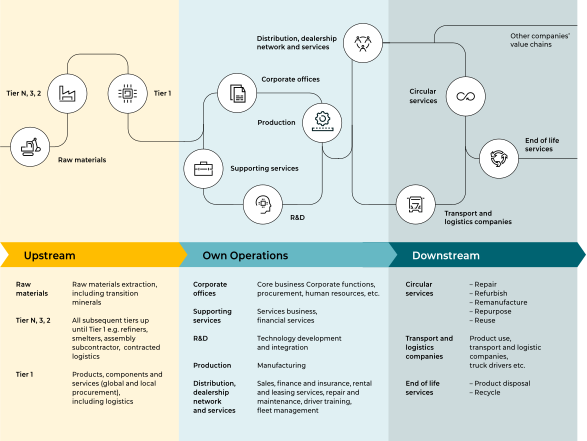
Upstream
The upstream value chain includes the extraction of raw materials and the production of components and parts. TRATON maintains close relationships with a large number of suppliers globally who play a key role in the provision of raw materials and intermediate products.
Core business/own operations
TRATON operates its own production facilities and assembly plants globally in which essential components such as powertrains, transmissions, and chassis are produced, and complete vehicles are assembled. The core business includes the central activities of development, manufacturing, logistics, and sales of vehicles as well as related services.
Development
In the development phase, TRATON conducts research and development activities in advanced technologies and innovative designs.
Manufacturing
Production takes place in production facilities spread across key geographies.
Logistics
Efficient logistics processes ensure integration of all steps, from purchasing to production and delivery.
Sales
Sales are carried out via a global dealer or distributor network. Parts of the TRATON dealer and distribution network are captive. Through the TRATON Financial Services segment, customers can also benefit from financing solutions.
Downstream
Product use
In the downstream value chain, the use phase and the associated services play a central role. The dealers and service partners offer maintenance and repair services, as well as digital services.
End-of-Life
The focus here is on the end of the products’ service life. This now also includes remanufacturing. In the future, battery recycling is also expected to play a role.
As depicted in the value chain description, TRATON relies on various inputs such as raw materials, components, technology, skilled labor, and financial resources sourced globally. These inputs are secured through strategic supplier relationships, expenditures for research and development, talent acquisition, and robust financial management. Promoting innovations is also an aspect of the approach to achieving and maintaining competitive advantages in the respective markets.
The products of the TRATON GROUP, commercial vehicles and innovative technologies, offer valuable advantages to a broad range of global stakeholders. Customers gain from reliable, cost-efficient vehicles that enhance their operations. Investors benefit from strong financial performance, market leadership, and growth driven by continuous innovation. Through the Group’s investment in low and zero emission technologies, stakeholders as well as wider society and the environment benefit from reduced environmental impact. The TRATON GROUP thereby further supports its customers in meeting their sustainability goals and regulatory compliance. For more details on the locations of our material impacts, risks and opportunities (IROs) within the TRATON value chain, refer to the graphic Overview of material topics in the Material topics of TRATON section.
For further information on the TRATON GROUP’s business activities, refer to the Business activities and organization section.
In general, none of the TRATON GROUP’s products or services are banned in certain markets. Nevertheless, they may fall under existing sanctions or embargoes, with which the Group strictly complies in line with applicable laws, regulations, and internal policies (see Affected communities).
Sustainability strategy
At TRATON, the commitment to sustainability is firmly anchored in the strategy and corporate values. The Group’s purpose is: “Transforming Transportation Together. For a sustainable world”. This is a commitment to building a profitable company by developing transportation solutions that meet the needs of a sustainable society.
Responsible Company
The strategic focus of the TRATON GROUP, known as the TRATON Way Forward (see To Our Shareholders), is based on a long-term vision for proactively navigating the transformation of the transportation and logistics sector. A part of this strategy is the pillar Responsible Company, which serves as the cornerstone of the Group’s ambition to act sustainably, ethically, and with a clear sense of accountability. Through this strategic focus, the Group strives to meet environmental goals, to foster responsible engagement with employees, customers, suppliers, and partners, and to ensure that responsibility underpins every decision. Together with its brands, TRATON is committed to a shared purpose: a central objective is to deliver value not only to customers but also to society — across the entire product life cycle.
The Responsible Company pillar also drives the cultivation of an inclusive and people-oriented corporate culture. TRATON recognizes diversity in a broad sense, valuing differences in personal experience, education, and perspective. Upholding ethical governance principles is equally critical to this strategy, as the Group seeks to embed integrity and transparency throughout its organizational processes. By focusing on joint impact areas, the TRATON GROUP aims to deepen its commitment and accelerate progress towards becoming an even more responsible and sustainability-driven Group.
Joint impact areas
The TRATON GROUP’s sustainability management approach outlines how TRATON translates its sustainability purpose and ambitions into action and results.
TRATON welcomes the Paris Climate Agreement as a guiding principle for the future. Our commitment is to move steadily towards alignment with the Paris Climate Agreement — driven by innovation and collaboration. This ambition is rooted in the recognition that road freight today contributes to a noticeable share of energy related greenhouse gas (GHG) emissions. To align road freight transportation with the Paris Climate Agreement, deep and fast reduction is needed. This requires the adoption and harmonization of stricter fuel economy standards and incentives, and infrastructure for zero-emission vehicles. A significant increase in renewable electricity supply and advancements in battery technology for truck electrification are necessary for the electrification of commercial vehicles. To achieve this, the commitment of all major transportation companies and commercial vehicle manufacturers, the pooling of resources, and cooperation with industry partners are crucial in order to drive forward decarbonization and strengthen the industry.
Increased resource consumption contributes to climate change as well as biodiversity loss and pollution. Also, here the transportation sector is a significant contributor. The Earth’s resources cannot sustain current consumption rates, leading to societal inequality and higher costs. Urgent measures and regulatory frameworks are needed to curb resource exploitation. Transitioning to a circular economy, especially in wealthier countries, could reduce resource use, improve well-being, and stimulate economic growth.
TRATON adopts a transformative approach to sustainability. This implies fundamental changes to products and services all the way to relationships with suppliers, customers, and partners, while ensuring relevance in the transition in the different parts of the world. The TRATON GROUP is active in shaping strategies, practices, and collaborations to shoulder our responsibility for the systemic changes needed. However, these sustainability-related goals are not limited to any specific supplier, customer group, or geographical area, thus a broad and inclusive approach to driving transformation is adopted. For TRATON to stay focused and use the resources in a manner that creates the most effect, three joint impact areas have been identified: decarbonization, circularity, and human rights. They allow TRATON to address these areas in an integrated and efficient way, based on the sustainability management model. With the joint impact areas, TRATON aims to drive sustainable transportation solutions and create lasting value for people and the planet.
Joint impact area commitments
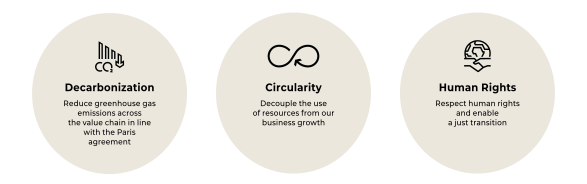
Decarbonization: TRATON is committed to the Paris Climate Agreement to reduce greenhouse gas emissions across the company’s entire value chain.
A substantial portion of global greenhouse gas (GHG) emissions originate from the transportation sector. TRATON is working towards being part of the solution and strives to play an important role in the decarbonization of the commercial vehicle sector. Recognizing that almost all the Group’s value chain emissions stem from the use phase of its products, TRATON is focusing on electrification as the most impactful lever to decarbonization. The Group aims to offer high-performance BEVs and complementary services such as charging solutions and financing options. At the same time, TRATON keeps improving the energy efficiency of vehicles using internal combustion engines. By forming partnerships and advocating supportive regulations, the Group facilitates access to new technologies and infrastructure.
Circularity: Commitment to decoupling the use of resources from the company’s growth.
Circularity reduces reliance on finite natural resources, ensuring a more sustainable development throughout the vehicle life cycle. Circularity means more for the TRATON GROUP than merely reducing negative impacts. It is about fundamentally rethinking processes and enhancing their design. The systematic introduction of circular principles is geared toward accelerating innovation and developing new products, services, and business models. This is linked to the goals of reducing or completely avoiding the use of new materials and creating a more sustainable customer offering that is tailored to future market requirements. Electrification of vehicles not only lowers emissions, it also reduces the resources used within the value chain. By forming partnerships and advocating appropriate regulations, the TRATON GROUP wants to play its part in bringing about systemic change.
Human rights: Commitment to human rights and ensuring an equitable transition.
The Group has taken steps to manage its own human rights impact. Further work is aimed at understanding the impact in its own operations and value chain, including the social dimension of the green transition. TRATON will place a strong focus on the supply chain and work closely with partners to create a transparent, responsible, and resilient value chain.
Stakeholder engagement
As a global organization, the activities of the TRATON GROUP impact many individuals. Engaging with stakeholders is essential to identify key areas for the Group strategy and anticipate evolving expectations. TRATON sees stakeholder engagement as its duty to systematically and continuously interact with various stakeholders, actively listen to their perspectives, and incorporate their feedback into our own strategy and business model. The goal is to — within the legal framework — maintain an open, constructive dialog with all stakeholder groups.
To facilitate decision-making processes at the TRATON GROUP, the following key stakeholder groups were identified as being of particular relevance in the context of sustainability: customers, employees, society and media, investors, science and experts, business partners and suppliers including value chain workers, politics and associations, NGOs and NPOs, as well as residents and communities and local authorities.
Engagement with these stakeholder groups is designed to foster open dialog, build trust through a variety of processes such as feedback mechanisms, collaborative initiatives, and transparent communication channels. For example, our European employees are engaged through the TRATON GROUP Works Council, ensuring a continuous exchange of perspectives across different regions. Investors are kept informed and involved through the Annual General Meeting, Investor Calls, and Capital Markets Days. These platforms offer transparency and the opportunity to explain strategic priorities. In general, surveys and partnerships are used to gather insights and share knowledge across stakeholder groups, while active participation in alliances and networks fosters the exchange of expertise and innovative solutions. By integrating stakeholder perspectives into decision-making and maintaining open, ongoing communication, TRATON ensures that its strategies are both inclusive and aligned with evolving societal and environmental priorities. The frequency of engagement with stakeholders depends on the stakeholder group and engagement format. Some formats are conducted regularly while others depend on specific political, societal, or economic events. The purpose of these actions is to maintain an exchange in both directions and generate insights into the interests and views of stakeholder groups. These in return inform the strategy process and subsequently contribute to any changes made to continuous development of the TRATON business model through the responsible functions, working groups, and committees. Thereby, ultimately also the highest-level management bodies of the Group are informed about the views and interests of stakeholders.
This process ensures that the sustainability strategy, accompanying processes, and guidelines are directly informed by stakeholders’ interests in sustainability matters. TRATON has the ambition to further elaborate guidance and actions of sustainability management, which will be informed by stakeholder engagement processes performed by the responsible function. The integration of stakeholder expectations into the DMA process is described in the section on Methodology and process.
A human rights salience assessment from 2024 provided key insights into the interests, views, and rights of the TRATON workforce, value chain workers, and affected communities. The salience assessment focused on the areas that are affected by the Group’s business model, highlighting opportunities for mitigating the negative impacts as well as creating value for people and society. It also serves as a base to further develop the sustainability strategy and specifically the joint impact area of human rights, which ensures the reflection of views, interests, and rights of employees, supply chain workers, (see Workers in the value chain) and affected communities in the strategy (see Road safety and Affected communities).
Beyond its contribution to material IRO evaluation, the human rights salience assessment also indirectly shaped TRATON’s sustainability strategy and business model. As this salience assessment was done on a cursory level, and there have been no major changes to the business model or operations of the company in 2025, we have continued to use the human rights salience assessment from 2024.
Material impacts, risks and opportunities and their interaction with strategy and business model
The TRATON GROUP has established strategic and operational foundations to adapt its business model in response to climate-related risks and opportunities. As part of its decarbonization strategy, the TRATON GROUP has defined actions that were implemented in 2025 and will continue to be implemented in the future. Details are described in the Decarbonization section. While measurable impacts are not yet available for the reporting year, these measures are designed to increase internal awareness and readiness across the Group.
The TRATON GROUP continuously monitors regulatory developments, technological trends, and stakeholder expectations to ensure its strategy remains compliant and responsive. These include regular review and adjustment of its sustainability measures, investment planning, and operational processes. These mechanisms enable the Group to flexibly align its business model with evolving climate transition pathways and commercial vehicle sector requirements.
In 2025, the TRATON GROUP identified material IROs through its DMA. These IROs are integrated into the Group’s strategy and business model through structured governance and sustainability processes. The following section outlines the current and anticipated effects of these IROs, the Group’s planned responses, and how these impacts affect people and the environment across the value chain.
In the reporting period, three material risks (see Decarbonization, Own workforce, and Corporate culture) were identified through the DMA, none of which had material negative or positive impacts on the TRATON GROUP’s financial position.
Looking ahead, TRATON anticipates that initiatives related to decarbonization and circularity may influence future investment decisions and product development. Additionally, regulatory changes and evolving stakeholder expectations are expected to increase the relevance of certain IROs over time. Key strategic levers include, among others, electrification, renewable energy sourcing, reducing resource consumption and waste, and human rights due diligence. The tracking of progress and the establishment of targets are currently managed at brand level rather than at Group level.
Material impacts identified by the TRATON GROUP affect both people and the environment across the entire value chain. These impacts are considered in the Group’s strategic planning and are integrated into the sustainability strategy. From a people perspective, the Group takes health and safety risks for employees and value chain workers into account. Managing these impacts is fundamental to TRATON’s business model: safe and fair working conditions underpin a skilled workforce, which is essential for competitiveness and innovation (see Own workforce – Approaches and policies). Material risks such as staff turnover and safety issues are addressed through Group-wide policies and targeted actions (see Own workforce — Actions). Thus, workforce impacts are embedded in TRATON’s sustainability governance and strategic decision-making (see Sustainability governance and Double materiality assessment). Road safety also plays a key role: it protects the lives and health of road users and supports the safe transportation of commercial goods. For TRATON, road safety means taking social and economic responsibility. It is therefore an integral part of vehicle development.
There are also human rights concerns related to sourcing, as well as community impacts arising from operations and product use. From an environmental perspective, the TRATON GROUP is aware that the use of its products, the consumption of resources, the environmental impacts associated with production and logistics, and waste generation can lead to greenhouse gas emissions and potentially contribute to biodiversity loss. These material impacts are closely connected to the company’s sustainability strategy, which prioritizes decarbonization, circularity, and human rights. Insights from the DMA inform product innovation, supply chain management, and stakeholder engagement. Impact assessments are conducted across short-, medium-, and long-term planning horizons to ensure that strategic decisions are aligned with the sustainability goals.
Sustainability governance
Sustainability management process
In the TRATON GROUP, the management and oversight of IROs are embedded in a structured and cross-functional governance framework to ensure accountability, integration, and continuous improvement across all brands and internal functions.
Dedicated controls and procedures for managing IROs: TRATON applies a Sustainability Management Model consisting of five interconnected steps that guide the identification, management, and integration of IROs:
- Prioritize and Commit: Material IROs are identified through stakeholder engagement and materiality assessments. These inform strategic commitments and action plans at both Group and brand levels. Actions, requirements, and targets are defined based on identified priorities. These are aligned with global frameworks such as the Science Based Targets initiative (SBTi), with validated climate goals already in place for Scania and MAN. Feedback loops enable adjustments and improvements based on the insights gained.
- Plan: Dedicated controls and procedures guide the definition of targeted actions, requirements and objectives. These are tailored to both brand-specific and Group-wide needs, ensuring alignment with strategic sustainability goals. The Group’s management accompanies sustainability target-setting and its progress through weekly meetings of the Sustainability Leadership Group, which includes the Chief Sustainability Officer and sustainability managers from each brand. Cross-functional collaboration on joint impact areas — Decarbonization, Circularity, and Human Rights — serves to guide resource allocation and the strategic focus.
- Integrate: Sustainability considerations are embedded into operational and strategic decision-making across all functions — such as product development, procurement, HR, and strategy — ensuring that IROs are managed as part of core business activities.
- Monitor and Learn: Governance structures within each function support continuous learning and performance tracking. Brand-level governance structures ensure sustainability targets are contextually relevant and operationally embedded. Monitoring mechanisms within each function track progress against defined targets and feed into Group-level reporting and strategy refinement. This integrated and collaborative approach ensures that IROs are not siloed but are part of the transformation of TRATON towards sustainable transportation.
- Enable Communication: Transparent internal and external communication reinforces credibility and stakeholder trust. This includes reporting mechanisms that support open dialog and accountability across the organization.
Management of sustainability issues and IROs identified in the DMA is organized through various committees, working groups, and reporting streams. This is designed to ensure a coordinated approach and the involvement of all relevant parties. The central Sustainability function at TRATON reports directly to the Chief Executive Officer and the other Executive Board members via the TRATON Sustainability Board and is responsible for coordinating sustainability management at TRATON. Developing TRATON’s sustainability strategy is a cross-functional task with responsibilities embedded both in several central TRATON functions and at the level of the brands.
- The TRATON Sustainability Board (TSB) consists of the Executive Board, the Chief Purchasing Officer, the Head of Production & Logistics, the Chief Sustainability Officer of the TRATON GROUP, the Heads of Sustainability of the brands and the TRATON GROUP’s Head of ESG. The TSB sets the direction and ambition level and approves commitments, group targets, and binding regulations. It also monitors how the IROs identified through the DMA are managed. New initiatives, actions and commitments, as well as the DMA, receive final approval from the TSB and at the level of each brand. The TSB held four meetings in 2025 and approved in particular the material impact, risks, and opportunities of the DMA. The outcomes of the TSB were documented through meeting minutes, signed by the CEO and the Chief Sustainability Officer.
- The Sustainability Leadership Group (SLG) consists of the Heads of Sustainability at the TRATON GROUP and all brands. The SLG acts as the responsible interface to the brand sustainability functions. It aligns decisions with relevant Group, entity, and brand functions and can approve non-binding documents. The SLG is responsible for all materials developed for the TSB, informing the TSB, and implementing the decisions made by the TSB. Progress and deviations are monitored on a regular basis, both on Group and brand level. Each brand within the TRATON GROUP is solely responsible for the implementation of approved initiatives at the brand level.
- The Group Sustainability Alignment Meeting (GSAM) consists of the Heads of Sustainability at the TRATON GROUP and all brands and relevant representatives of TRATON functions. All commitments, action areas, targets, binding, and non-binding regulations are aligned in GSAM before being presented to the TSB. These decisions are then communicated during TRATON Sustainability Network Meetings, which occur quarterly. These meetings serve as an instrument to share information on sustainability topics within the Group. Further communication is shared through relevant channels such as the intranet.
Committees and processes for sustainability management
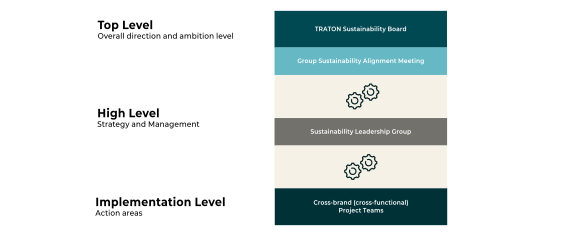
Responsibility for sustainability also lies with the Executive Board, while the Supervisory Board monitors the activities. Under German law, the Executive Board and Supervisory Board are obliged to conduct an evaluation of all relevant aspects, including sustainability aspects, when making business decisions. This ensures that all factors are taken into consideration and that decisions are made with the utmost care and diligence. Failure to do so might result in liability risks, as decisions made without proper evaluation might be deemed faulty. The Executive Board is committed to upholding these rules and making informed decisions that benefit TRATON SE and its stakeholders. Fundamental cornerstones of corporate governance, such as the Code of Conduct for Employees and related procedures, are created and supervised respectively with their involvement. In addition, the Audit Committee is regularly informed about the progress of CSRD reporting. The Chairman of the Audit Committee then reports directly to the Supervisory Board based on the discussions and outcomes of these meetings.
In addition to the sustainability management structure, the Governance, Risk, and Compliance (GRC) organization plays a critical role in ensuring integrity across the TRATON GROUP. Managed by the Head of GRC/Chief Compliance Officer, the organization reports directly to the Chairman of the Executive Board and the Audit Committee. The GRC organization oversees compliance, integrity, risk management, and data protection throughout the Group.
Overarching management policies for sustainability
The TRATON GROUP has overarching policies that provide a foundation for the overall management processes and apply to all sustainability matters. These policies ensure a consistent and integrated approach to decision-making on material sustainability measures across the TRATON GROUP. The overarching policies are outlined in the following sections. In addition to this, the TRATON GROUP has policies that relate to specific sustainability matters. These topic-specific policies are presented in detail in the relevant sections on the topics within this sustainability report.
General management process for TRATON GROUP policies
TRATON has implemented a process for developing, implementing, and monitoring policies on Group-level. This process applies to all Group policies described throughout the report, which are clearly labeled as such. Where policies other than Group policies are described, such as guidelines or frameworks, their individual management processes are described.
Group policies regulate substantial topics, thereby protecting employees and the organization, avoiding risks, but also securing the Group’s reputation and assets. Topics that do not relate to any of these categories may be managed through other types of policies or processes.
From 2025 and based on the new TRATON GROUP policy Policy Management, it is possible and intended to have common TRATON GROUP policies applying to all TRATON brands and entities. Policy Management requires the mandatory involvement of all brands based on a co-creation approach. The respective brand topic owners contribute their brands’ perspectives and coordinate with stakeholders within their brands.
Once a new Group policy has been created and checked regarding applicable quality standards, it is submitted to the TRATON Policy Committee to conclude sufficient involvement of the brands and fulfillment of quality standards. This preapproval qualifies for requesting final approval by TRATON SE Executive Board, which is the most senior level accountable for the implementation of the policy. After approval, the policy coordinators ensure publication via the TRATON intranet. The policy coordinators submit the approved policy documents to their equivalents at brand or entity level and request implementation within a given time frame. If needed for safeguarding the implementation or compliance, training and guidance are provided for relevant target groups of the policies. If applicable, the brands’ policy coordinators publish equivalent policies on the respective topic and report the implementation status to TRATON quarterly.
In place of the general policies of the TRATON GROUP, corporate policies that apply exclusively to TRATON SE may be issued. These define minimum standards and requirements for TRATON brands and companies. The TRATON brands implement requirements by issuing own governing documents or adopting the TRATON SE company policy. Brands can also issue further brand-governing documents that apply to their subsidiaries in case of need.
Guided by Policy Management, policy owners must regularly review their TRATON GROUP policies to evaluate whether they need to be updated. Furthermore, they must assess the need for an amendment of existing regulations or the introduction of new ones as soon as relevant parameters change. The Group’s corporate audit department conducts audits of topics or processes based on its assessments and planning. It utilizes applicable policies and related governing documents for such audits.
As of the reporting date, the policies for policy management, internal investigations, and sustainability management had been adopted as Group policies of TRATON. The revision of further policies for inclusion in the Group standards of TRATON is currently in preparation.
Overarching policies
| Name of policy | Key contents and objective | Scope | Responsible organizational level and monitoring process | Availability of the policy for stakeholders |
|---|---|---|---|---|
| TRATON sustainability management (Group policy) | In 2024, the TRATON GROUP started developing the TRATON sustainability management Group policy, which was approved by the Executive Board in October 2025. Its purpose is to enable the TRATON GROUP to translate its sustainability purpose and ambitions into action and results. The policy enables TRATON to set its own ambitions and priorities while also meeting stakeholders’ expectations and requirements. This policy defines the sustainability management model, the governance structure, and the roles and responsibilities for ensuring cross-brand collaboration at TRATON in terms of sustainability. In line with the nature of the policy, TRATON’s sustainability management has neither a defined ambition level nor a reference period against which progress can be benchmarked. | TRATON GROUP | The most senior level at the TRATON GROUP that is accountable for this policy is the Chief Sustainability Officer. TRATON does not currently track the effectiveness of this policy, though the policy provides a foundation for actionable impact and integration. | Access via intranet |
| TRATON sustainability management (guideline) | The TRATON GROUP’s sustainability management is designed to drive transformative change by embedding sustainability into core business practices. It begins with Prioritize and Commit, where the organization identifies its most critical impacts and risks through ongoing engagement with stakeholders and the DMA. Once these priorities are clear, TRATON makes concrete commitments to act. The next phase, Plan, focuses on defining targeted actions, requirements, and objectives that are tailored to both brand-specific and Group-wide needs — helping ensure that planned efforts align with strategic sustainability goals. In the Integrate phase, TRATON moves from intention to action by embedding these commitments into daily operations, empowering teams across the organization to make decisions that uphold these sustainability ambitions. Progress is tracked through Monitor and Learn, relying on existing governance structures and the TRATON Sustainability Board to assess performance, extract lessons, and refine strategies. Finally, Enable Communication reinforces transparency and trust, with open internal and external reporting — including a sustainability report — serving as a cornerstone of credible management. Together, these five pillars form a resilient system that not only advances sustainability but unlocks its capacity for deep, systemic transformation. In line with the nature of the policy, TRATON’s sustainability management guideline has neither a defined ambition level nor a reference period against which progress can be benchmarked. | TRATON GROUP | The most senior level at the TRATON GROUP that is accountable for the guideline is the Chief Sustainability Officer. TRATON does not currently track the effectiveness of this guideline, though the guideline provides a foundation for actionable impact and integration. | Access via intranet |
| Code of Conduct for Employees (Group policy) | The TRATON GROUP Code of Conduct for Employees is the ethical and value-based central guideline for acting with integrity and in compliance with the rules in the Group. It serves as a binding framework for all employees of all functions in all TRATON GROUP entities all over the world. The Code of Conduct for Employees covers a wide range of topics, including ethical leadership, human rights, occupational health and safety, prohibition of corruption, product compliance, IT security, and environmental protection. All topics of the section Governance in this sustainability report are also governed by the Code of Conduct for Employees. The decisions taken in all areas of work and in all roles must be in accordance with the corporate values and comply with applicable national and international laws, regulations, and internal voluntary commitments. The Code of Conduct for Employees addresses human rights, including human trafficking and the use of forced or child labor. Each brand has their brand-specific version observing local requirements. | TRATON GROUP |
The most senior level at the TRATON GROUP that is accountable for this policy is the Executive Board. The Code of Conduct for Employees is monitored within the standard processes of the Group. |
Accessible via the TRATON GROUP website. The brand-specific versions are available on the relevant brand websites. |
| Code of Conduct for Suppliers and Business Partners (Group policy) | The policy is considered the basis for successful execution of business relations between the TRATON GROUP and its partners. As the TRATON GROUP’s suppliers and business partners play a significant role in the Group’s business success, TRATON expects them to act responsibly, amongst others in the areas of human rights, health and safety at work, tax and trade compliance, environmental protection, and anti-corruption. In the Code of Conduct for Suppliers and Business Partners, the TRATON GROUP has defined its expectations as well as requirements regarding the conduct of Suppliers and Business Partners in their corporate activities. The sustainability requirements in the Code of Conduct for Suppliers and Business Partners are based on various international standards, including the UN Global Compact, OECD Guidelines, ILO conventions, and the Guiding Principles of the Drive Sustainability Initiative. The TRATON GROUP also adheres to internationally agreed standards such as the Universal Declaration of Human Rights. The Code of Conduct for suppliers and business partners addresses the safety of workers, human trafficking, and the use of forced labor or child labor. No ambition level has been defined. Each brand has their brand-specific version observing local requirements. | The Code of Conduct for Suppliers and Business Partners applies to all suppliers (i.e., all contracting parties that supply the TRATON GROUP with goods, materials, or services) as well as to sales and service partners and other B2B partners who do business with the TRATON GROUP. | The most senior level at the TRATON GROUP that is accountable for this policy is the Executive Board. To monitor the effectiveness of the policy, the TRATON GROUP brands reserve the right to verify compliance with sustainability requirements regularly, randomly, or for specific events and using appropriate and adequate means, such as risk assessments or self-assessments by the business partner, before awarding a new contract and throughout the business relationship. Some of the related actions are described in section Responsible supply chain system | Accessible via the TRATON GROUP website. The brand-specific versions are available on the relevant brand websites. |
Double materiality assessment
General approach to the double materiality assessment
The sustainability reporting of the TRATON GROUP is grounded in a DMA aligned with the ESRS requirements. In 2025, the TRATON GROUP updated its DMA. It was carried out at Group-level and in close collaboration with all brands, iterating between Group and brand materiality to come to an aligned result. The DMA was approved in line with TRATON’s sustainability governance. This ensured review and verification across all hierarchical levels. Following the review by the Sustainability Leadership Group, it was presented to the Group Sustainability Alignment meeting before its approval by the TRATON Sustainability Board. In the coming years, work will continue towards further maturing and refining the assessment in line with best practices and new guidance across our sustainability topics. The IROs identified as material to the operations and value chain of TRATON have been mapped against the disclosure requirements listed in the topical ESRS to identify required information for the reporting in 2025. For material IROs covered by a topical standard, the information is disclosed in line with ESRS, while for entity-specific topics, the minimum disclosure requirements are used as a basis for reporting on policies, actions, targets, and metrics. For the index of ESRS disclosure requirements covered by this sustainability report, see the section on Disclosure requirements covered in the TRATON GROUP Annual Report 2025.
The updated DMA did not result in any significant change. However, it led to changes to the material topics that are part of the environmental, social, and governance standard. This shift is primarily due to an increased materiality threshold compared to the previous year. More details can be found in section Methodology in this section. Material sustainability topics, which comprise further sub-topics, are detailed along with their respective IROs in the Environmental, Social, and Governance sections of this report.
Material topics of TRATON
In its DMA, the TRATON GROUP identified and assessed the impacts on the environment and society, as well as the sustainability-related financial risks to which it is exposed and the opportunities it leverages. In total, 24 IROs have been assessed as material, comprising four positive impacts, 17 negative impacts, three risks, and no opportunities. The outcome of the DMA is shown in the figure below, Overview of material topics.
Overview of material topics
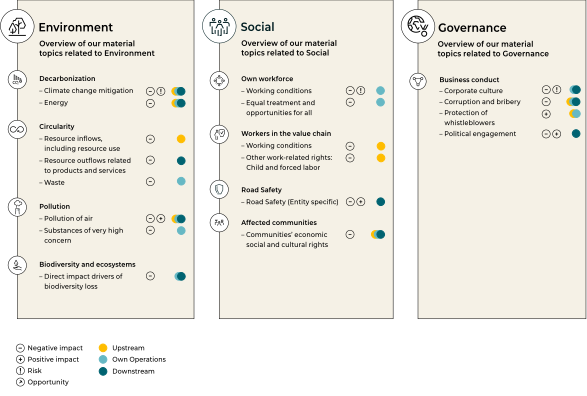
For environmental topics, the DMA confirmed that decarbonization, circularity, pollution, and biodiversity and ecosystems are material to TRATON. Within decarbonization, two sub-topics were identified as having material impacts — one within climate change mitigation and another within energy. The assessment of physical climate-related impacts on the company’s assets was informed by a comprehensive analysis conducted across multiple time horizons, evaluating the potential effects of climate change. In addition, a transitional risk related to climate change mitigation was recognized. Other than in the previous year, climate change adaptation did not qualify as material.
Regarding circularity, the DMA identified three distinct impacts: one related to resource inflows, one concerning resource outflows, and one associated with waste.
In the area of pollution, three material impacts were recognized: two pertaining to pollution of air and one to substances of very high concern (SVHC). In the previous year, pollution of water as well as microplastics were also identified as material. However, following the reassessment conducted during the reporting year’s DMA, it has been determined that, while these issues continue to play a role, they do not qualify as material topics for TRATON.
Within the topic of biodiversity and ecosystems, a single impact was identified, linked to direct drivers of biodiversity loss.
For social topics, the assessment reconfirmed that own workforce, workers in the value chain, and affected communities are material to the TRATON GROUP. Most of the material topics in these categories are relevant in terms of their impact. However, employee turnover, productivity losses, and safety issues among its own workforce due to adverse working conditions also pose a significant risk to TRATON. For the entity-specific topic of road safety, two impacts were identified as material in the DMA: injuries resulting from accidents on the road from our products as a material negative impact and increased safety features and driver training as a material positive impact. The sub-topic other work-related rights and privacy did not qualify as a material topic in the 2025 DMA reassessment, unlike last year.
For governance topics, the DMA confirmed the categories corporate culture, corruption and bribery, protection of whistleblowers as well as political engagement to be material. However, based on the reporting year’s DMA reassessment, it has been concluded that although managing supplier relationships, including payment practices, remains a relevant consideration, it does not meet the threshold for materiality for TRATON.
Most of the material topics are material from an impact perspective, with only the financial risk of reduced productivity, decreased efficiency, and higher employee turnover fostered by a negative corporate culture identified as material. In light of the global operations of the TRATON GROUP and its role as a global commercial-vehicle provider, this list is not exhaustive. It highlights the areas in which TRATON may have the greatest impact on people and the environment, as well as the areas in which we are exposed to the most significant financial risks or opportunities.
Methodology and process
Methodology
The TRATON GROUP conducted a DMA across its operations and value chain, integrating both internal and external stakeholder perspectives. The process included desktop research, expert workshops, and stakeholder engagement through interviews. Internal stakeholders included cross-functional experts from sustainability, decarbonization, and governance teams across the Group. External perspectives were integrated through desktop research and analysis of relevant reports and articles. Material IROs were evaluated using a structured scoring model based on likelihood, severity, and financial magnitude. In 2024, the TRATON GROUP adopted a conservative approach to the DMA as part of its first ESRS reporting cycle. Following a thorough benchmarking exercise with industry peers, consultation with external experts, and consideration of evolving legislative requirements, TRATON decided in the reporting year to raise the materiality threshold. This adjustment reflects a more focused and robust assessment, enabling the TRATON GROUP to concentrate on the most significant sustainability topics. The rise of the threshold did not lead to changes in the DMA process itself.
No IROs were identified for end-users due to the Group’s B2B model providing logistics services to customers who are not consumers/end-users as defined in the ESRS.
To ensure the reliability of the analysis, strict control mechanisms were introduced: Documentation was stored securely, access was restricted, and complete traceability was ensured. Additionally, the results were validated through plausibility checks, benchmarking against previous assessments and industry peers, and expert reviews. This approach ensures that the sustainability strategy of the TRATON GROUP is both stakeholder-informed and data-driven.
Description of the process to identify and assess material impacts, risks and opportunities
To assess the materiality of potential and actual impacts, an impact risk score was calculated based on likelihood and severity. The likelihood of each impact was rated from 2 to 10, with 2 being unlikely and 10 being a very likely or actual impact. The severity resulted from the average value of scale, scope, and in the case of negative effects, remediability. The severity assessment levels were 0, 2, 3, 5, and 10, with 10 being the most severe factor (i.e., very high scale, global/total scope, and not remediable/reversible). In general, an impact was considered material if the product of its severity and likelihood yielded a risk score above 25 — an increase from last year’s threshold of 20.
To determine financial materiality of potential risks and opportunities for the TRATON GROUP, the likelihood factor described above, as well as the magnitude — amount of the potential loss from a risk or gain from an opportunity — of the financial impact and the severity of the reputational effect were assessed. Magnitude is generally measured as the amount of potential loss from a risk or potential gain from an opportunity. Magnitude and reputation effect were assessed in combination, whereby the magnitude had five (0, 1, 3, 5, and 10) and the reputation effect had four evaluation levels (0, 1, 5, and 10). However, with a weighting of 75%, the magnitude was significantly more decisive for the assessment of materiality than the reputational effect. The sum of the two factors was multiplied by the likelihood factor and the result ultimately determined the materiality. Financial materiality was determined when the analysis produced a risk score above 25, reflecting an increase from the previous year’s threshold of 20. In general, areas with a greater positive and negative impact on the environment and people are also more likely to represent higher financial risks and opportunities for the TRATON GROUP. Following the evaluation of which scores require further input through the confidence score, impact and financial materiality scores were compared.
Interfaces between DMA and Enterprise Risk Management (ERM) have been defined to combine information gained through both processes. The IROs identified in the DMA are used as input for the ERM process and the results of the ERM process are considered when updating the DMA.
Double materiality at a glance
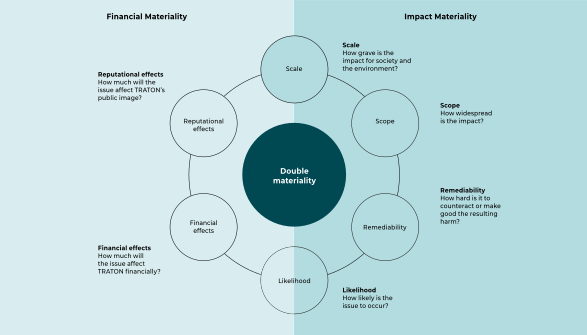
In the assessment of IROs, time horizons as per ESRS 1 are applied by TRATON, short-term being the reporting year and medium-term covering one to five years. Long-term emerging impacts and risks (beyond five years) have also been identified by TRATON. Some of these, such as negative impacts of climate change, are also material in the longer term, but since impacts are already apparent, these have been included as short-term IROs.
Additional considerations to the double materiality assessment
Beyond the DMA process for identifying and assessing IROs, for some topical standards additional aspects were considered.
For the identification of IROs and dependencies related to water and marine resources, as well as biodiversity and ecosystems, the TRATON GROUP used input from the study conducted by WWF Sweden (World Wildlife Fund) (see Biodiversity). The TRATON GROUP conducted a human rights salience assessment in 2024, which was considered during the DMA to assess the impact on human rights across the entire value chain.
Beyond the process for identifying and assessing IROs, the TRATON GROUP has not conducted a structured and complete screening of its assets, sites, and business activities to identify IROs related to decarbonization, circularity, pollution, or water and marine resources across its value chain. However, an analysis of the physical climate risks for our own business activities was carried out under a worst-case scenario (SSP5-8.5). It was conducted in accordance with the EU Taxonomy requirements and did not fully meet the ESRS requirements (see EU Taxonomy). Potential risks in the supply chain cannot be ruled out, as this area is not covered by the EU Taxonomy climate risk analysis. Additionally, the current analysis does not include any transition risks.