Schneider Umweltservice AG, Switzerland
Improving Total Cost of Ownership while boosting community acceptance with low-noise waste collection and recycling logistics
Koopman Logistics B. V., Netherlands
Making zero-emission vehicle transport possible even for the most demanding logistics tasks
First Student, USA
Creating healthier school commutes by cutting emissions from daily school transportation.
TRANSPPASS, Brazil
Enabling sustainable mobility on challenging urban routes
E-Mobility
in Practice
Battery-electric commercial vehicles are sustainably transforming the transport sector. At Scania, MAN, IC Bus, and Volkswagen Truck & Bus, they are already in daily use — cutting emissions, reducing costs, and improving efficiency.
Schneider Umweltservice AG, Switzerland
Improving Total Cost of Ownership while boosting community acceptance with low-noise waste collection and recycling logistics
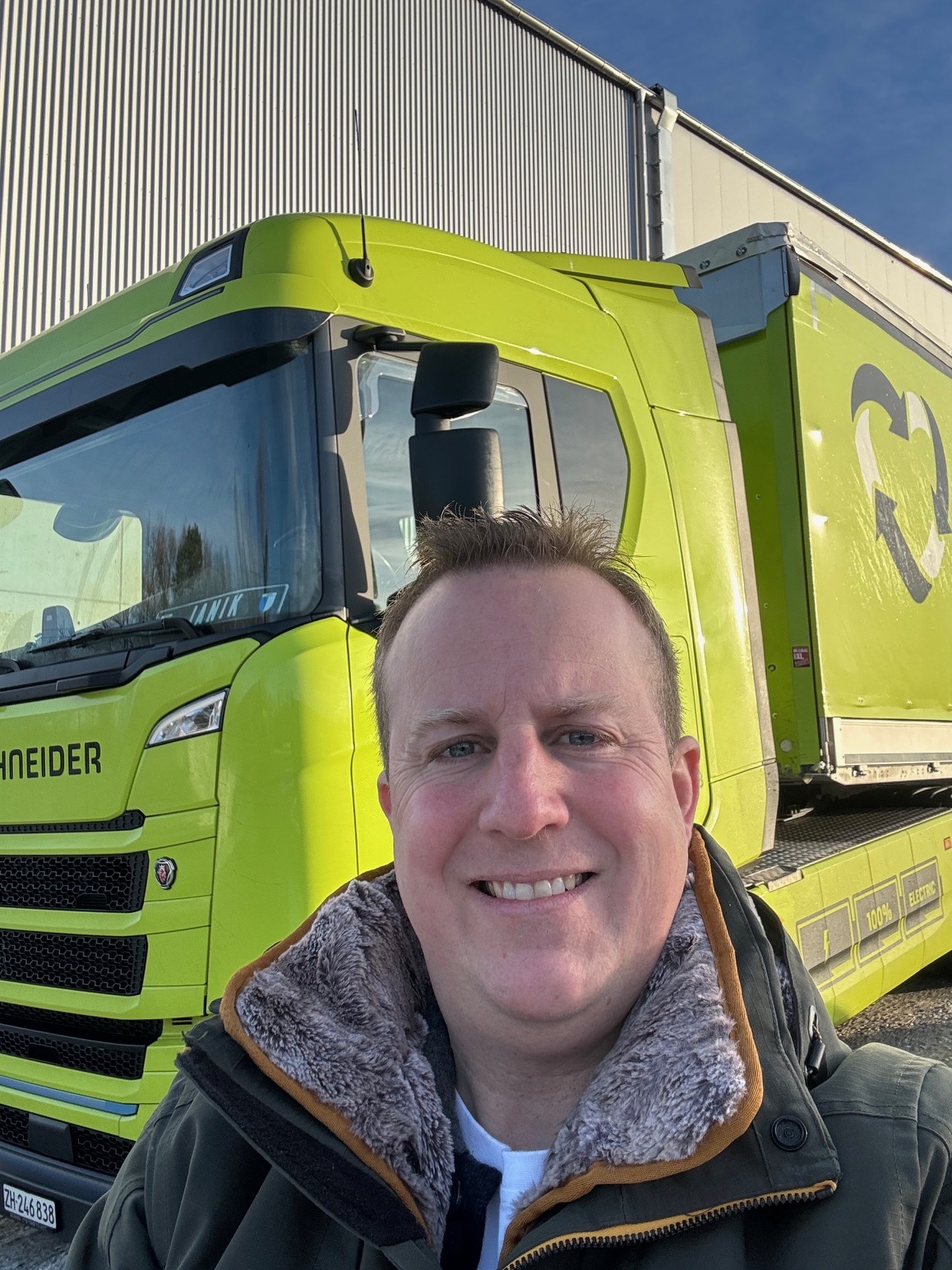
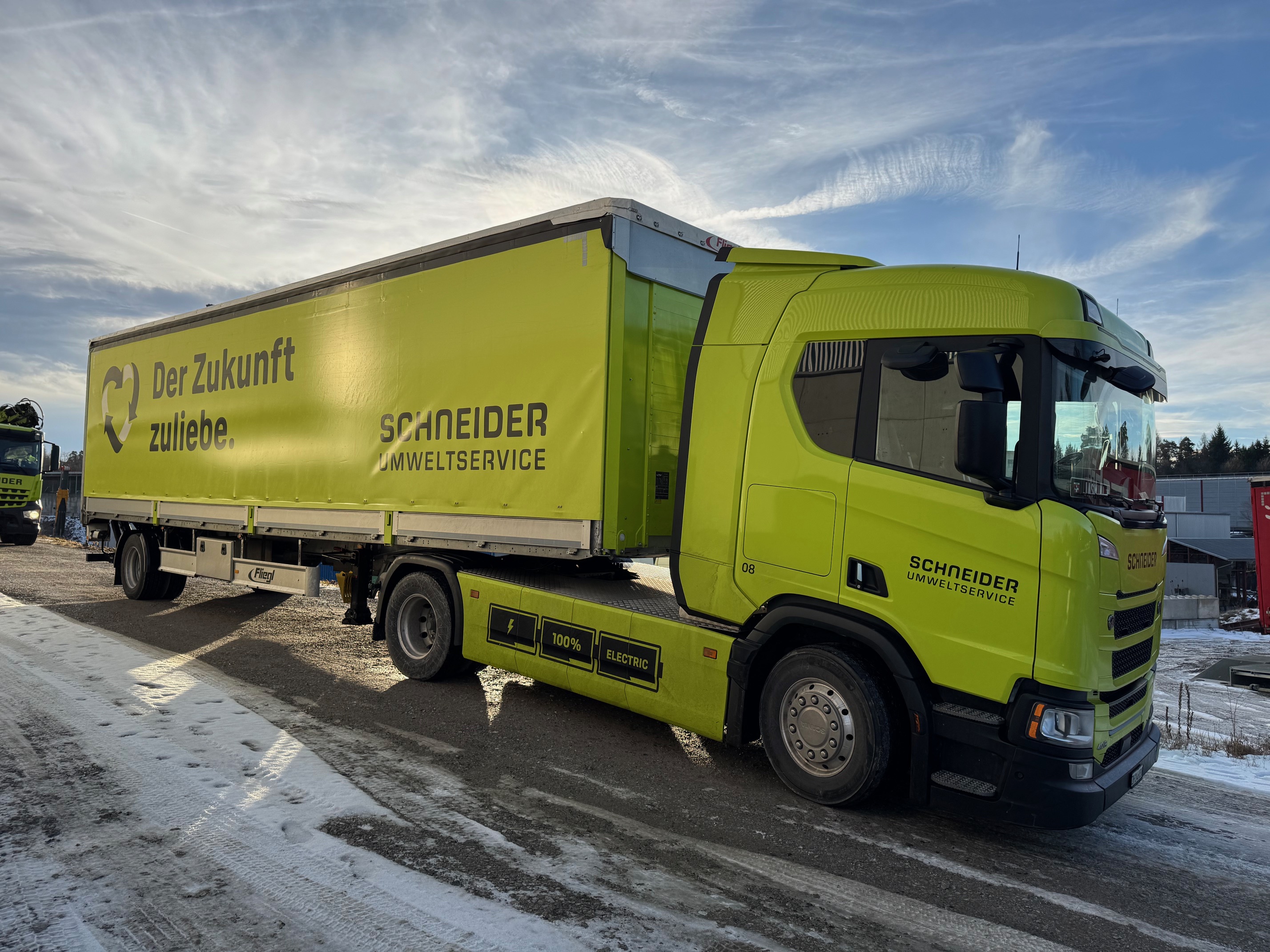
“Our name is a commitment,” says Rico Sommerhalder, CEO of Schneider Umweltservice, which translates to environmental services. To make recycling and waste management even more sustainable, the Swiss company is gradually converting its fleet to electric power in collaboration with Scania. Currently, 25 of the 128 company-owned vehicles in the fleet are electric, including 18 Scania trucks. They are used across a wide range of applications, from hook-lift roll-off vehicles to tractor-trailers and waste collection trucks. For Schneider Umweltservice, the transition to electric mobility is both an economic and an environmental decision. “We see e-trucks as a true win-win solution,” Sommerhalder says. “Over their entire lifecycle, they are economically attractive as energy and maintenance costs are significantly lower. At the same time, they noticeably reduce CO₂ emissions, which reflects our responsibility toward the environment and society.”
The company generates most of the electricity needed for charging from its own photovoltaic systems or purchases it in advance. “Our electric trucks make us less dependent on price fluctuations than we are on diesel prices with conventional trucks. That gives us greater planning security,” Sommerhalder explains. He also highlights the low noise level of electric vehicles as a key advantage, especially in residential areas or on construction sites. “Community acceptance is very important to us,” the CEO emphasizes.
Charging relies on existing infrastructure at recycling centers and around 70 charging points planned with Scania by 2026. This supports the goal of electrifying over half of the fleet by 2027, rising to 90% by 2029.
Koopman Logistics B. V., Netherlands
Making zero-emission vehicle transport possible even for the most demanding logistics tasks
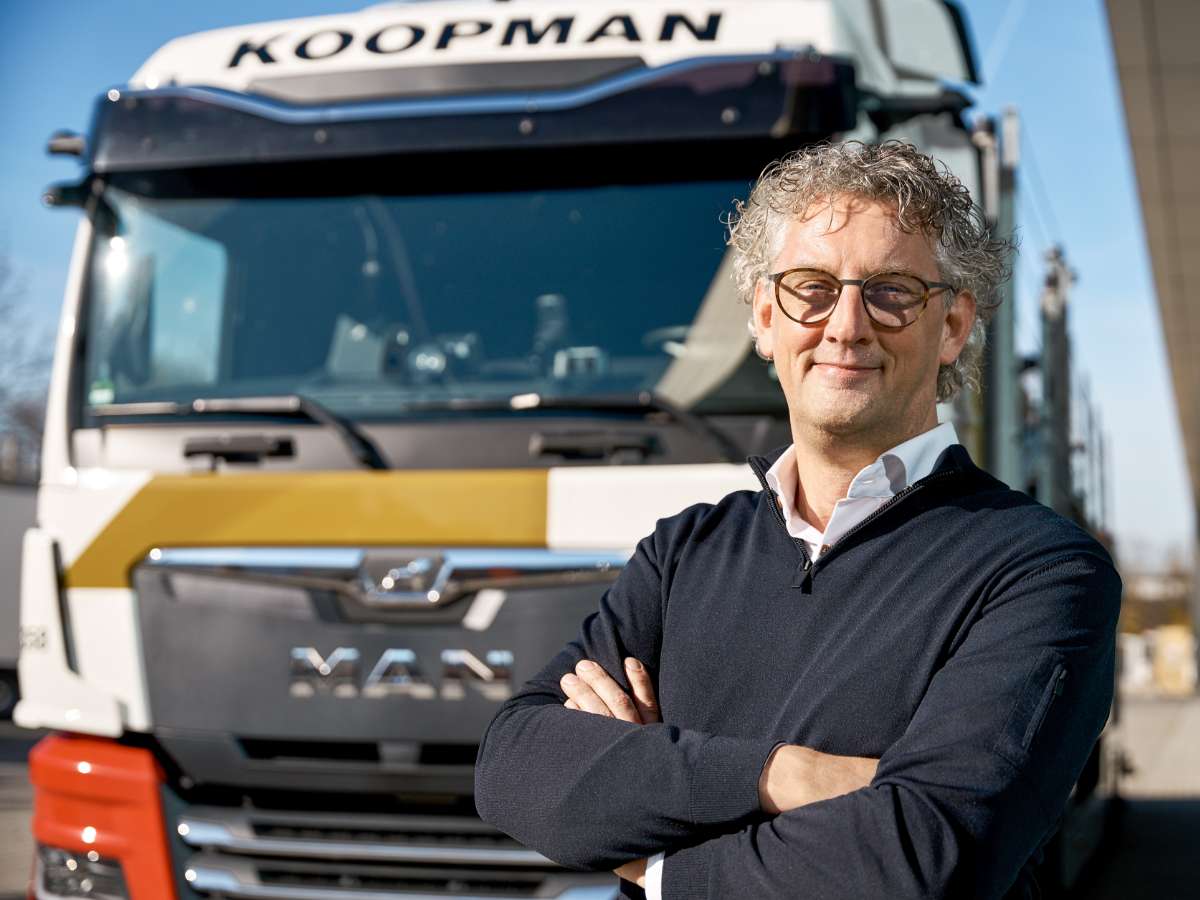
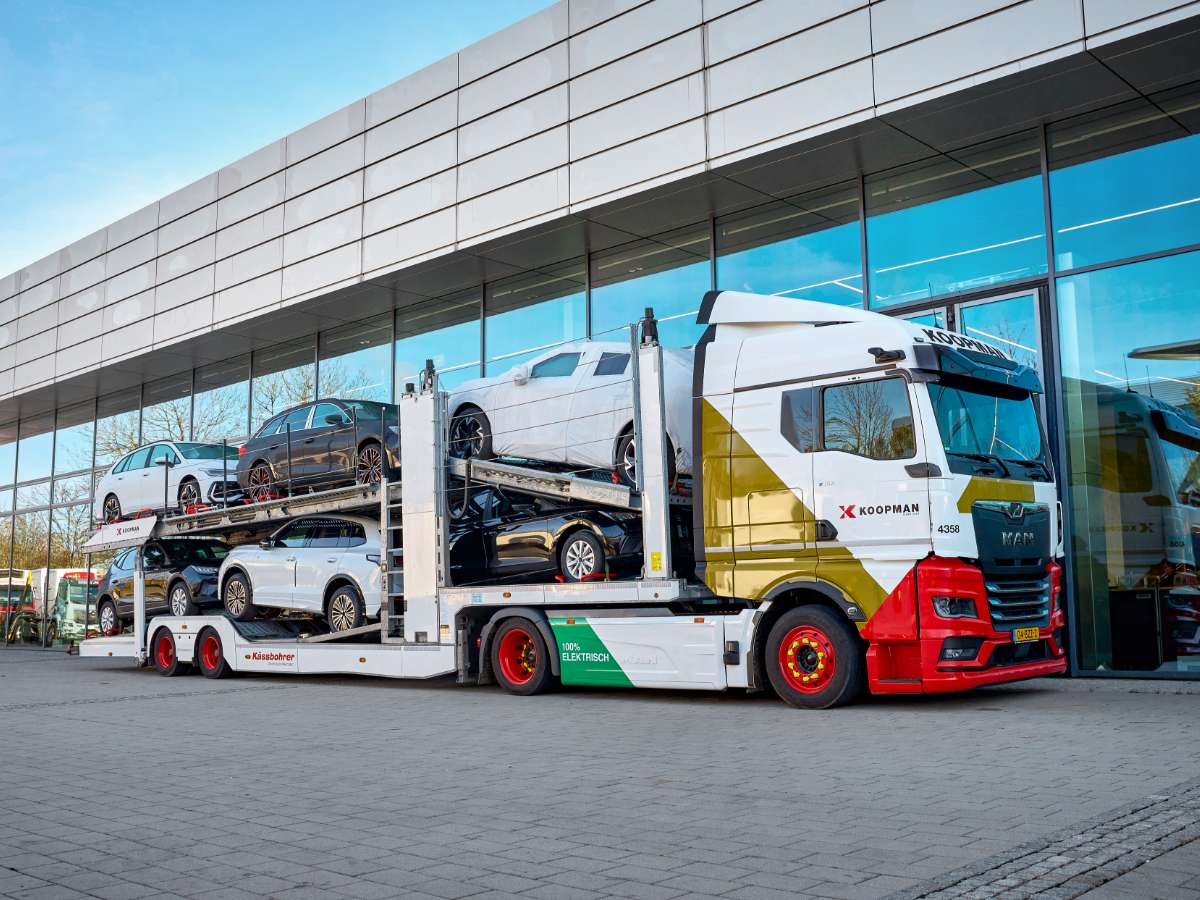
The Koopman Logistics Group, headquartered in the Netherlands, specializes in cargo transport and vehicle delivery. The companyʼs goal is to ensure that cars and goods reach their new owners in an environmentally friendly way. “We would very much like to switch to zero-emission transport, and preferably as quickly as possible,” says Klaas Koopman, the companyʼs co-owner and managing director.
A key part of this sustainable approach are the fully electric MAN eTGX and the MAN eTGX Low Liner (Ultra). With the Low Liner semi-truck, the company can deliver not only components and parts but also complete new vehicles entirely electrically. This vehicle is ideal for tasks where optimal loading capacity is crucial. It features a particularly low trailer height and a very short wheelbase yet still offers maximum battery capacity. Another major advantage for Koopman is the flexible choice of battery packs: with four, five, or six battery modules, the MAN eTGX can be perfectly tailored to any transport requirement.
“The eTrucks donʼt just do the job as well as diesel trucks — they do it even better because they are sustainable,” notes Koopman. Drivers quickly come to appreciate electric trucks because they are quiet and comfortable. “They tell me they don’t want to go back to diesel trucks,” he adds.
The company uses both its own charging stations at headquarters and public charging points along routes for charging. Currently, 5 of the companyʼs 500 vehicles are fully electric MAN trucks, with a further 6 planned as part of the companyʼs strategy to advance the electrification of its fleet.
First Student, USA
Creating healthier school commutes by cutting emissions from daily school transportation.
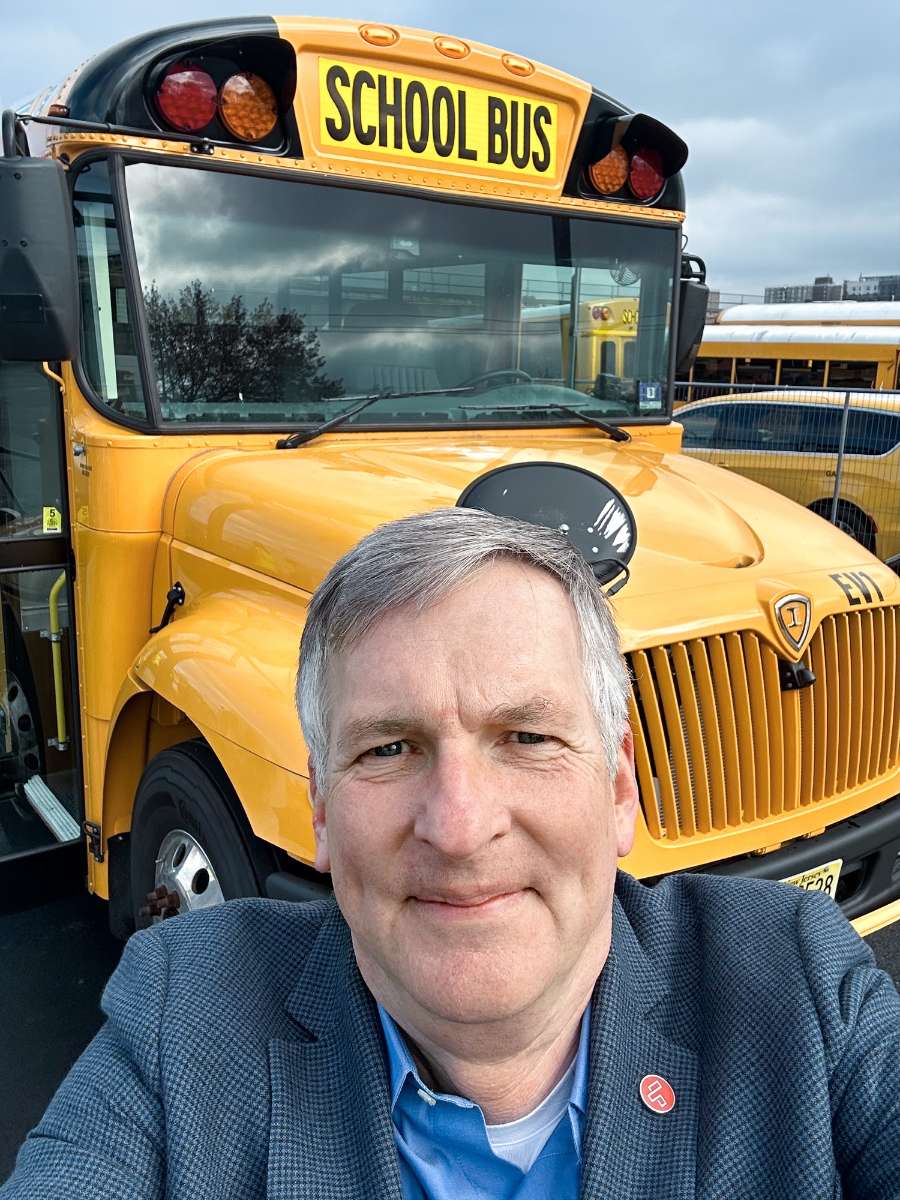
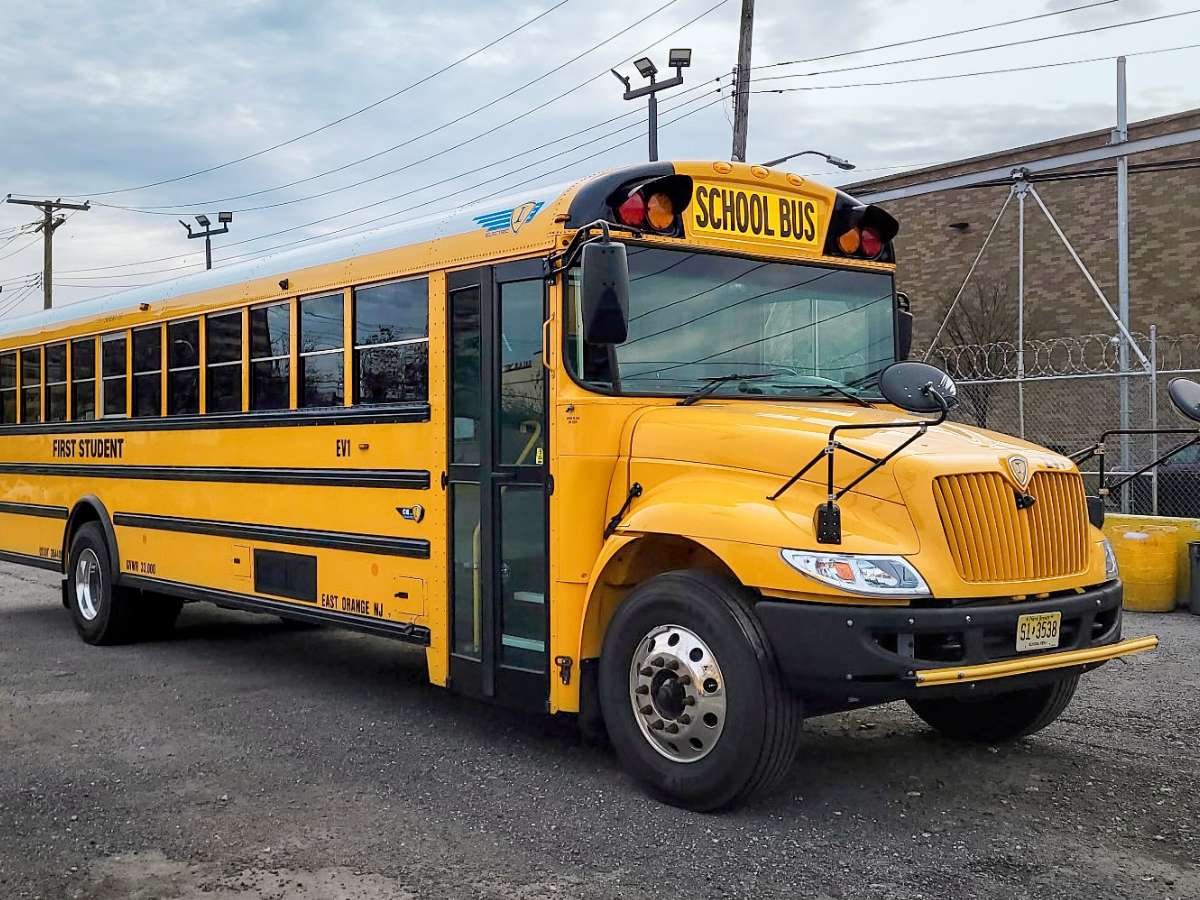
“We move more people per day than the entire U.S. airline industry combined,” says Kevin Matthews. As Head of Electrification at First Student, the largest school bus operator in North America, he is responsible for electrifying the company’s fleet. Around 2.7 million children and teenagers travel to and from school on one of the large yellow school buses each day — some of them now on an electric Type-C bus from IC Bus, a brand of International Motors.
“School buses are ideally suited for electrification,” says Matthews. On average, they cover 128 kilometers in total — 64 kilometers in the morning and the same distance in the afternoon — and they can be charged at the depot at midday and in the evening.
But the most important factor, Matthews says, has been the children. “The safety and health of our students is our primary objective.” First Student aims to reduce emissions, improve air quality, and contribute to a healthier environment with the electric buses. Drivers have also noticed that children are more comfortable and calmer on the electric buses, which is likely thanks to the quieter ride. “This benefits the students and drivers much more than we ever expected,” adds Matthews.
Currently, 82 electric buses from IC Bus are in operation with First Student, with a further 335 on order. However, the companyʼs long-term goal is clear: it plans its entire fleet of around 46,000 buses to be electric in the coming years.
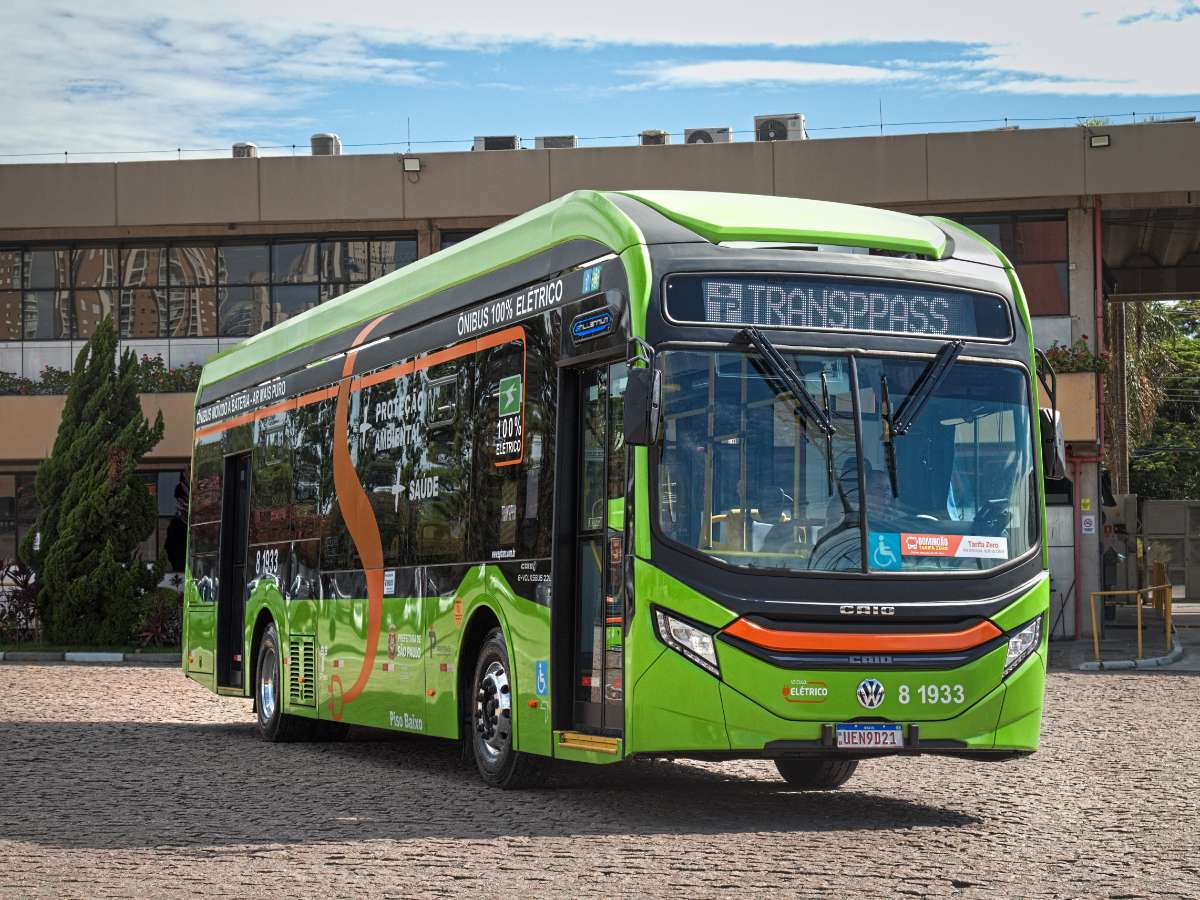
TRANSPPASS, Brazil
Enabling sustainable mobility on challenging urban routes
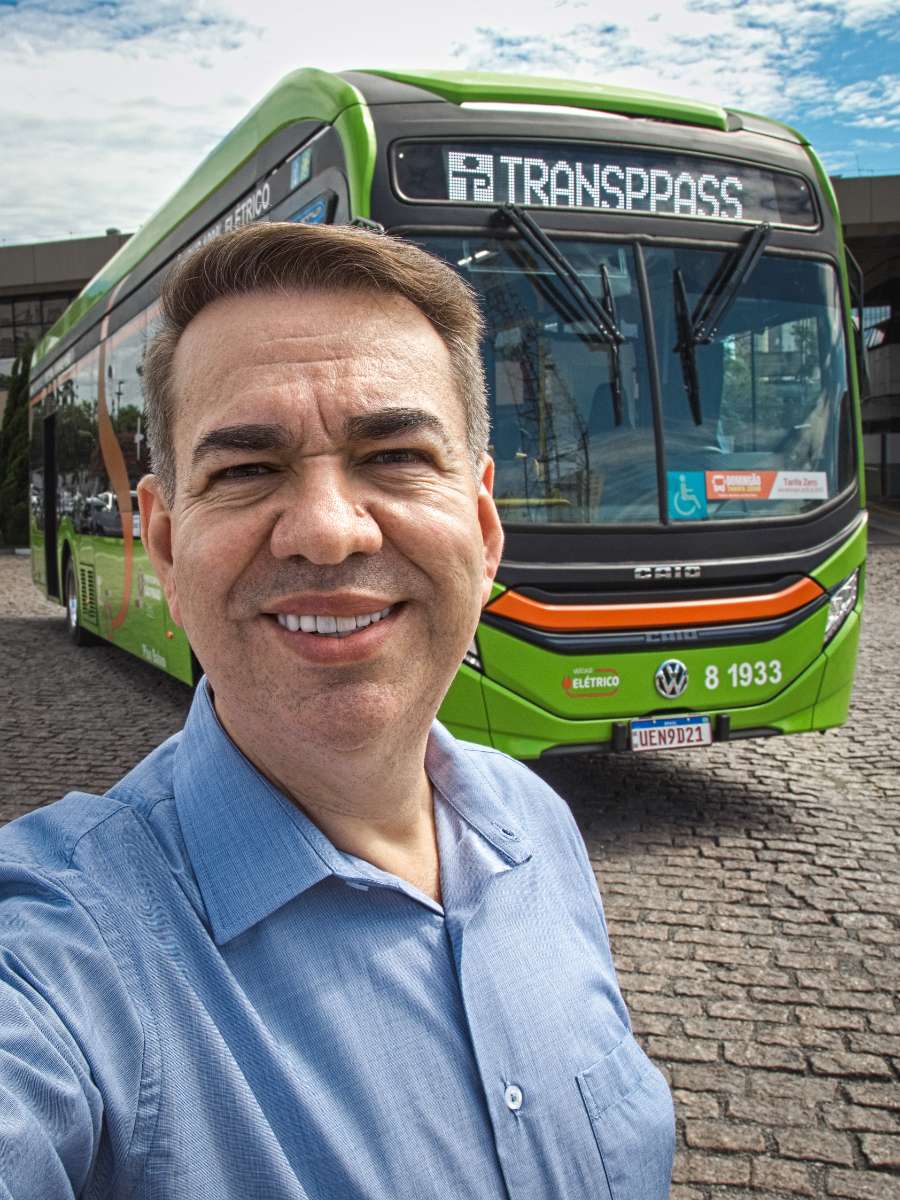
In São Paulo’s West Zone, TRANSPPASS operates public passenger transport in two designated bus areas. As part of its public procurement contract with municipal authorities, the company began investing in electric buses in 2025.
“The environment is now the highest priority,” says Adaías Francisco de Souza, director at TRANSPPASS. New contractual clauses in public tenders require the exclusive use of electric buses instead of diesel vehicles. This marked the beginning of a consistent transformation of the TRANSPPASS fleet in collaboration with Volkswagen Truck & Bus (VWTB). As part of an ongoing renewal process, the entire fleet of 454 buses is expected to be fully electric within the next five years. Quite apart from the positive environmental impact, this also helps to reduce costs.
“One of the advantages offered by e-Volksbuses is that they are compact,” explains de Souza. “This is extremely useful on some of our more difficult-to-access routes.” The 13-meter buses from VWTB are easier to operate on narrow streets, while their range has exceeded expectations. Routes that were previously associated with high diesel costs can now be operated more efficiently and economically with electric buses.
TRANSPPASS thoroughly evaluated the economic performance of the buses in daily operations during a six-month test phase. “The e-Volksbuses were very well received by our operators and our maintenance team,” de Souza recalls. Based on these positive results, TRANSPPASS decided to purchase 50 VWTB electric buses. “The future of transportation has arrived, and electric buses are at the center of it,” de Souza concludes.