No longer just a vision: On Texas highways, autonomous trucks are already operating
like regular fleet vehicles. Joint test operations by International and PlusAI show how
TRATON is transforming autonomous driving from advanced technology into scalable, real-world
logistics solutions.
For a passing driver on the Interstate 35 between Laredo and Dallas, the truck ahead appears
entirely normal. It keeps its lane, maintains distance, and blends seamlessly into the flow of traffic.
The truck seems to be a regular International LT Series, but if you take a closer look, you might
recognize that the person in the driver’s seat is not touching the steering wheel. The driving task is
being handled entirely by PlusAI’s latest generation of AI-based autonomous driving software, SuperDriveTM.
Real-world deployment in Texas
International’s and PlusAI’s autonomous test operations in Texas mark a decisive step toward
scalable, commercial deployment of Level 4 hub-to-hub trucking within the TRATON GROUP. The test
program focuses on validating the joint system of vehicle and software end to end under real operating
conditions. PlusAI contributes the AI-based intelligence for perception, prediction, and planning.
International brings vehicle engineering, industrialization expertise, customer relationships, and
service infrastructure.
“We are committed to the long-term outcome. Every mile in Texas strengthens our product.”
Amisha Vadalia, Vice President of Operations and Program Management at PlusAI
Autonomous trucks with potential
“Autonomy creates value when it behaves like a production vehicle, not a prototype,” says James Cooper,
Head of Autonomous Solutions at International. Trucks depart on fixed schedules, not engineering timetables.
They interact with yards, loading docks, and digital fleet systems. This brings the “soft side” of autonomy into
focus — all the tasks a driver performs beyond driving. “If you don’t get these elements right, you lose the
efficiency gains you achieve through autonomy,” Cooper notes.
Long-haul logistics today remain constrained by hours-of-service limits and growing driver shortages.
Autonomous trucks have the potential to change that equation by enabling predictable, continuous operation
within clearly defined conditions — while maintaining a consistently high safety baseline.
“Autonomy creates value when it behaves like a production vehicle, not a prototype.”
James Cooper, Head of Autonomous Solutions at International
Designed for global use
The current test program focuses on validating the combined system of PlusAI’s software and
International’s vehicle platform across diverse environments. “We’re moving from R&D into the
concrete steps that lead to series production, from building a joint safety case to running structured
on-road validation with a pilot customer,” Amisha Vadalia, Vice President of Operations and Program
Management at PlusAI, explains.
The work in the US does more than advance local testing — it lays the foundation for autonomous
technology across the TRATON GROUP. While the first deployment will be in North America, the architecture
is designed for global use and ultimately for integration into the TRATON Modular System. Learnings in one
market accelerate progress across all TRATON brands.
Commercial-ready solutions
Engineering teams from International and PlusAI work side by side every day on
integration, safety, validation, and operations. “Our strengths complement each other,” explains
Vadalia. “This is not a transactional supplier relationship; we are co-investing toward a shared
long-term roadmap.”
Both Cooper and Vadalia expect Level 4 hub-to-hub operations to become operationally viable
within the next few years, with commercial-ready solutions delivering value before the end of the
decade. The role of human operators will evolve — from long-haul driving to higher-skilled roles in
supervision, yard operations, exception handling, and fleet management.
Industrializing at scale
“We are committed to the long-term outcome,” Vadalia says. “Every mile in Texas strengthens our product.”
Cooper adds: “We’re not just proving that autonomous driving works — we’re building the processes and systems
required to industrialize it at scale.”
Autonomous driving at TRATON
Autonomous driving is an important part of TRATON’s strategy. It addresses critical challenges like
driver shortage, environmental impact, and road safety (learn more about autonomous trucking at TRATON).
Examples from the brands:
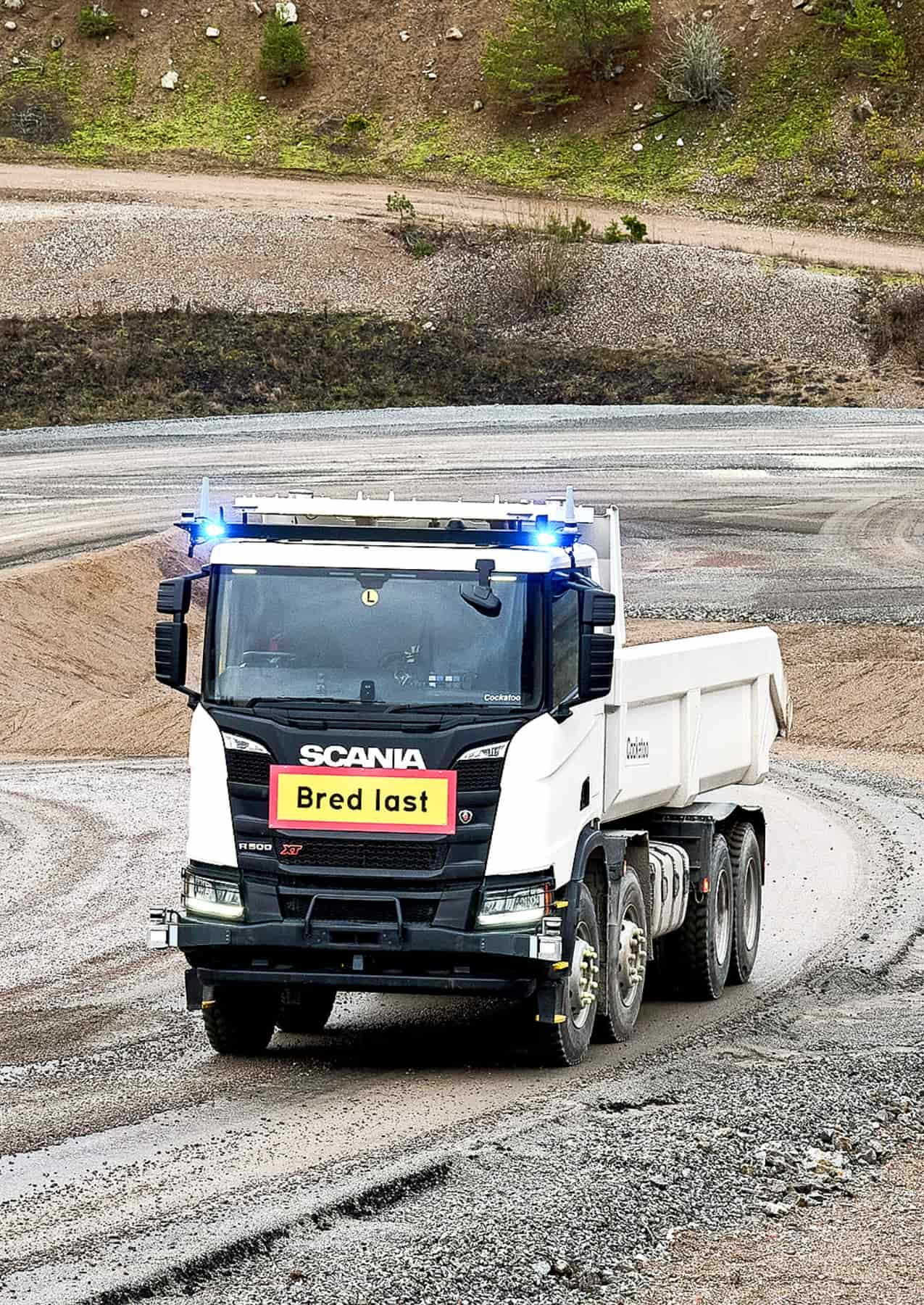
Scania: Driverless in harsh conditions
Scania opened a purpose-built facility in Valsberga, Sweden, to test and develop
autonomous mining solutions. The site allows to continuously test vehicle performance,
optimize loading cycles, and validate software to enable stable operations without a safety driver.
Mining is a natural fit for Level 4 autonomy: routes are repetitive, infrastructure can be
tailored to vehicle needs, and round-the-clock operations offer strong productivity gains.
The facility will shorten the time between lab development and deployment in real-world
mining operations.
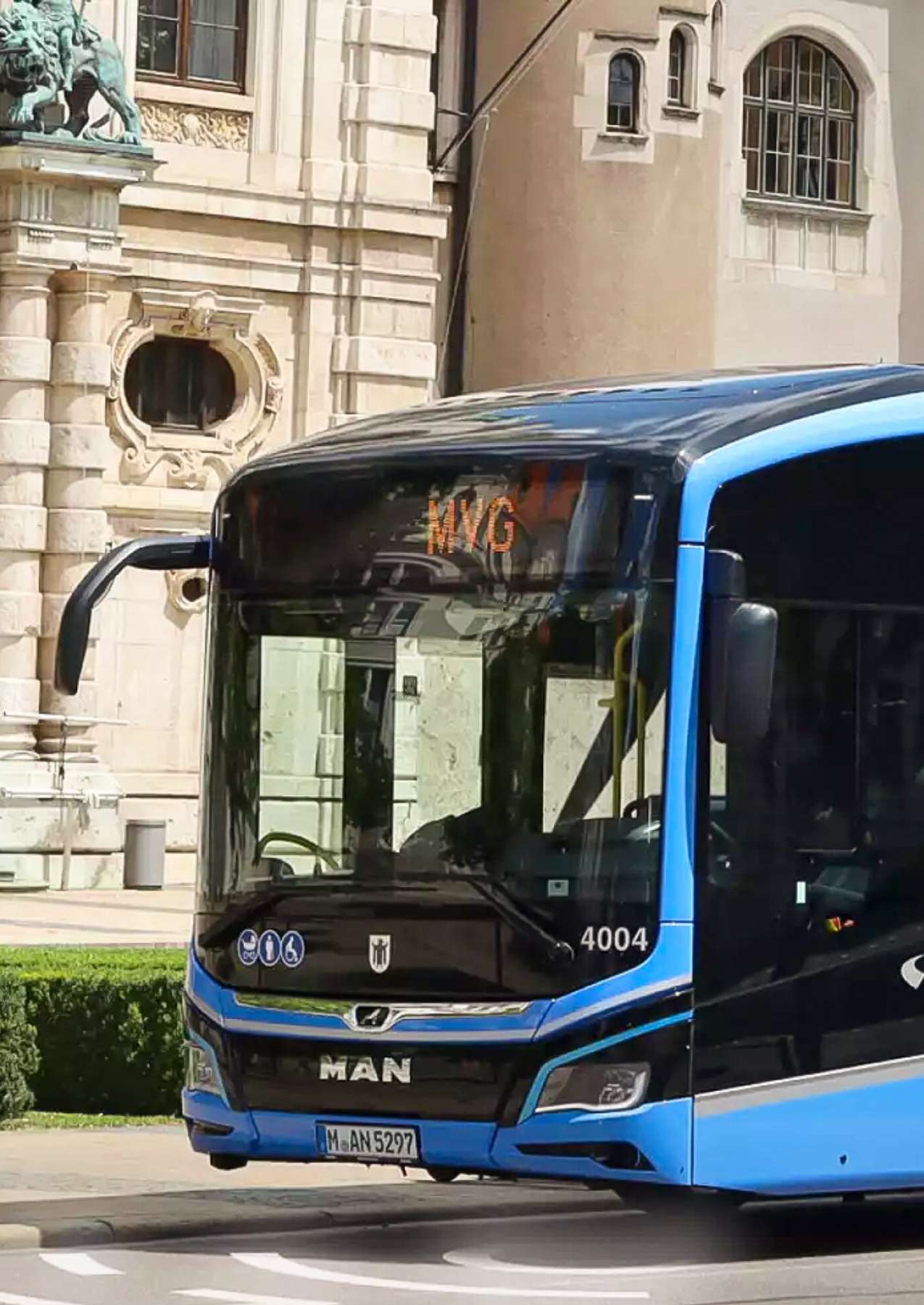
MAN: Autonomous buses for tomorrow’s cities
In Germany, MAN is actively testing autonomous electric buses in Munich with the MINGA
project and in Berlin with the BeIntelli project, using MAN Lionʼs City E models. The
buses are equipped with state-of-the-art sensor and computer technology, aiming for fully
automated operation and series production from 2030 on.
Together with local partners, the brand is testing autonomous electric buses with safety
drivers onboard. The buses navigate defined urban routes while interacting smoothly with city
traffic. The projects aim to demonstrate how highly automated vehicles can make public transit
safer, more efficient, and more accessible.
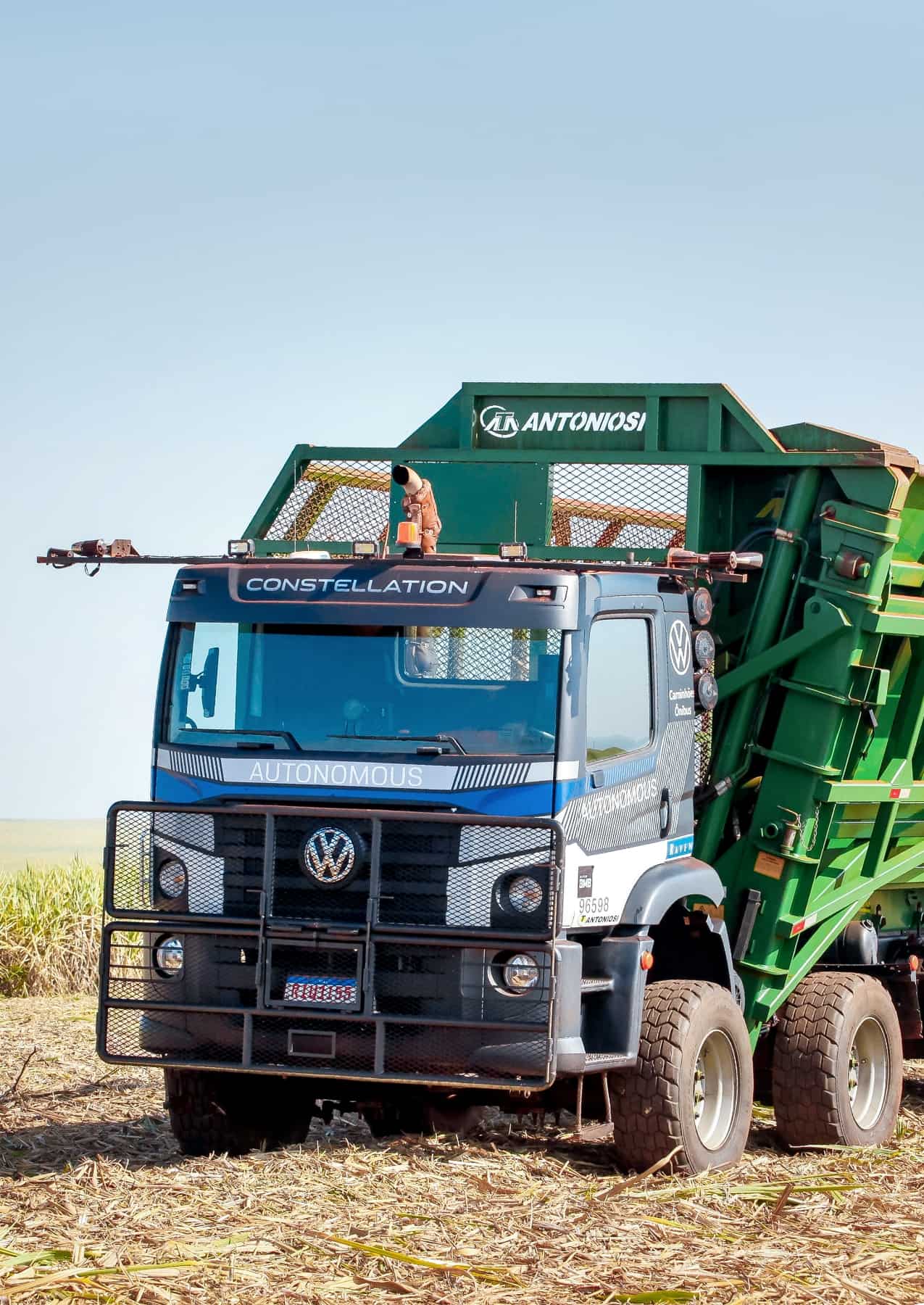
Volkswagen Truck & Bus: Autonomous precision in agriculture
In Brazil, Volkswagen Truck & Bus is exploring how autonomous driving can transform
agricultural logistics. The brand is testing an autonomous harvesting support vehicle
designed to follow combine harvesters with centimeter-level precision. The vehicle operates
alongside harvesting machinery, automatically adjusting its trajectory and speed while
synchronizing with crop flow.
This minimizes grain loss, increases efficiency during harvest season, and reduces the physical
demands on operators. The system’s ability to perform highly repetitive tasks reliably makes it
particularly well suited for large farms facing labor shortages.