Environmental
Environmental responsibility is a key component of the TRATON GROUP’s sustainability strategy. This section covers four key areas — decarbonization and the circular economy as joint impact areas, as well as pollution and biodiversity. It also highlights how the Group is striving to achieve a resource-efficient, low-emission future.
Decarbonization
The TRATON Way Forward strategy (see To Our Shareholders) emphasizes our commitment to sustainability. It serves as a catalyst for change within a global industrial and transportation ecosystem undergoing critical transformation. This is reflected through the joint impact area of decarbonization, through which TRATON aims to transform the business model and product design to reduce GHG emissions across the value chain.
Aligned with this strategy and regulatory requirements, the TRATON GROUP is committed to playing an active role in shaping the future of transportation by driving innovation in cleaner, sustainable mobility solutions. This includes not only reducing emissions but also setting new standards for efficiency, safety, and circularity in the transportation sector. Achieving these goals requires close collaboration with governments, businesses, customers, and other stakeholders. Stringent regulations in the EU are already driving change, and TRATON is advocating for market conditions that support the decarbonization of global transportation.
As of the reporting period, the TRATON GROUP has not yet performed a comprehensive climate resilience analysis. The Group is in a preparatory phase focused on establishing the necessary foundations for a structured approach to climate resilience.
As part of the DMA, TRATON identified material negative impacts and risks in the areas of climate change mitigation and energy. The following section explains the Group’s approach to managing these impacts, in particular related to decarbonization across the entire value chain.
Impacts, risks and opportunities related to decarbonization
| Sustainability matter | IRO category | Time horizon | Scope | Description |
|---|---|---|---|---|
| Climate change mitigation | Actual negative impact | Short-term | Upstream, own operations, and downstream | Significant contribution to climate change, especially the use phase of our products |
| Risk | Medium-term | Upstream, own operations, and downstream | Financial risks to business linked to CO2 penalties, insufficient BEV volumes and loss of market share | |
| Energy | Actual negative impact | Long-term | Upstream, own operations, and downstream | Reliance on fossil fuels contributing to climate change |
Approaches and policies
Material IROs that specifically relate to climate change mitigation and energy are managed through the policies described below.
The TRATON sustainability management policy and the TRATON sustainability management guideline, in conjunction with the sustainability management process (see also the Sustainability management process), refer to climate-related financial transition risks for the business in connection with CO2 penalties, insufficient BEV volumes, and market share losses. These policies, as well as the Code of Conduct for Suppliers and Business Partners, further relate to the actual negative impacts of the transportation industry as a substantial contributor to climate change, especially through the use phase of the Group’s products.
The TRATON GROUP’s Code of Conduct for Suppliers and Business Partners, as well as the respective codes of the brands, encourages the implementation of effective measures to reduce air emissions — particularly GHG — that pose risks to human health and the environment. To enhance product and service performance, partners are expected to actively reduce emissions along the value chain, for example through greater use of fossil-free energy. On request, suppliers who supply TRATON directly or via the TRATON brands provide product-level data on energy consumption (MWh) and GHG emissions (Scope 1, 2, and 3, in CO2-equivalents), enabling the Group to improve its environmental indicators. Partners are further encouraged to adopt science-based targets and renewable energy goals aligned with the Paris Climate Agreement, and to commit to a carbon-neutral economy by 2050. Additional details on the Code of Conduct for Suppliers and Business Partners can be found below and in the section on Overarching policies.
Two frameworks further shape TRATON’s decarbonization: The Environmental Compliance Management System (ECMS), which covers all environmental sustainability matters, including decarbonization, circularity, pollution, and biodiversity and, therefore, relates to all environmental IROs, as well as the guidelines for renewable and fossil-free electricity, which relate to the actual negative impact of reliance on fossil fuels that is contributing to climate change. Both frameworks apply to the entire TRATON GROUP and are accessible to all affected stakeholders, our employees, via the intranet, or via distribution. Further details on the policies can be found in the table below.
Policies addressing decarbonization
| Name of policy | Key contents and objective | Scope | Responsible organizational level and monitoring process | Availability of the policy for stakeholders | Further Information |
|---|---|---|---|---|---|
|
ECMS (Group policy) |
The ECMS directs all TRATON GROUP entities to address environmental management through all stages of their operations and the life cycle of their products and services with the goal of minimizing the environmental impact. By integrating compliance aspects into environmental management, the TRATON GROUP ensures conformity with applicable regulations, uncovers possible misconduct, and prevents it in the future. The policy defines the minimum requirements for operating organizations to implement the ECMS, while providing flexibility to tailor these requirements to the brands’ specific business needs. It outlines what is necessary for effective environmental compliance management, without prescribing how it should be carried out. In this way, it empowers each organization, regardless of size, location, range of activities, or degree of regulation, to identify, assess, and manage environmental aspects and risks. The ECMS ambition level is 100% coverage of all TRATON entities within the Group’s general compliance framework. The reference period for measuring progress is 2022. In line with the risk-based approach, this Group policy is divided into nine core premises: leadership and commitment; responsibility and accountability; compliance obligations; managing environmental aspects, risks, and opportunities; improving performance; awareness and competence; stakeholder dialog; evaluating performance; and managing non-compliance. |
TRATON GROUP | The most senior level at the TRATON GROUP that is accountable for this policy is the Executive Board. The policy is reviewed and updated if necessary. The effectiveness of the ECMS is tracked by evaluating risks, incidents, and audit findings from both internal and external audits conducted under ISO 14001:2015. These findings are reported annually by the brands and subsequently presented to the Executive Board as part of the annual management review. | Access via intranet | This policy is aligned with internationally recognized standards, e.g., the ISO 14001:2015 and ISO 19011:2018, to enhance environmental compliance across the life cycle of products and services. |
| Guidelines for renewable and fossil free electricity |
The guidelines for renewable and fossil-free electricity outline the commitment of the TRATON GROUP to reducing GHG emissions by transitioning to renewable and fossil-free electricity sources throughout the value chain. Renewable electricity sources such as wind, solar, sustainable hydropower, certified biomass, geothermal, and marine energy are preferable. While nuclear power is considered a fossil-free option, it is only acceptable when renewable options are unavailable due to business, infrastructural, or regulatory constraints. The policy prioritizes on-site electricity generation, followed by off-site generation through investments in renewable projects and contractual solutions for renewable energy procurement. Wherever possible, electricity from renewable sources should be sourced within the same interconnected grid, enhancing the local impact and reliability of renewable electricity use. Exceptions are made only when renewable energy sources are inaccessible, in which case nuclear power may be temporarily used with prior consultation from the TRATON Energy department. The policy does not provide for either a fixed ambition level or a reference period for measuring progress. |
TRATON GROUP |
The most senior level at the TRATON GROUP that is accountable for the guidelines is the Chief Sustainability Officer of TRATON GROUP. The guidelines are reviewed and updated if necessary. For monitoring purposes and to track the effectiveness of these guidelines, a uniform reporting system is planned for all sites across the brands and the entire TRATON GROUP. Compliance and transparency are ensured through third-party audits, which also prevent double counting of renewable energy attributes. |
These guidelines are distributed to all TRATON brands and are scheduled for integration into the Group’s overarching sustainability documentation. | The criteria for implementation of these guidelines are aligned with Scope 2 Guidance of the GHG Protocol and the Technical Criteria of the Renewable Energy Initiative RE100. To support implementation, particularly for regional operational units, the TRATON GROUP Sustainability department offers direct guidance on selecting and procuring renewable and fossil-free electricity. |
Actions
In the reporting period, the TRATON GROUP did not define concrete Group-wide actions, targets, or a climate transition action plan. The primary reason is that the Group is in a preparatory phase focused on establishing the necessary foundations for effective decarbonization. This involves identifying the key decarbonization levers — strategic mechanisms that outline the pathways for addressing decarbonization — across brands and operations, which is essential for setting realistic, fact-based targets. TRATON prioritizes building a robust plan that will enable credible, actionable, and measurable targets in subsequent reporting periods. There is currently no defined scope of application, binding timeframe, or monitoring for the defined levers.
GHG footprint of the TRATON GROUP
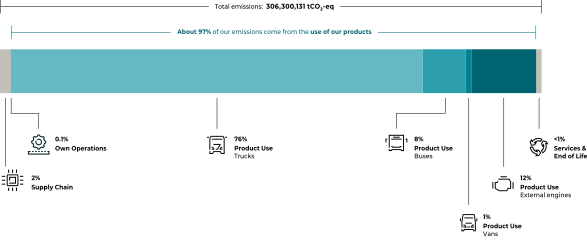
TRATON developed forecasts for GHG emissions from its own operations (Scope 1 and 2) and the vehicle use phase (Scope 3, Category 11). The analysis shows that emissions from the use phase account for the predominant share of total emissions, at about 97%. In light of this, the electrification of the product portfolio is the key pathway to reducing emissions. A detailed breakdown of total emissions reveals that 76% are attributable to the use phase of trucks, 8% to the use of buses, 1% to the use of vans, and 12% to the use of external engines in customer applications. Conversely, emissions from own operations represent only 0.1% of the total, with supply chain activities contributing 2%.
Although the footprint from its own operations is comparatively small (0.1%), TRATON is committed to reducing it. Emissions are systematically measured across all sites, with individual roadmaps developed for each brand.
Levers addressing decarbonization in own operations
| Levers | Description |
|---|---|
| Renewable electricity | Most of the TRATON GROUP’s European production sites are already utilizing electricity from renewable energy sources. The remaining sites are evaluated to transition to renewable energy sources in the coming years. |
| Electrification and renewable heat | When it comes to electrification and the supply of renewable heat, there are various considerations for replacing the existing fossil energy sources. Depending on local requirements, geothermal energy, biogas, or hydrogen are being considered. A timeframe by which all locations of TRATON will be converted to renewable energy sources for heat supply has yet to be defined. |
| Electrification and fuel switching | In addition, the electrification and transition to alternative fuels for the own fleet of the TRATON GROUP is being driven forward. |
About 97% of the TRATON GROUP’s CO2 emissions occur during the use phase of its products. To address this, the company focuses on three key levers: battery-electric vehicles (BEVs) as the primary and most effective means to decarbonize product use, energy-efficient internal combustion engines (ICEs), and solutions based on biofuel and biogas for transitional and external applications. These technologies form the foundation of TRATON’s strategy to reduce use-phase emissions.
Levers addressing decarbonization in the use phase
| Levers | Description |
|---|---|
| BEV production |
The TRATON GROUP has been accelerating its investment in the development and production of BEVs to reduce reliance on diesel engines. TRATON is introducing a large range of battery-electric trucks and buses to the market, with a focus on long-haul electric solutions equipped with fast-charging capabilities. The TRATON GROUP further aims to lower the total cost of ownership for electric trucks and buses. The brands offer consulting services to fleet operators, helping them evaluate the operational savings BEVs can deliver, including reductions in maintenance and fuel costs. |
| Improving energy efficiency of internal combustion engine vehicles | By enhancing the efficiency of ICEs, the TRATON GROUP reduces fuel consumption and GHG emissions as it transitions to full electrification. The TRATON GROUP is developing innovative combustion technologies to achieve better fuel consumption and lower emissions. Advanced engineering and leveraging digital solutions to monitor and adjust engine performance in real time, optimizing fuel use based on load and topography, results in more efficient energy use and minimized emissions. These innovations enable the TRATON GROUP to deliver immediate emission reductions through enhanced ICE vehicle efficiency while advancing toward a fully electric future. |
| Enabling use of renewable fuels | To enable the use of renewable fuels, the TRATON GROUP is making its vehicles’ engines compatible with renewable fuels, such as biodiesel and biogas, which can achieve lower CO2 emissions compared to traditional diesel if sustainably sourced biofuels are used. |
The supply chain accounts for approximately 2% of the TRATON GROUP’s total CO2 emissions. As part of its decarbonization strategy, the company is increasing the use of recycled materials in manufacturing processes. The Group is working with suppliers to reduce emissions from hot spot materials that together represent the majority of material-related emissions. Hotspot materials, identified through Life Cycle Assessment (LCA) at the vehicle level, account for up to 80% of supply chain carbon emissions, primarily from steel, aluminum, cast iron, and battery cells. In the course of reducing its emissions, TRATON is targeting high-impact areas identified through LCAs.
Levers addressing decarbonization in the supply chain
| Levers | Description |
|---|---|
| Use of recycled content in hot spot materials | Recycled materials require significantly less energy to produce compared to virgin materials. By integrating these materials into TRATON’s manufacturing processes, the Group directly reduces the embedded carbon in its vehicles. Furthermore, recycled content reduces the need for resource extraction, minimizes waste, and creates a more resilient and sustainable supply chain. |
| Sourcing of materials produced with renewable energy | The production of batteries, steel, aluminum, and cast iron is energy-intensive. By sourcing materials produced with renewable energy, the TRATON GROUP can substantially reduce the embedded carbon in its materials. |
The Group is collaborating with stakeholders across and beyond its value chain to accelerate the transformation to electric mobility. This includes expanding charging infrastructure through initiatives like Milence and TRATON Charging Solutions, which aim to make public charging for heavy-duty vehicles accessible across the entire EU. For long-haul and heavy-duty applications, a robust charging network is essential. These activities are supported by strategic partnerships, direct investments, and the development of new technologies. Together, these initiatives are paving the way for a more sustainable future in transport.
Levers addressing decarbonization via partnerships
| Levers | Description |
|---|---|
| Partnerships for charging infrastructure |
TRATON Charging Solutions focuses on simplifying access to the charging infrastructure by providing reliable charging services for commercial vehicle operators. The network currently comprises around 150 locations and over 400 charging points across 19 European countries. TRATON Charging Solutions partnered with Hubject in 2023 to align EU charging data standards, enhancing network usability for fleet operators and enabling global scalability. Additionally, the TRATON GROUP, in partnership with Daimler Truck and Volvo Group, has launched a high-performance charging network in Europe through their joint venture, Milence. Joint investments of €500 million have been allocated to install high-performance charging points along all major TEN-T corridors — the long-distance, multimodal transportation axes of Europe’s TransEuropean Transport Network, helping to ensure that infrastructure development aligns with customer needs and market development. Milence opened its first charging hub in the Netherlands in 2023. In 2024, additional hubs were launched in Belgium, Germany, France, and Sweden, followed by Italy, the UK, and Spain in 2025. As of 2025, Milence had over 30 operational sites across Europe. Despite growing regulatory support, charging infrastructure remains a critical bottleneck to the adoption of EVs. Green corridors: together with partners, TRATON develops green corridors — dedicated routes for battery-electric heavy-duty vehicles supported by robust charging infrastructure and renewable energy. TRATON launched a pilot project in Brazil and set up a strong ecosystem of partners supplying the full range of expertise. Further green corridor projects are planned in Mexico, Kenya, Poland, and Australia, among other countries. |
In the reporting year, TRATON continued to allocate resources toward reducing CO2 emissions, including investments in battery production, transformation of manufacturing lines, and workforce development. These initiatives support the expansion of TRATON’s electrified commercial vehicle portfolio and reflect the TRATON GROUP’s strategic commitment to sustainable transportation solutions. The electrification of the product portfolio is the primary contributor to decarbonization, which is reflected in the OpEx and CapEx plan.
In 2025, investments of €513 million (previous year: €563 million)1 were made for decarbonization-related initiatives. Looking ahead, the Group plans to invest an additional €3.1 billion between 2026 and 2030, with a significant share directed toward use-phase decarbonization levers.
Performance
Energy consumption and mix
| 2025 | 20241 | |
| Total energy consumption (MWh) | 2,388,588 | 2,439,717 |
| Total fossil energy consumption (MWh)2 | 1,309,127 | 1,372,865 |
| Fuel consumption from coal and coal products (MWh) | 321 | 293 |
| Fuel consumption from crude oil and petroleum products (MWh) | 408,587 | 444,787 |
| Fuel consumption from natural gas (MWh) | 569,144 | 521,875 |
| Fuel consumption from other fossil sources (MWh) | 1,757 | 3,066 |
| Consumption of purchased or acquired electricity, heat, steam, and cooling from fossil sources (MWh) | 329,317 | 402,844 |
| Share of fossil sources in total energy consumption (%) | 55 | 56 |
| Energy consumption from nuclear sources (MWh) | 33,368 | 34,068 |
| Shares of consumption from nuclear sources in total energy consumption (%) | 1 | 1 |
| Total renewable energy consumption (MWh) | 1,046,094 | 1,032,784 |
| Fuel consumption from renewable sources (MWh)3 | 74,739 | 80,396 |
| Consumption of purchased or acquired electricity, heat, steam and cooling from renewable sources (MWh) | 941,749 | 925,389 |
| Consumption of self-generated non-fuel renewable energy (MWh)4 | 29,606 | 26,999 |
| Share of renewable sources in total energy consumption (%) | 44 | 42 |
| Non-renewable energy production (MWh)5 | 45,870 | 4,259 |
| Renewable energy production (MWh)6 | 48,226 | 43,880 |
| Total energy consumption from activities in high climate impact sectors (MWh) | 2,388,588 | 2,439,717 |
1 In addition to the update based on the availability of actual data, the metrics for 2024 were adjusted due to structural changes.
2 Further disaggregation specifies how much energy is used from coal and coal products, crude oil, and petroleum products, natural gas, other fossil sources or purchased or acquired electricity, heat, steam, or cooling from fossil sources.
3 The data on energy consumption from biomass (including industrial and municipal waste of biological origin), biofuels, biogas, and hydrogen from renewable sources is directly derived from the respective invoices.
4 The TRATON GROUP consumes only self-generated, non-fuel renewable solar energy. Meter readings specify the amount produced, consumed, and sold.
5 Energy production from combined heat and power plants driven by gas burning, and electricity production from diesel burning in test engines and diesel generators.
6 Energy production from renewable sources, primarily from solar panels for TRATON, and from biomass pellets, calculated using conversion factors based on invoices detailing the mass (kg) of pellets purchased or from meters in burning stations if mass data is unavailable.
The energy intensity of TRATON is reported as total energy consumption in megawatt hours (MWh) per million euros (€ million) of sales revenue from activities in high climate impact sectors. All TRATON GROUP activities are considered to fall within high climate impact sectors as the Group’s main economic activity is the manufacture of commercial vehicles and engines (NACE Code 29.10: Manufacture of motor vehicles). The only exception is financial services, which are classified under NACE Section K (Financial and insurance activities: divisions 64–66) and therefore not considered high climate impact sectors.
Compared with the previous year, financial services are now excluded from the scope. The prior-period comparative figure was modified accordingly to comply with the new methodology. In 2024, total energy consumption from activities in high climate impact sectors of the TRATON GROUP was 53.6 MWh per € million of revenue, while in the reporting year this figure is 57.1 MWh per € million. The revenue used to calculate energy intensity, corresponding to the Group’s total sales revenue from activities in high climate impact sectors, was €45,541 million in 2024 and €41,864 million in 2025.
To track and manage energy consumption, environmental coordinators at each brand collect energy usage invoices and record them in their brand-specific environmental IT systems. These invoices detail the amount of energy consumed from fossil and renewable sources. The consumption of nuclear energy is estimated by multiplying the energy consumption from fossil sources with the country-specific percentage of nuclear energy in the grid, provided from the World Nuclear Performance Report. The data in the table above is based on a combination of actual data and estimates. In particular, consumption data for the fourth quarter was not yet fully available at the time of reporting and was therefore calculated using established estimation methods.
GHG emissions
GHG emissions (in tCO2eq)
| 2025 | 20241 | |
| Scope 1 GHG emissions | ||
| Gross Scope 1 greenhouse gas emissions (tCO2eq) | 232,441 | 231,219 |
| Percentage of Scope 2 GHG emissions from regulated emission trading schemes (%)2 | 7 | 7 |
| Scope 2 GHG emissions | ||
| Gross location-based Scope 2 greenhouse gas emissions (tCO2eq) | 320,688 | 323,810 |
| Gross market-based Scope 2 greenhouse gas emissions (tCO2eq)3 | 105,188 | 138,025 |
| Scope 1 & 2 GHG emissions (market-based) | 337,628 | 369,244 |
| Significant scope 3 GHG emissions | ||
| Total gross indirect (Scope 3) GHG emissions (tCO2eq) | 305,749,409 | 359,148,382 |
| Purchased goods and services (tCO2eq)4 | 6,818,270 | 7,324,861 |
| Capital goods (tCO2eq)5 | 684,440 | 654,381 |
| Fuel and energy-related activities (tCO2eq)6 | 111,173 | 121,322 |
| Upstream transportation and distribution (tCO2eq)7 | 846,222 | 1,133,269 |
| Waste generated in operations (tCO2eq)8 | 593,407 | 397,038 |
| Business travel (tCO2eq)9 | 80,938 | 86,700 |
| Employee commuting (tCO2eq)10 | 60,436 | 61,619 |
| Upstream leased assets (tCO2eq)11 | – | – |
| Downstream transportation (tCO2eq)12 | – | – |
| Processing of sold products (CO2eq)13 | 199,587 | 197,938 |
| Use of sold products (tCO2eq)14 | 295,593,530 | 348,263,895 |
| End-of-life treatment of sold products (tCO2eq)15 | 465,374 | 606,022 |
| Downstream leased assets (tCO2eq)16 | – | – |
| Franchises (tCO2eq)17 | 287,139 | 292,358 |
| Investments (tCO2eq)18 | 8,893 | 8,981 |
| Total GHG emissions | ||
| Total GHG emissions (location-based) (tCO2eq) | 306,302,538 | 359,703,411 |
| Total GHG emissions (market-based) (tCO2eq) | 306,087,037 | 359,517,627 |
1 In addition to the update based on the availability of actual data, the metrics for 2024 were adjusted due to structural changes.
2 Percentage is calculated with an online tool from the German Emissions Trading Authority (DEHSt) at the Federal Environment Agency.
3 Location-based emission factors were used for individual sites for which no market-based emission factors are available.
4 Purchased goods = volume of vehicle and components * weight of vehicle and components * kgCO2eq per reference vehicle or components. Purchased services (IT, supplies, packaging, sales marketing) are scoped out due to their minimal impact (<1%). Scania groups similar products together into reference groups, using production volumes and an in-house Material Data System (SMDS) with external Life Cycle Assessment (LCA) data. International groups similar products together into reference groups, based on the number of vehicles sold, and uses external LCA data. MAN applies LCAs for vehicle categories using sales data, average weight calculations, and expert estimates. VWTB calculates emissions from component volumes, applying Ecoinvent emission factors based on engineering calculations.
5 Capital goods = monetary input * emission factor. Monetary input based on values from Financial Accounting and Cash Transaction System (FACTS). Emission factors are used from GHG protocol. Factors are converted into kgCO2/€ based on world bank data and adjusted for inflation based on the German Federal Office for statistics. For International, ClimatePartner calculates this datapoint.
6 Fuel and energy-related activities = Sum of (emission factor for fuel type * fuel consumption for fuel type). The emission factors are taken from Volkswagen AG’s internal manual. Additional emission factors are taken from Sphera’s LCA for Experts database. MAN and International use emission factors from VDA (German Association of the Automotive Industry). VWTB uses emission factors from Ecoinvent, the International Energy Agency (IEA), and the Brazilian Ministry of Energy. The amount of fuel is derived from consumption data and differentiated by fuel type.
7 Scania and VWTB apply an activity-based calculation method. MAN employs a cost-based approach. Scania and MAN rely on emission factors from the Global Logistics Emission Council (GLEC). VWTB uses emission factors from the Department for Environment, Food & Rural Affairs (DEFRA) and the Brazilian GHG Protocol Program (PBGHGP). ClimatePartner calculates this data point for International.
8 Waste generated in operations = Sum of (waste outflow * corresponding emission factor). Scania, MAN and International use emission factors from LCA for Experts and the internal manual from Volkswagen AG. Due to the different type of waste operations in South America, VWTB uses emission factors from the IPCC.
9 Flight, train, and car data is collected separately at brand level and multiplied with the respective emission factors. MAN gets its data from BCD Travel standard reports for flight emissions. Car rental providers report data on the total annual orders of rented cars. Emissions from train travel are set to zero as Deutsche Bahn reports zero CO2 usage. Scania receives its emissions stemming from flight travel from BCD Travel reports. No emissions from train transportation are reported for Scania. VWTB calculates the emissions based on emission factors from DEFRA 2021 for flights and from PBGHGP for cars. No trains are used in VWTB. ClimatePartner calculates this datapoint for International.
10 Commuting emissions = Σ number of employees per region * distances * modal split * emission factors. The number of employees is split into regions (Europe, North America, South America, Africa, Asia/Pacific, Australia) and direct (production)/indirect (non-production) sector. VWTB uses a calculation based on primary data since its employees’ main method of commuting is the chartered bus fleet hired by the VWTB.
11 Upstream leased assets, primarily consisting of vehicles and buildings, are reported under Scope 1 and Scope 2 emissions, as their operational emissions can be determined.
12 Reported under upstream transportation and distribution.
13 Only rigids are included in the processing calculation. The emissions are estimated by assuming the processing emissions per vehicle are the same as the production emissions per vehicle. Scope 1 and 2 emissions are divided by the total number of vehicles sold/produced and then multiplied by the number of rigids sold/produced.
14 See Scope 3: Methods, assumptions, and emission factors
15 End-of-life treatment of sold products =Scania and MAN have developed internal life cycle assessment (LCA) models to produce intensity factors estimating CO2 emissions associated with end-of-life treatment per kilogram of product group. These intensity factors are then multiplied by the total weight of each product group to calculate total end-of-life greenhouse gas (GHG) emissions. International and VWTB follow the model developed by Scania.
16 Reported under use of sold products.
17 Scania and MAN franchise emissions are calculated based on the average Scope 1 and Scope 2 emissions of a typical commercial site. VWTB and International do not have any commercial sites in scope for CSRD.
18 Scania calculate this datapoint in two steps. Investments are prioritized by importance, selecting the top ten for evaluation. Scope 1 and 2 emissions are then calculated based on Scania’s equity interest in these companies, using the formula: Emissions * Interest. Emission data is obtained from the companies’ environmental reports or, if not available, through questionnaires sent to the companies. MAN has fewer than ten investments and therefore includes all investments in its calculation. VWTB and International do not provide financial resources to external companies.
The TRATON GROUP annually calculates its greenhouse gas emissions using the Scope 1 to 3 inventory, in accordance with the guidelines of the internationally recognized GHG Protocol and the ESRS.
Scope 1 and 2: Methods, assumptions, and emission factors
Currently, Scope 1 and Scope 2 emissions are calculated by the brands and aggregated at Group level.
For Scope 1 emissions, the following emission factors are used: Scania and VWTB apply the Intergovernmental Panel on Climate Change (IPCC) Guidelines. MAN relies on the German Association of the Automotive Industry (VDA) guidelines for facilities, as well as the Life Cycle Assessment (LCA) for Experts Software and the Joint Research Centre (JRC) — of the European Commission and its JEC Consortium for vehicles. International uses factors from the Climate Registry.
Scope 2 GHG emissions are calculated using both location-based and market-based approaches in alignment with Scope 2 Guidance of the GHG Protocol. For US sites, Environmental Protection Agency (EPA) emission factors are applied. For non-US sites, emission factors provided by the International Energy Agency (IEA) are used. Regarding the types of contractual instruments used for energy purchases tied to Scope 2 emissions, the TRATON GROUP identifies renewable energy purchases based on available contractual instruments recorded in each brand’s environmental management system. Energy with a valid instrument is classified as renewable, while energy without documentation is treated as non-renewable. The TRATON GROUP records the following types of contractual instruments for renewable energy purchases: Guarantee of Origin (GO), International Renewable Energy Certificate (I-REC), Tradable Instruments for Global Renewables (TIGR), Non-Fungible Digital Certificate (NFD), and Green Electricity Certificate (GEC). All contractual instruments recorded by the TRATON GROUP represent unbundled guarantees of origin for renewable energies; no bundled electricity purchases from renewable energies were recorded for the reporting year. The share of contractual instruments is calculated as the proportion of purchased electricity, heat, steam, and cooling from renewable sources in relation to total purchased energy, reported at TRATON GROUP level. The percentage of contractual instruments in 2025 was 74.1% (previous year: 69.7%).
Scope 3: Methods, assumptions, and emission factors
For the reporting year, emissions are covered for all 15 Scope 3 categories, with methodologies and assumptions detailed in an internally maintained handbook that is updated annually. However, emissions of some categories are reported together with other categories. Upstream leased assets, primarily vehicles and buildings, are accounted for under Scope 1 and Scope 2 emissions as TRATON has operational control over these assets. Downstream transportation and distribution are classified under upstream transportation and distribution (Scope 3 Category 4) as all TRATON brands, except VWTB, outsource these services. To maintain a standardized reporting framework, VWTB’s separately calculated data is manually integrated into Scope 3 Category 4. Downstream leased assets are reported under Scope 3 Category 11 as CO2-equivalent emissions for all vehicles during their use phase are calculated and included in this category, irrespective of whether the vehicles are sold or leased. The emission factors used for calculating Scope 3 emissions are specific to each brand and Scope 3 category.
Emissions from the use phase of sold products represent the major share of the emissions balance sheet of the TRATON GROUP. The calculation of these emissions is divided into two methods based on the product category. The first method applies to the product category of trucks and buses, while the second method applies to the product category of power solutions and external engines. To calculate emissions for trucks and buses, variables such as the number of vehicles, energy consumption, well-to-wheel GHG emission factors, and the driven distance are considered. Each brand applies the same general formula by multiplying the values but, due to deviations in product portfolios, each brand calculates the total emissions individually with differently grouped vehicle classes. Scania uses its production volume while MAN, International, and VWTB use sales volumes. Scania’s and MAN’s energy consumption values are derived by collecting operational data sent from vehicles and are extrapolated based on vehicle group average. The monitored truck fleet is assumed to be representative of all vehicles. MAN also uses certificate-based estimates for vehicles that do not deliver operating data. Due to lack of operational data, VWTB uses engineering tests and estimations. International collects telematic data and average data when available for each vehicle group. Estimates are also used for vehicle groups with no or minimal real-world data available such as vans and BEVs. Scania and MAN derive values of driven distance based on a Scania/MAN investigation carried out in 2022-2023. International sets a value based on shares of lifetime driven distance per year in percent (profile derived from service data). VWTB uses engineering judgement to estimate driven distance. TRATON uses dynamic emission factors by combining estimations of driven distance shares per year with forecasted emission factors. CO2eq from AdBlue, N2O, and CH4 are also accounted for in the emission factors. Scania applies a well-to-wheel (WtW) factor based on the energy carrier (diesel, gas, electricity), year, and the geographic segment. MAN aggregates different geographic groups by energy use share and translates it up once over 80% of total energy is accounted for. In the case of BEVs, the total energy is accounted for in its entirety. VWTB and International are in alignment with Scania’s WtW emission factor calculation and data source. Scania and MAN calculate CO2eq emissions from external engines by multiplying the estimated lifetime CO2eq emissions per unit by the corresponding number of external engines sold. International and VWTB do not sell external engines and therefore do not report emissions for this category.
Primary data in Scope 3 reporting
When primary data from value chain partners is unavailable for Scope 3 emissions, assumptions, average values, and estimations are used to approximate the emissions. Currently, individual brands within the TRATON GROUP calculate their Scope 3 emissions independently, and the results are subsequently aggregated on the Group level. This decentralized approach leads to discrepancies in the individual Scope 3 subcategories, as brands differ, for example, in the availability of primary data and the choice of emission factors. Further details on methodological discrepancies can be found in the footnotes to the table on Scope 3 disclosures. Applying industry-wide, average emission factors does not account for individual measures taken by specific suppliers, which further underscores the challenges of the current approach. There is currently no recognized or standardized method for indicating the share of primary data in Scope 3 as well as measuring the extent of Scope 3 GHG emissions measured using inputs from specific activities within the upstream or downstream value chain. Recognizing these limitations, TRATON is committed to improving data accuracy and consistency by aligning calculation methods across the Group. This initiative aims to reduce measurement uncertainty and enhance the reliability of reported emissions data in the future.
Biogenic carbon emissions
| 2025 | 2024 | |
| Biogenic CO2 emissions from the combustion or biodegradation of biomass in Scope 1 GHG emissions (tCO2eq) | 13,605 | 15,045 |
| Biogenic CO2 emissions from the combustion or biodegradation of biomass in Scope 2 GHG emissions (tCO2eq) | 18,643 | 22,517 |
| Biogenic CO2 emissions from the combustion or biodegradation of biomass occurring in the upstream and downstream value chain under Scope 3 GHG emissions (tCO2eq) | 18,079,249 | 20,892,806 |
The biogenic CO2 emissions resulting from combustion or biodegradation of biomass are displayed in the table above, categorized by their exclusion from Scope 1, Scope 2, and Scope 3 GHG emissions across the value chain. For reporting, each brand used different emission factors to calculate biogenic Scope 1 emissions: Scania and VWTB used emission factors from the IPCC Guidelines, while International used those from the Climate Registry. MAN uses emission factors from the German Association of the Automotive Industry (VDA) for emissions from facilities and Sphera’s LCA for Experts and JEC emission factors for vehicle emissions. For Scope 2 emissions, all brands apply VDA emission factors, which include detailed disclosures on the biogenic share of fuels used in electricity and heat generation. These factors reflect the biomass content specific to each country, allowing the separate identification of biogenic CO2 emissions. For Scope 3 emissions, all brands use emission factors from Sphera LCA for Experts.
GHG emissions intensity
The table below presents the total GHG emissions calculated using both the location-based and market-based methods, relative to the TRATON GROUP’s total net revenue. The net revenue of the TRATON GROUP amounted to €44,052 million in 2025.
GHG intensity based on net revenue1
| 2025 | 2024 | |
| Total GHG emissions (location-based) per sales revenue (tCO2eq/€ million) | 6,953 | 7,577 |
| Total GHG emissions (market-based) per sales revenue (tCO2eq/€ million) | 6,948 | 7,573 |
1 To calculate the greenhouse gas (GHG) emissions intensity of TRATON GROUP, the “Sales revenue” line item as reported in the Consolidated Financial Statement is used (see 1. Sales revenue).
Further information on GHG reporting
The changes in the metrics are mainly due to changes in vehicle production and vehicle unit sales between the years. The calculations for gross Scopes 1, 2, 3, and total GHG emissions were not independently validated by an external body. However, recognized methodologies, reporting frameworks, and emission factors provided by external organizations such as ClimatePartner, the German Emissions Trading Authority (DEHSt), and other industry-standard references were used. However, this does not constitute external validation or confirmation.
Currently, there are no active carbon removal or storage initiatives integrated into TRATON’s business activities or supply chain. Additionally, no formalized internal carbon pricing schemes are currently in place within the TRATON GROUP’s business operations.
Circularity
The TRATON GROUP considers circularity as a core component of its sustainability strategy and a joint impact area. In light of the sharp rise in raw material consumption, which according to the United Nations’ Global Resource Outlook 2024 is damaging the climate, biodiversity, and the environment, TRATON sees circularity strategies not only as an ecological imperative, but also as an economic opportunity. The TRATON GROUP is working with its brands on a circular economy policy that outlines the strategic transition from a linear value chain to a circular life cycle model.
The approach is rooted in a life cycle mindset and considers circular materials, the company’s own business activities, services, and end-of-life processes. Four levers have been defined to operationalize circular business approaches: reducing resource consumption and waste; increasing reused, recycled, and renewable content in products; optimizing vehicle lifetime and utilization through circular design and services and integrating circularity into business models and partnerships.
Commitments in the Circularity joint impact area
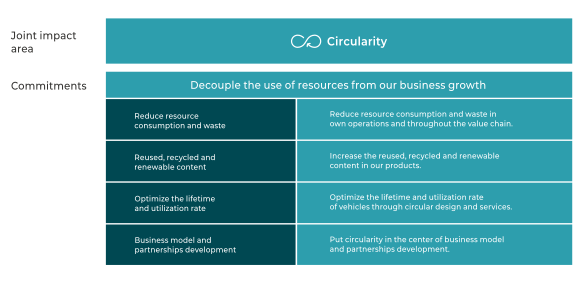
The TRATON GROUP has firmly anchored circularity principles in its governance structure: TRATON’s Sustainability Board makes key decisions and designates sponsors to drive integration across business processes. This shared commitment across all brands makes circularity a collective responsibility for a sustainable transportation ecosystem. Particularly in the case of resource-intensive commercial vehicles, circularity in design is crucial to reducing environmental impacts and ensuring value retention across the entire life cycle. TRATON is committed to using secondary materials and closed material cycles to reduce dependency on finite resources and minimize end-of-life waste.
As part of the DMA, the Group identified an actual negative impact related to resource inflows, as well as potential negative impacts associated with resource outflows and waste. The following section outlines the approach of the TRATON GROUP to managing material impacts related to circularity across the value chain.
Impacts, risks and opportunities related to circularity
| Sustainability matter | IRO category | Time horizon | Scope | Description |
|---|---|---|---|---|
| Resources inflows, including resource use | Actual negative impact | Short-term | Upstream | High virgin and non-renewable resource consumption |
| Resource outflows related to products and services | Potential negative impact | Short-term | Downstream | The improper disposal or recycling of vehicles can contribute to landfill waste, increased resource outflows, and the loss of valuable resources. |
| Waste | Potential negative impact | Short-term | Own operations | Landfill waste and contribution to resource scarcity caused by significant waste generation |
Approaches and policies
As a global manufacturer of commercial vehicles, the TRATON GROUP acknowledges its responsibility to foster circularity. While TRATON does not have a standalone circular economy policy, the Group is working on aligning circularity efforts to guide decision-making and support the integration of circularity across the value chain.
TRATON circular business model
TRATON’s circular business model covers the entire life cycle of commercial vehicles. It pursues renewable practices for products, components, and materials to reduce resource consumption, prolong service life, and minimize environmental impact — from initial design to end-of-life.
The TRATON GROUP’s circular business model
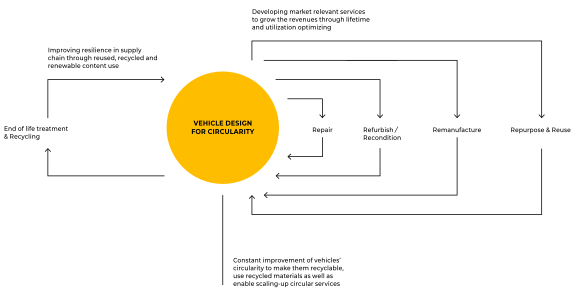
Circularity begins at the design and engineering stage. As part of the product development process, the TRATON GROUP is working on a common guideline for ecodesign, including circular design, to support engineering decisions. This guideline contains principles such as circular design, modularity, remanufacturing, and material reuse. Each element contributes to reducing resource consumption and extending product life cycles.
By implementing these principles, the TRATON GROUP is strengthening its competitiveness: it is unlocking potential for sales revenue growth, reducing costs for circular services, and preparing for upcoming legal requirements — in particular, standards for circular designs and end-of-life return and disassembly. At the same time, TRATON is building core competencies for circularity and improving access to green financing. The increased use of recycled and renewable components enhances recyclability and promotes the sustainability of vehicles.
The TRATON Modular System (TMS) acts as a central key element by standardizing components across brands, supporting reuse, enabling scalable remanufacturing processes, simplifying maintenance, and optimizing resource utilization throughout the entire vehicle life cycle.
TRATON’s service network plays a role in implementing circular practices throughout the use phase of the vehicles. These include repairs of key systems, such as drivetrains, to extend vehicle life and enable second-life applications. Remanufacturing plays a central role, by rebuilding components to their original specifications. In addition, digital services such as predictive maintenance and fleet optimization could further extend vehicle usage and reduce environmental impact. TRATON brand Scania supports end-of-life management for heavy-duty commercial vehicles by providing data for disassembly. This data includes guidelines for safe draining and disposal of hazardous materials. At the same time, this increases occupational safety.
Resource inflows of materials and products
The TRATON GROUP recognizes the increasing complexity of global supply chains and the rising demand for strategic raw materials driven by the transition to e-mobility. TRATON is committed to closely monitoring the sourcing of these materials, ensuring compliance with human rights standards and ethical practices throughout the supply chain. For more information, refer to the section Workers in the value chain – Approaches and policies.
Circularity in products and materials
The TRATON GROUP is focused on minimizing resource and energy consumption. Initial measures have prioritized batteries, steel, aluminum, and plastics as a decarbonization approach. These initiatives lay the foundation for further advancing the Group’s joint impact area and exploring innovative business models.
High-voltage batteries and other key components such as electric drive systems are becoming part of the circular economy due to statutory requirements. The raw materials they contain are playing an increasingly important role in climate change mitigation. These materials are not only valuable but also critical for ensuring resource security. Maintaining these materials in the circular economy supports the decoupling of production from virgin raw material dependency while safeguarding access to resources. Furthermore, the extraction and use of these raw materials are associated with emissions and other environmental impacts. By reusing battery-grade materials, the TRATON GROUP can mitigate these effects, which could contribute to a reduction in the overall CO2 footprint.
Given the increasing complexity of supply chains and the geopolitical and material availability challenges of recent years, TRATON recognizes the need to develop an efficient, Group-wide strategy for material security. This is not yet an active strategy, but the plan is to establish a comprehensive raw material procurement process aimed at securing critical and strategic raw materials for key components. This approach focuses on strategically relevant raw material groups to define, assess, and implement security scenarios. These groups may include battery materials, rare earth elements (REEs), platinum group materials (PGMs), semiconductor materials, tin, tantalum, tungsten, and gold (3TGs), and mica (a silicate mineral widely used in electronics and industrial applications). Other critical resources such as magnesium, aluminum, plastics, and copper will also be considered.
Policies
In the DMA, the sustainability matters of resource inflows, resource outflows, and waste were identified as material for the TRATON GROUP. Material impacts that specifically relate to these sustainability matters are managed through the policies described below.
The TRATON sustainability management policy and TRATON sustainability management guideline, in conjunction with the sustainability management process, relate to the potential negative impact of landfill waste and contribution to resource scarcity caused by significant waste generation. The same policies and the Code of Conduct for Suppliers and Business Partners address the actual negative impact of high virgin and non-renewable resource consumption, which is substantial in the transportation supply chain due to the reliance on non-renewable resources. Furthermore, the Code of Conduct for Suppliers and Business Partners addresses the potential negative impact of improper disposal or recycling of vehicles, which can contribute to landfill waste, increased resource outflows, and the loss of valuable resources. Further information on the above-mentioned policies is available in the section Overarching policies.
Resource efficiency is a fundamental aspect of the Code of Conduct for Suppliers and Business Partners. Partners are expected to minimize waste, reuse resources, recycle materials, and dispose of residuals, including hazardous waste and wastewater, safely and sustainably. These practices should apply across development, production, product use, and end-of-life recycling, in compliance with international standards, such as the Basel Convention, and relevant local laws. Where technically and economically feasible, partners should use secondary materials, know the recycled content of their products, and provide this data to TRATON when requested. They are also encouraged to support circular systems by closing material loops, extending product lifespans, and improving utilization.
Actions
In the reporting period, the TRATON GROUP did not yet define concrete Group-wide actions or targets and does not track the effectiveness of its policies for circularity.
The primary reason is that the Group is in a preparatory phase focused on establishing the necessary foundations for a Group-wide circularity approach. This includes identifying key circularity levers across brands and business areas. This is essential for setting realistic, fact-based targets. Circularity levers are strategic mechanisms that outline the main pathways for addressing circularity, such as reducing resource consumption, prioritization of the use of recycled materials, and optimizing the lifetime and utilization rate of TRATON’s products. There is currently no defined scope of application, binding timeframe, or monitoring for the defined levers.
The levers are directly aligned with IROs identified in TRATON’s DMA. The sustainability matter of waste aligns with the key lever of reducing resource consumption and waste. The three additional key levers align with the sustainability matters of resource inflows, including resource use, and the aspects of resource outflows related to products and services. The specific levers are further detailed in the following section, providing a view of their implementation and contribution to mitigating negative impacts and enhancing long-term value creation.
Levers addressing circularity
| Levers | Description |
|---|---|
| Reducing resource consumption and waste | TRATON has committed to using resources more efficiently, minimizing the amount of waste generated, and ultimately reducing resource consumption throughout the entire value chain. TRATON pays particular attention to the use phase of the vehicles it produces and to its own business activities. At TRATON, waste prevention is a corporate value. The brands are constantly searching for more efficient ways to design and produce vehicles. By optimizing these processes, we aim to not only make our operations more sustainable but also improve affordability for our customers. |
| Reused, recycled, and renewable content | TRATON encourages its business partners to prioritize the use of recycled materials and to share recycled content data with the TRATON GROUP on request. Through collaboration, the Group aims to source more sustainable materials and increase the share of recycled and renewable content in TRATON’s products. Achieving this requires strong cross-functional efforts to incorporate reused parts and higher recycled material content into vehicle designs. Additionally, TRATON is exploring ways to improve the traceability of material composition across its brands. This initiative aims to support more transparent communication around product sustainability. |
| Optimizing the lifetime and utilization rate |
To advance lifetime and utilization rates, TRATON focuses on improving product longevity through enhanced durability and reparability; increasing reuse through reconditioning and repurposing parts; and expanding remanufacturing and refurbishing services to extend the life of components. These efforts primarily target the downstream part of the value chain of TRATON, aiming to reduce resource outflow by prolonging product life. A key aspect of the Group’s approach to circularity involves expanding circular services, including remanufacturing, repair, refurbishment, and reconditioning. To support these efforts, TRATON has prioritized scaling up remanufacturing services across brands through a dedicated cross-brand Remanufacturing Task Force. The ongoing development of the common modular platform, TMS, plays a significant role in supporting TRATON’s circularity agenda. It contributes to the circular economy by facilitating the reuse and refurbishment of standardized components such as engines, transmissions, and electronics. This alignment with circular principles enhances maintenance services, improves efficiency, and supports resource conservation. |
| Business model and partnerships development |
TRATON is committed to sourcing more renewable and recycled materials and scaling up circular services through essential collaborations, within the Group, along the value chain and beyond. TRATON will work on developing further partnerships with suppliers, customers, governments, and even competitors to create a more circular transportation system and explore new business models, such as Product as a Service, in partnerships with others. Currently, the TRATON GROUP and its brands collaborate with multiple recycling partners in Europe. These partnerships are crucial in advancing sustainable material recovery within TRATON operations. The main business model of the recyclers is to recover critical cathode-grade materials, like nickel, cobalt, and lithium. External advocacy is a key part of our partnership approach. The TRATON GROUP is convinced that the transition to a circular economy is imperative. |
Performance
Resource inflows
The total weight of vehicles produced by TRATON, including technical and biological materials, amounted to 2,260,894 tons in the reporting year, following 2,450,218 tons in 2024. This figure is calculated based on either supplier-provided data on the weight of parts or by directly weighing the vehicles. The weight data is averaged for each product group and multiplied by the production volume to derive the total value.
The weight of recycled materials was 557,193 tons, which corresponds to 24.6% of total material usage. In the previous year, the weight of recycled materials had been 608,653 tons (24.8%). The total weight of products is broken down into material groups, and the corresponding share of secondary materials is applied. While brands calculate this in slightly different ways due to data availability, the overall approach follows the same principle of material classification and reference vehicle analysis.2 The secondary material share is expected to be an accurate representation as the figure is based on industry data. Given the potential for a large range in the secondary material share of some materials, the lower percentage has been used for a conservative approach. To enhance accuracy in the future, plans are in place to actively request and collect information from suppliers on secondary material rates when supplying a part to TRATON brands.
Resource outflows
Products and materials
TRATON GROUP vehicles are designed and built to remain functional over a long period of time. Their longevity is further enhanced by regular maintenance and the repair or replacement of broken parts. However, there is currently no industry-wide standard or average method for calculating the durability of heavy-duty vehicles. Additionally, the durability of such vehicles is influenced not only by their design and construction but also by downstream factors such as intensity of use, geographic conditions, and the frequency of repairs and servicing. As a result, the TRATON GROUP is unable to provide a definitive durability figure for its products.
The TRATON GROUP’s focus on high quality and low repair needs aims to enable the long durability of its vehicles during their use phase, contributing to resource efficiency and sustainability. The exchange parts program is a cornerstone of this approach. It enables the return of “old parts” by importers and national subsidiaries for industrial processing, remanufacturing, or refurbishment, making these components suitable for reuse in other vehicles within the Group. Parts that cannot be remanufactured or refurbished are replaced with brand-new components.
As part of its commitment to circularity, the TRATON GROUP evaluates its vehicles to ensure compliance with international standards and advance sustainability. A recyclability calculation conducted on two 12-meter Citywide urban buses, one Inter ICE and one BEV, using the guidelines set out in ISO 22628:2002, showed a recyclability rate of 91% for both vehicles.
Additionally, a study of the Group’s heavy-duty truck portfolio, including ICE models TGX, TGS, TGM, TGL, and the BEV truck model eTGS, revealed recyclability rates exceeding 85%.
Waste
The TRATON GROUP generates diverse waste streams across its production processes. A significant portion consists of scrap metal, metal filings, and metalworking fluids from machining operations. Paint waste is a major category, containing residues of organic solvents and other chemical components from vehicle painting. Additionally, casting sand from foundries and packaging materials such as cardboard, plastics, and wood are common waste types. The materials present in these waste streams include metals, oil, organic solvents, plastics, sand, and cardboard. Each material requires specific waste management strategies to minimize environmental impact and comply with regulations.
Waste streams and material management
| 2025 | 2024 | |
| Total waste generated [t]1 | 524,419 | 359,415 |
| Total amount diverted from disposal – non-hazardous: | ||
| Preparation for reuse [t] | 2,328 | 8,585 |
| Recycling [t] | 283,390 | 185,081 |
| Other recovery operations [t] | 17,590 | 30,795 |
| Total amount directed to disposal – non-hazardous: | ||
| Incineration [t] | 8,789 | 1,954 |
| Landfill [t] | 37,056 | 57,788 |
| Other disposal operation [t] | 107,269 | 6,553 |
| Total amount of hazardous waste [t] | 67,996 | 68,659 |
| Total amount diverted from disposal - hazardous: | ||
| Preparation for reuse [t] | 2,364 | 4,558 |
| Recycling [t] | 24,816 | 23,224 |
| Other recovery operations [t] | 19,601 | 23,333 |
| Total amount directed to disposal - hazardous: | ||
| Incineration [t] | 9,388 | 1,369 |
| Landfill [t] | 8,408 | 14,292 |
| Other disposal operation [t] | 3,420 | 1,883 |
| Total amount of non-recycled waste [t] | 211,520 | 137,968 |
| Percentage of non-recycled waste [%] | 40 | 38 |
| Total amount of radioactive waste [t] | 0 | 0 |
1 The increased volume of waste is due to construction activities at our sites
Pollution
The TRATON GROUP is aware of the significant role that the transportation industry plays in environmental pollution. Minimizing negative environmental impacts is essential for protecting ecosystems and human health. The TRATON GROUP brands are working to continuously reduce pollutant emissions and phase out harmful substances. The Group-wide research and development teams are working to develop clean technologies and deploy innovative materials. This enables TRATON to lay the foundation for a successful transition to low-emission solutions and actively contribute to the transformation towards cleaner, more sustainable mobility.
Through the DMA, TRATON identified an actual negative impact and a potential positive impact related to pollution of air, as well as a potential negative impact linked to substances of very high concern. No material impacts, risks, or opportunities for other sustainability matters were identified in relation to pollution, which is why they are not addressed further in this report.
Impacts, risks and opportunities related to pollution
| Sustainability matter | IRO category | Time horizon | Scope | Description |
|---|---|---|---|---|
| Pollution of air | Actual negative impact | Medium- and long-term | Upstream, own operations, and downstream | Emissions from transportation and manufacturing release pollutants (e.g., particulates, nitrogen oxides) that degrade air quality and pose health risks |
| Potential positive impact | Medium-term | Upstream, own operations, and downstream | Reduction of air pollution by adopting cleaner technologies and systems to control emissions | |
| Substances of very high concern | Potential negative impact | Short-, medium- and long-term | Own operations | Use of substances of very high concern can harm the environment, workers, and customers |
Approaches and policies
As a global manufacturer of commercial vehicles, the TRATON GROUP is aware of its responsibility to reduce environmental impacts along the entire value chain. The following section outlines the Group’s approach to managing pollution.
No policies or coordinated actions are currently in place at Group level that specifically relate to sustainability matters relating to pollution. There are currently no plans to introduce such Group-wide policies. Responsibility for these topics lies with the individual brands of the TRATON GROUP. This decentralized structure reflects the brand-specific approach to environmental management in the Group. The TRATON GROUP is assessing the need for a more harmonized approach to pollution management across its brands.
Actions
In the reporting period, the TRATON GROUP did not define any specific Group-wide actions or targets for combating environmental pollution. Nor are any activities or targets currently planned at Group level for the coming years. However, the TRATON brands continued to pursue activities to reduce environmental harm across their own operations in 2025. This included activities to mitigate pollution and implement robust systems to prevent and manage potential incidents and emergencies.
Performance
Pollution of air
In 2025, the TRATON GROUP conducted a threshold analysis to identify which pollutants at its production sites exceed the thresholds defined in the European Pollutant Release and Transfer Register (E-PRTR).
Three groups of substances were identified whose emissions exceed the defined thresholds: non-methane volatile organic compounds (NMVOCs), nitrogen oxides (NOx/NO2), and benzene.
The TRATON GROUP brands use local emission factors to calculate the pollutants emitted into the air. This approach supports accurate recording of emissions and forms the basis for further actions to reduce environmental impacts.
Pollution of air
| 2025 | 2024 | Changes over time(2024-2025)1 | |
| NMVOC (t)2 | 993.9 | 1,165.6 | –171.7 |
| NOx/NO2 (t)3 | 167.5 | 216.0 | –48.5 |
| Benzene (t)4 | 6.3 | 5.5 | +0.8 |
1 The changes in the metrics are mainly due to changes in vehicle production and vehicle unit sales between the years.
2 Volatile Organic Compounds (VOCs — from painting) are calculated from the material balance, with data provided from all production sites. The method analyses how many organic solvents are put into the production process, and this is compared with the outflows to air/water. Abatement incinerates the solvent, and, in these cases, it is measured to see how much is incinerated.
3 Nitrogen oxides (NOx/NO2) are calculated at brand level using local emission factors. In combustion engine development emission factors have been determined from actual measurements of fuel used. The emission factors are calculated using the amount of fuel purchased, compared with the amount of fuel used and considering the type of engine.
4 Benzene is measured in process ventilation. A sample is taken from several hours of product-based air flow and ventilation and extrapolated to an annual value.
Substances of very high concern
The TRATON GROUP uses the IMDS (International Material Data System) list of the European Automobile Manufacturers’ Association (ACEA) as the basis for managing substances of very high concern (SVHC). This is based on the candidate list of the European Chemicals Agency (ECHA).
The TRATON GROUP and the operators at the sites of the individual brands always act in accordance with the applicable legal requirements. The onsite technologies are approved by the competent authorities in accordance with these requirements. If SVHCs are used as substances or in mixtures during vehicle production, or if they become part of the “vehicle” product during the production process, they are subjected to individual testing and approval by internal chemical management processes at brand level. No full quantitative analysis of SVHCs can currently be performed at either brand or Group level.
There is no measurement method for recording the entire spectrum of all SVHCs, so no data can be collected on these emissions. Regarding the use of SVHCs in TRATON GROUP products, lead in starter batteries is by far the most significant substance. Lead accounts for approximately 98% of the total amount of all SVHCs used in a typical truck. The total amount of lead in starter batteries sold by TRATON in 2025 was 23,922 tons (previous year: 24,780 tons)3 . The data point “total amount of SVHCs leaving facilities as products” is not considered applicable for TRATON as only “vehicles sold” are considered according to the product definition.
Biodiversity
Biodiversity is essential to the stability of ecosystems and the sustainability of global supply chains. Protecting this diversity is integral to responsible sourcing, land use, and environmental stewardship. The TRATON GROUP is committed to minimizing its ecological footprint and supporting actions that preserve natural habitats, promote regenerative practices, and enhance resilience across the value chain.
As a commercial vehicle manufacturer, the TRATON GROUP acknowledges that activities across its value chain can affect biodiversity and ecosystems. The TRATON GROUP has identified the sustainability matter of direct impact drivers of biodiversity loss as material. No material impacts, risks, or opportunities were identified for other biodiversity-related sustainability matters and are therefore not addressed further in this report. The following section outlines the TRATON GROUP’s approach to managing material impacts related to biodiversity across the value chain.
Impacts, risks and opportunities related to biodiversity
| Sustainability matter | IRO category | Time horizon | Scope | Description |
|---|---|---|---|---|
| Direct impact drivers of biodiversity loss | Potential negative impact | Long-term | Upstream and downstream | Support of activities that contribute to biodiversity loss |
Approaches and policies
The Group is currently assessing its impacts as well as exposure to biodiversity-related risks and opportunities. TRATON Intends to integrate biodiversity considerations into the sustainability strategy in the future. At present, there are no specific policies addressing the direct drivers of biodiversity loss at Group level. However, the ECMS policy (see Decarbonization) oversees all environmental topics including biodiversity in own operations of TRATON.
Actions
As of the reporting period, the TRATON GROUP has not implemented targets or specific Group-wide actions to prevent or mitigate direct drivers of biodiversity loss, beyond the activities described under Decarbonization, Circularity, and Pollution. Given the interconnection between biodiversity loss, climate change, and pollution, all actions described in these areas contribute indirectly, however, to biodiversity protection. Furthermore, resource use — particularly the extraction of virgin raw materials — can significantly impact ecosystems. Therefore, activities aimed at reducing the consumption of primary resources are considered relevant to biodiversity.
The lack of specific targets and targeted actions is due to the current preparatory phase, in which the TRATON GROUP is focusing on developing fundamental structures for a systematic approach to biodiversity.
The TRATON GROUP provided sector-specific data for the nature risk study conducted by the WWF. The study identified significant biodiversity impacts across the entire commercial vehicle value chain, from raw material extraction to vehicle production and use. In addition, new risks associated with the transition to electric and alternative powertrains were identified, due in particular to increased demand for critical minerals such as lithium and rare earths. These findings mark an important step towards preparing targeted actions and integrating biodiversity aspects into environmental strategies in the future to address the impacts on biodiversity and encourage long-term ecological resilience.
Performance
The TRATON GROUP conducted an assessment to evaluate whether its production sites are located in or near biodiversity-sensitive areas. The evaluation included 32 sites involved in the manufacturing of vehicles, components, and assemblies.
The TRATON GROUP has defined a radius of 4.5 km for the assessment of production sites located near biodiversity-sensitive areas on the basis of the Technical Instructions on Air Quality Control and in line with the industry standard in accordance with the EU Taxonomy. This radius equates to the height of the tallest chimney multiplied by 50. The corresponding protected areas were analyzed by experts using the Kuyua software.
The analysis revealed that 224 TRATON GROUP production sites (a total area of 1,489 ha) are situated within the 4.5 km radius of 72 protected areas. The status of over 500 protected areas was reviewed as part of this assessment. The evaluation considered protected habitats, species at risk, and those endangered or critically endangered.
Potential impacts and dependencies were identified using the online tool Exploring Natural Capital, Opportunities, Risks and Exposure (ENCORE). The evaluation looked at the sector’s potential impacts on vehicle production and identified the following relevant aspects:
- Material dependencies: soil and sediment retention, water treatment, regulation of water flow, flood protection, and storm mitigation.
- Material impacts: disruptions in the value chain (e.g., noise, light) and emissions of toxic and water pollutants.
There are currently no plans for specific mitigation actions.
Information on significant sites and biodiversity-sensitive areas, as well as activities and land use at sites near key biodiversity areas, can be found under Further information on biodiversity.